Roda JM et al. (JUL 2006)
Journal of immunology (Baltimore,Md. : 1950) 177 1 120--9
Interleukin-21 enhances NK cell activation in response to antibody-coated targets.
NK cells express an activating FcR (FcgammaRIIIa) that mediates Ab-dependent cellular cytotoxicity and the production of immune modulatory cytokines in response to Ab-coated targets. IL-21 has antitumor activity in murine models that depends in part on its ability to promote NK cell cytotoxicity and IFN-gamma secretion. We hypothesized that the NK cell response to FcR stimulation would be enhanced by the administration of IL-21. Human NK cells cultured with IL-21 and immobilized IgG or human breast cancer cells coated with a therapeutic mAb (trastuzumab) secreted large amounts of IFN-gamma. Increased secretion of TNF-alpha and the chemokines IL-8,MIP-1alpha,and RANTES was also observed under these conditions. NK cell IFN-gamma production was dependent on distinct signals mediated by the IL-21R and the FcR and was abrogated in STAT1-deficient NK cells. Supernatants derived from NK cells that had been stimulated with IL-21 and mAb-coated breast cancer cells were able to drive the migration of naive and activated T cells in an in vitro chemotaxis assay. IL-21 also enhanced NK cell lytic activity against Ab-coated tumor cells. Coadministration of IL-21 and Ab-coated tumor cells to immunocompetent mice led to synergistic production of IFN-gamma by NK cells. Furthermore,the administration of IL-21 augmented the effects of an anti-HER2/neu mAb in a murine tumor model,an effect that required IFN-gamma. These findings demonstrate that IL-21 significantly enhances the NK cell response to Ab-coated targets and suggest that IL-21 would be an effective adjuvant to administer in combination with therapeutic mAbs.
View Publication
产品号#:
15025
15065
产品名:
RosetteSep™人NK细胞富集抗体混合物
RosetteSep™人NK细胞富集抗体混合物
Renn CN et al. (JUL 2006)
Journal of immunology (Baltimore,Md. : 1950) 177 1 298--305
TLR activation of Langerhans cell-like dendritic cells triggers an antiviral immune response.
Langerhans cells (LC) are a unique subset of dendritic cells (DC),present in the epidermis and serving as the first line of defense against pathogens invading the skin. To investigate the role of human LCs in innate immune responses,we examined TLR expression and function of LC-like DCs derived from CD34+ progenitor cells and compared them to DCs derived from peripheral blood monocytes (monocyte-derived DC; Mo-DC). LC-like DCs and Mo-DCs expressed TLR1-10 mRNAs at comparable levels. Although many of the TLR-induced cytokine patterns were similar between the two cell types,stimulation with the TLR3 agonist poly(I:C) triggered significantly higher amounts of the IFN-inducible chemokines CXCL9 (monokine induced by IFN-gamma) and CXCL11 (IFN-gamma-inducible T cell alpha chemoattractant) in LC-like DCs as compared with Mo-DCs. Supernatants from TLR3-activated LC-like DCs reduced intracellular replication of vesicular stomatitis virus in a type I IFN-dependent manner. Finally,CXCL9 colocalized with LCs in skin biopsy specimens from viral infections. Together,our data suggest that LCs exhibit a direct antiviral activity that is dependent on type I IFN as part of the innate immune system.
View Publication
产品号#:
15026
15066
产品名:
RosetteSep™人造血祖细胞富集抗体混合物
RosetteSep™人造血祖细胞富集抗体混合物
Carmona EM et al. (JUL 2006)
Journal of immunology (Baltimore,Md. : 1950) 177 1 459--67
Pneumocystis cell wall beta-glucans induce dendritic cell costimulatory molecule expression and inflammatory activation through a Fas-Fas ligand mechanism.
Respiratory failure during Pneumocystis pneumonia is mainly a consequence of exaggerated inflammatory responses to the organism. Dendritic cells (DCs) are the most potent APCs in the lung and are key to the regulation of innate and adaptive immune responses. However,their participation in the inflammatory response directed against Pneumocystis infection has not been fully elucidated. Therefore,we studied the role of Pneumocystis carinii,as well as Saccharomyces cerevisiae,cell wall-derived beta-glucans,in DC costimulatory molecule expression. We further studied the impact of beta-glucans on subsequent T cell activation. Because cytokine secretion by DCs has recently been shown to be regulated by Fas ligand (FasL),its role in beta-glucan activation of DCs was also investigated. beta-Glucan-induced DC activation occurred in part through dectin-1 receptors. We demonstrated that DC activation by beta-glucans elicits T cell activation and polarization into a Th1 patterned response,but with the conspicuous absence of IL-12. These observations differed from LPS-driven T cell polarization,suggesting that beta-glucans and LPS signal DC activation through different mechanisms. We additionally determined that IL-1beta and TNF-alpha secretion by beta-glucan-stimulated DCs was partially regulated by Fas-FasL. This suggests that dysregulation of FasL could further enhance exuberant and prolonged cytokine production by DCs following DC-T cell interactions,further promoting lung inflammation typical of Pneumocystis pneumonia.
View Publication
Molecular mechanisms mediating antimyeloma activity of proteasome inhibitor PS-341.
We have recently shown that proteasome inhibitor PS-341 induces apoptosis in drug-resistant multiple myeloma (MM) cells,inhibits binding of MM cells in the bone marrow microenvironment,and inhibits cytokines mediating MM cell growth,survival,drug resistance,and migration in vitro. PS-341 also inhibits human MM cell growth and prolongs survival in a SCID mouse model. Importantly,PS-341 has achieved remarkable clinical responses in patients with refractory relapsed MM. We here demonstrate molecular mechanisms whereby PS-341 mediates anti-MM activity by inducing p53 and MDM2 protein expression; inducing the phosphorylation (Ser15) of p53 protein; activating c-Jun NH(2)-terminal kinase (JNK),caspase-8,and caspase-3; and cleaving the DNA protein kinase catalytic subunit,ATM,and MDM2. Inhibition of JNK activity abrogates PS-341-induced MM cell death. These studies identify molecular targets of PS-341 and provide the rationale for the development of second-generation,more targeted therapies.
View Publication
产品号#:
15129
15169
产品名:
RosetteSep™人多发性骨髓瘤细胞富集抗体混合物
RosetteSep™人多发性骨髓瘤细胞富集抗体混合物
Chang Q et al. (SEP 2002)
Infection and Immunity 70 9 4977--86
Structure-function relationships for human antibodies to pneumococcal capsular polysaccharide from transgenic mice with human immunoglobulin Loci.
To investigate the influence of antibody structure and specificity on antibody efficacy against Streptococcus pneumoniae,human monospecific antibodies (MAbs) to serotype 3 pneumococcal capsular polysaccharide (PPS-3) were generated from transgenic mice reconstituted with human immunoglobulin loci (XenoMouse mice) vaccinated with a PPS-3-tetanus toxoid conjugate and their molecular genetic structures,epitope specificities,and protective efficacies in normal and complement-deficient mice were determined. Nucleic acid sequence analysis of three MAbs (A7,1A2,and 7C5) revealed that they use two different V(H)3 genes (A7 and 1A2 both use V3-15) and three different V(kappa) gene segments. The MAbs were found to have similar affinities for PPS-3 but different epitope specificities and CDR3 regions. Both A7 and 7C5 had a lysine at the V(H)-D junction,whereas 1A2 had a threonine. Challenge experiments with serotype 3 S. pneumoniae in BALB/c mice revealed that both 10- and 1- micro g doses of A7 and 7C5 were protective,while only a 10- micro g dose of 1A2 was protective. Both A7 and 7C5 were also protective in mice lacking either an intact alternative (FB(-/-)) or classical (C4(-/-)) complement pathway,but 1A2 was not protective in either strain. Our data suggest that PPS-3 consists of epitopes that can elicit both highly protective and less protective antibodies and that the superior efficacies of certain antibodies may be a function of their structures and/or specificities. Further investigation of relationships between structure,specificity,and efficacy for defined MAbs to PPS may identify antibody features that might be useful surrogates for antibody (and vaccine) efficacy.
View Publication
产品号#:
03800
03801
03802
03803
03804
03805
03806
产品名:
ClonaCell™-HY杂交瘤试剂盒
ClonaCell™-HY培养基A
ClonaCell™-HY 培养基 B
ClonaCell™-HY 培养基 C
ClonaCell™-HY 培养基 D
ClonaCell™-HY 培养基 E
ClonaCell™-HY PEG
Sandrin V et al. (AUG 2002)
Blood 100 3 823--32
Lentiviral vectors pseudotyped with a modified RD114 envelope glycoprotein show increased stability in sera and augmented transduction of primary lymphocytes and CD34+ cells derived from human and nonhuman primates.
Generating lentiviral vectors pseudotyped with different viral glycoproteins (GPs) may modulate the physicochemical properties of the vectors,their interaction with the host immune system,and their host range. We have investigated the capacity of a panel of GPs of both retroviral (amphotropic murine leukemia virus [MLV-A]; gibbon ape leukemia virus [GALV]; RD114,feline endogenous virus) and nonretroviral (fowl plague virus [FPV]; Ebola virus [EboV]; vesicular stomatitis virus [VSV]; lymphocytic choriomeningitis virus [LCMV]) origins to pseudotype lentiviral vectors derived from simian immunodeficiency virus (SIVmac251). SIV vectors were efficiently pseudotyped with the FPV hemagglutinin,VSV-G,LCMV,and MLV-A GPs. In contrast,the GALV and RD114 GPs conferred much lower infectivity to the vectors. Capitalizing on the conservation of some structural features in the transmembrane domains and cytoplasmic tails of the incorporation-competent MLV-A GP and in RD114 and GALV GPs,we generated chimeric GPs encoding the extracellular and transmembrane domains of GALV or RD114 GPs fused to the cytoplasmic tail (designated TR) of MLV-A GP. Importantly,SIV-derived vectors pseudotyped with these GALV/TR and RD114/TR GP chimeras had significantly higher titers than vectors coated with the parental GPs. Additionally,RD114/TR-pseudotyped vectors were efficiently concentrated and were resistant to inactivation induced by the complement of both human and macaque sera,indicating that modified RD114 GP-pseudotyped lentiviral vectors may be of particular interest for in vivo gene transfer applications. Furthermore,as compared to vectors pseudotyped with other retroviral GPs or with VSV-G,RD114/TR-pseudotyped vectors showed augmented transduction of human and macaque primary blood lymphocytes and CD34+ cells.
View Publication


 EasySep™小鼠TIL(CD45)正选试剂盒




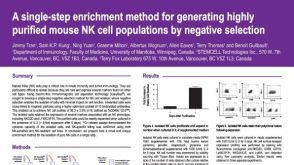 科学海报Cell Enrichment to Obtain Mouse NK Cell Populations By Negative Selection
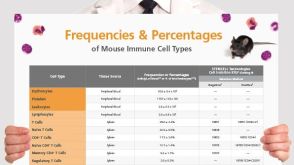 挂图Frequencies and Percentages of Mouse Immune Cell Types List of the frequencies of over 25 immune cell types in C57BL/6 mice
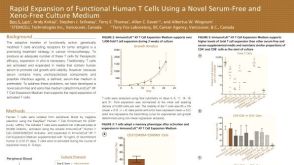 科学海报Rapid Expansion of Functional Human T Cells Using a Novel Serum-Free and Xeno-Free Culture Medium


 沪公网安备31010102008431号