Analysis of natural killer cells isolated from human decidua: Evidence that 2B4 (CD244) functions as an inhibitory receptor and blocks NK-cell function.
While during the first trimester of pregnancy natural killer (NK) cells represent the most abundant lymphocyte population in the decidua,their actual function at this site is still debated. In this study we analyzed NK cells isolated from decidual tissue for their surface phenotype and functional capability. We show that decidual NK (dNK) cells express normal surface levels of certain activating receptors,including NKp46,NKG2D,and 2B4,as well as of killer cell immunoglobulin-like receptors (KIRs) and CD94/NKG2A inhibitory receptor. In addition,they are characterized by high levels of cytoplasmic granules despite their CD56(bright) CD16- surface phenotype. Moreover,we provide evidence that in dNK cells,activating NK receptors display normal triggering capability whereas 2B4 functions as an inhibitory receptor. Thus,cross-linking of 2B4 resulted in inhibition of both cytolytic activity and interferon-gamma (IFN-gamma) production. Clonal analysis revealed that,in the majority of dNK cell clones,the 2B4 inhibitory function is related to the deficient expression of signaling lymphocyte activation molecule (SLAM)-associated protein (SAP) mRNA. Moreover,biochemical analysis revealed low levels of SAP in the dNK polyclonal population. This might suggest that dNK cells,although potentially capable of killing,are inhibited in their function when interacting with cells expressing CD48.
View Publication
产品号#:
15025
15065
产品名:
RosetteSep™人NK细胞富集抗体混合物
RosetteSep™人NK细胞富集抗体混合物
Laudanski K et al. (OCT 2006)
Proceedings of the National Academy of Sciences of the United States of America 103 42 15564--9
Cell-specific expression and pathway analyses reveal alterations in trauma-related human T cell and monocyte pathways.
Monitoring genome-wide,cell-specific responses to human disease,although challenging,holds great promise for the future of medicine. Patients with injuries severe enough to develop multiple organ dysfunction syndrome have multiple immune derangements,including T cell apoptosis and anergy combined with depressed monocyte antigen presentation. Genome-wide expression analysis of highly enriched circulating leukocyte subpopulations,combined with cell-specific pathway analyses,offers an opportunity to discover leukocyte regulatory networks in critically injured patients. Severe injury induced significant changes in T cell (5,693 genes),monocyte (2,801 genes),and total leukocyte (3,437 genes) transcriptomes,with only 911 of these genes common to all three cell populations (12%). T cell-specific pathway analyses identified increased gene expression of several inhibitory receptors (PD-1,CD152,NRP-1,and Lag3) and concomitant decreases in stimulatory receptors (CD28,CD4,and IL-2Ralpha). Functional analysis of T cells and monocytes confirmed reduced T cell proliferation and increased cell surface expression of negative signaling receptors paired with decreased monocyte costimulation ligands. Thus,genome-wide expression from highly enriched cell populations combined with knowledge-based pathway analyses leads to the identification of regulatory networks differentially expressed in injured patients. Importantly,application of cell separation,genome-wide expression,and cell-specific pathway analyses can be used to discover pathway alterations in human disease.
View Publication
产品号#:
15624
15664
15021
15061
15028
15068
产品名:
RosetteSep™人粒细胞去除抗体混合物
RosetteSep™人粒细胞去除抗体混合物
RosetteSep™人T细胞富集抗体混合物
RosetteSep™人T细胞富集抗体混合物
RosetteSep™人单核细胞富集抗体混合物
RosetteSep™人单核细胞富集抗体混合物
Wada Y et al. (FEB 2007)
Blood 109 3 1156--64
Selective abrogation of Th1 response by STA-5326, a potent IL-12/IL-23 inhibitor.
The interleukin-12 (IL-12) cytokine induces the differentiation of naive T cells to the T helper cell type 1 (Th1) phenotype and is integral to the pathogenesis of Th1-mediated immunologic disorders. A more recently discovered IL-12 family member,IL-23,shares the p40 protein subunit with IL-12 and plays a critical role in the generation of effector memory T cells and IL-17-producing T cells. We introduce a novel compound,STA-5326,that down-regulates both IL-12 p35 and IL-12/IL-23 p40 at the transcriptional level,and inhibits the production of both IL-12 and IL-23 cytokines. Oral administration of STA-5326 led to a suppression of the Th1 but not Th2 immune response in mice. In vivo studies using a CD4+CD45Rbhigh T-cell transfer severe combined immunodeficiency (SCID) mouse inflammatory bowel disease model demonstrated that oral administration of STA-5326 markedly reduced inflammatory histopathologic changes in the colon. A striking decrease in interferon-gamma (IFN-gamma) production was observed in ex vivo culture of lamina propria cells harvested from animals treated with STA-5326,indicating a down-regulation of the Th1 response by STA-5326. These results suggest that STA-5326 has potential for use in the treatment of Th1-related autoimmune or immunologic disorders. STA-5326 currently is being evaluated in phase 2 clinical trials in patients with Crohn disease and rheumatoid arthritis.
View Publication
产品号#:
15028
15068
产品名:
RosetteSep™人单核细胞富集抗体混合物
RosetteSep™人单核细胞富集抗体混合物
Hu J et al. (DEC 2006)
Journal of immunology (Baltimore,Md. : 1950) 177 11 8037--45
An HLA-A2.1-transgenic rabbit model to study immunity to papillomavirus infection.
We have established several HLA-A2.1-transgenic rabbit lines to provide a host to study CD8(+) T cell responses during virus infections. HLA-A2.1 protein expression was detected on cell surfaces within various organ tissues. Continuous cultured cells from these transgenic rabbits were capable of presenting both endogenous and exogenous HLA-A2.1-restricted epitopes to an HLA-A2.1-restricted epitope-specific CTL clone. A DNA vaccine containing an HLA-A2.1-restricted human papillomavirus type 16 E7 epitope (amino acid residues 82-90) stimulated epitope-specific CTLs in both PBLs and spleen cells of transgenic rabbits. In addition,vaccinated transgenic rabbits were protected against infection with a mutant cottontail rabbit papillomavirus DNA containing an embedded human papillomavirus type 16 E7/82-90 epitope. Complete protection was achieved using a multivalent epitope DNA vaccine based on epitope selection from cottontail rabbit papillomavirus E1 using MHC class I epitope prediction software. HLA-A2.1-transgenic rabbits will be an important preclinical animal model system to study virus-host interactions and to assess specific targets for immunotherapy.
View Publication
产品号#:
18557
18557RF
产品名:
Campello S et al. (DEC 2006)
The Journal of experimental medicine 203 13 2879--86
Orchestration of lymphocyte chemotaxis by mitochondrial dynamics.
Lymphocyte traffic is required to maintain homeostasis and perform appropriate immunological reactions. To migrate into inflamed tissues,lymphocytes must acquire spatial and functional asymmetries. Mitochondria are highly dynamic organelles that distribute in the cytoplasm to meet specific cellular needs,but whether this is essential to lymphocyte functions is unknown. We show that mitochondria specifically concentrate at the uropod during lymphocyte migration by a process involving rearrangements of their shape. Mitochondrial fission facilitates relocation of the organelles and promotes lymphocyte chemotaxis,whereas mitochondrial fusion inhibits both processes. Our data substantiate a new role for mitochondrial dynamics and suggest that mitochondria redistribution is required to regulate the motor of migrating cells.
View Publication
产品号#:
15021
15061
产品名:
RosetteSep™人T细胞富集抗体混合物
RosetteSep™人T细胞富集抗体混合物
Hideshima T et al. (FEB 2003)
Blood 101 4 1530--4
Molecular mechanisms mediating antimyeloma activity of proteasome inhibitor PS-341.
We have recently shown that proteasome inhibitor PS-341 induces apoptosis in drug-resistant multiple myeloma (MM) cells,inhibits binding of MM cells in the bone marrow microenvironment,and inhibits cytokines mediating MM cell growth,survival,drug resistance,and migration in vitro. PS-341 also inhibits human MM cell growth and prolongs survival in a SCID mouse model. Importantly,PS-341 has achieved remarkable clinical responses in patients with refractory relapsed MM. We here demonstrate molecular mechanisms whereby PS-341 mediates anti-MM activity by inducing p53 and MDM2 protein expression; inducing the phosphorylation (Ser15) of p53 protein; activating c-Jun NH(2)-terminal kinase (JNK),caspase-8,and caspase-3; and cleaving the DNA protein kinase catalytic subunit,ATM,and MDM2. Inhibition of JNK activity abrogates PS-341-induced MM cell death. These studies identify molecular targets of PS-341 and provide the rationale for the development of second-generation,more targeted therapies.
View Publication
Lentiviral vectors pseudotyped with a modified RD114 envelope glycoprotein show increased stability in sera and augmented transduction of primary lymphocytes and CD34+ cells derived from human and nonhuman primates.
Generating lentiviral vectors pseudotyped with different viral glycoproteins (GPs) may modulate the physicochemical properties of the vectors,their interaction with the host immune system,and their host range. We have investigated the capacity of a panel of GPs of both retroviral (amphotropic murine leukemia virus [MLV-A]; gibbon ape leukemia virus [GALV]; RD114,feline endogenous virus) and nonretroviral (fowl plague virus [FPV]; Ebola virus [EboV]; vesicular stomatitis virus [VSV]; lymphocytic choriomeningitis virus [LCMV]) origins to pseudotype lentiviral vectors derived from simian immunodeficiency virus (SIVmac251). SIV vectors were efficiently pseudotyped with the FPV hemagglutinin,VSV-G,LCMV,and MLV-A GPs. In contrast,the GALV and RD114 GPs conferred much lower infectivity to the vectors. Capitalizing on the conservation of some structural features in the transmembrane domains and cytoplasmic tails of the incorporation-competent MLV-A GP and in RD114 and GALV GPs,we generated chimeric GPs encoding the extracellular and transmembrane domains of GALV or RD114 GPs fused to the cytoplasmic tail (designated TR) of MLV-A GP. Importantly,SIV-derived vectors pseudotyped with these GALV/TR and RD114/TR GP chimeras had significantly higher titers than vectors coated with the parental GPs. Additionally,RD114/TR-pseudotyped vectors were efficiently concentrated and were resistant to inactivation induced by the complement of both human and macaque sera,indicating that modified RD114 GP-pseudotyped lentiviral vectors may be of particular interest for in vivo gene transfer applications. Furthermore,as compared to vectors pseudotyped with other retroviral GPs or with VSV-G,RD114/TR-pseudotyped vectors showed augmented transduction of human and macaque primary blood lymphocytes and CD34+ cells.
View Publication
产品号#:
02690
09600
09650
产品名:
StemSpan™ CC100
StemSpan™ SFEM
StemSpan™ SFEM
Chang Q et al. (SEP 2002)
Infection and Immunity 70 9 4977--86
Structure-function relationships for human antibodies to pneumococcal capsular polysaccharide from transgenic mice with human immunoglobulin Loci.
To investigate the influence of antibody structure and specificity on antibody efficacy against Streptococcus pneumoniae,human monospecific antibodies (MAbs) to serotype 3 pneumococcal capsular polysaccharide (PPS-3) were generated from transgenic mice reconstituted with human immunoglobulin loci (XenoMouse mice) vaccinated with a PPS-3-tetanus toxoid conjugate and their molecular genetic structures,epitope specificities,and protective efficacies in normal and complement-deficient mice were determined. Nucleic acid sequence analysis of three MAbs (A7,1A2,and 7C5) revealed that they use two different V(H)3 genes (A7 and 1A2 both use V3-15) and three different V(kappa) gene segments. The MAbs were found to have similar affinities for PPS-3 but different epitope specificities and CDR3 regions. Both A7 and 7C5 had a lysine at the V(H)-D junction,whereas 1A2 had a threonine. Challenge experiments with serotype 3 S. pneumoniae in BALB/c mice revealed that both 10- and 1- micro g doses of A7 and 7C5 were protective,while only a 10- micro g dose of 1A2 was protective. Both A7 and 7C5 were also protective in mice lacking either an intact alternative (FB(-/-)) or classical (C4(-/-)) complement pathway,but 1A2 was not protective in either strain. Our data suggest that PPS-3 consists of epitopes that can elicit both highly protective and less protective antibodies and that the superior efficacies of certain antibodies may be a function of their structures and/or specificities. Further investigation of relationships between structure,specificity,and efficacy for defined MAbs to PPS may identify antibody features that might be useful surrogates for antibody (and vaccine) efficacy.
View Publication
产品号#:
03800
03801
03802
03803
03804
03805
03806
产品名:
ClonaCell™-HY杂交瘤试剂盒
ClonaCell™-HY培养基A
ClonaCell™-HY 培养基 B
ClonaCell™-HY 培养基 C
ClonaCell™-HY 培养基 D
ClonaCell™-HY 培养基 E
ClonaCell™-HY PEG
Hirst CE et al. (JAN 2003)
Journal of immunology (Baltimore,Md. : 1950) 170 2 805--15
The intracellular granzyme B inhibitor, proteinase inhibitor 9, is up-regulated during accessory cell maturation and effector cell degranulation, and its overexpression enhances CTL potency.
Granzyme B (grB) is a serine proteinase released by cytotoxic lymphocytes (CLs) to kill abnormal cells. GrB-mediated apoptotic pathways are conserved in nucleated cells; hence,CLs require mechanisms to protect against ectopic or misdirected grB. The nucleocytoplasmic serpin,proteinase inhibitor 9 (PI-9),is a potent inhibitor of grB that protects cells from grB-mediated apoptosis in model systems. Here we show that PI-9 is present in CD4(+) cells,CD8(+) T cells,NK cells,and at lower levels in B cells and myeloid cells. PI-9 is up-regulated in response to grB production and degranulation,and associates with grB-containing granules in activated CTLs and NK cells. Intracellular complexes of PI-9 and grB are evident in NK cells,and overexpression of PI-9 enhances CTL potency,suggesting that cytoplasmic grB,which may threaten CL viability,is rapidly inactivated by PI-9. Because dendritic cells (DCs) acquire characteristics similar to those of target cells to activate naive CD8(+) T cells and therefore may also require protection against grB,we investigated the expression of PI-9 in DCs. PI-9 is evident in thymic DCs (CD3(-),CD4(+),CD8(-),CD45(+)),tonsillar DCs,and DC subsets purified from peripheral blood (CD16(+) monocytes and CD123(+) plasmacytoid DCs). Furthermore,PI-9 is expressed in monocyte-derived DCs and is up-regulated upon TNF-alpha-induced maturation of monocyte-derived DCs. In conclusion,the presence and subcellular localization of PI-9 in leukocytes and DCs are consistent with a protective role against ectopic or misdirected grB during an immune response.
View Publication
产品号#:
15022
15062
15024
15064
15023
15063
15025
15065
15028
15068
产品名:
RosetteSep™人CD4+ T细胞富集抗体混合物
RosetteSep™人CD4+ T细胞富集抗体混合物
RosetteSep™人B细胞富集抗体混合物
RosetteSep™人B细胞富集抗体混合物
RosetteSep™人CD8+ T细胞富集抗体混合物
RosetteSep™人CD8+ T细胞富集抗体混合物
RosetteSep™人NK细胞富集抗体混合物
RosetteSep™人NK细胞富集抗体混合物
RosetteSep™人单核细胞富集抗体混合物
RosetteSep™人单核细胞富集抗体混合物
Chan H-W et al. (JAN 2003)
The Journal of experimental medicine 197 2 245--55
DNA methylation maintains allele-specific KIR gene expression in human natural killer cells.
Killer immunoglobulin-like receptors (KIR) bind self-major histocompatibility complex class I molecules,allowing natural killer (NK) cells to recognize aberrant cells that have down-regulated class I. NK cells express variable numbers and combinations of highly homologous clonally restricted KIR genes,but uniformly express KIR2DL4. We show that NK clones express both 2DL4 alleles and either one or both alleles of the clonally restricted KIR 3DL1 and 3DL2 genes. Despite allele-independent expression,3DL1 alleles differed in the core promoter by only one or two nucleotides. Allele-specific 3DL1 gene expression correlated with promoter and 5' gene DNA hypomethylation in NK cells in vitro and in vivo. The DNA methylase inhibitor,5-aza-2'-deoxycytidine,induced KIR DNA hypomethylation and heterogeneous expression of multiple KIR genes. Thus,NK cells use DNA methylation to maintain clonally restricted expression of highly homologous KIR genes and alleles.
View Publication


 EasySep™小鼠TIL(CD45)正选试剂盒




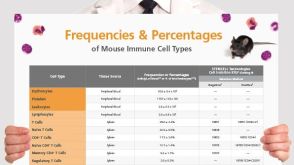 挂图Frequencies and Percentages of Mouse Immune Cell Types List of the frequencies of over 25 immune cell types in C57BL/6 mice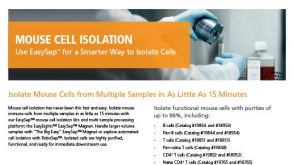

 沪公网安备31010102008431号