Smith Sa et al. (MAR 2012)
Journal of Virology 86 5 2665--75
Persistence of circulating memory B cell clones with potential for Dengue virus disease enhancement for decades following infection
Symptomatic dengue virus infection ranges in disease severity from an influenza-like illness to life-threatening shock. One model of the mechanism underlying severe disease proposes that weakly neutralizing,dengue serotype cross-reactive antibodies induced during a primary infection facilitate virus entry into Fc receptor-bearing cells during a subsequent secondary infection,increasing viral replication and the release of cytokines and vasoactive mediators,culminating in shock. This process has been termed antibody-dependent enhancement of infection and has significantly hindered vaccine development. Much of our understanding of this process has come from studies using mouse monoclonal antibodies (MAbs); however,antibody responses in mice typically exhibit less complexity than those in humans. A better understanding of the humoral immune response to natural dengue virus infection in humans is sorely needed. Using a high-efficiency human hybridoma technology,we isolated 37 hybridomas secreting human MAbs to dengue viruses from 12 subjects years or even decades following primary or secondary infection. The majority of the human antibodies recovered were broadly cross-reactive,directed against either envelope or premembrane proteins,and capable of enhancement of infection in vitro; few exhibited serotype-specific binding or potent neutralizing activity. Memory B cells encoding enhancing antibodies predominated in the circulation,even two or more decades following infection. Mapping the epitopes and activity of naturally occurring dengue antibodies should prove valuable in determining whether the enhancing and neutralizing activity of antibodies can be separated. Such principles could be used in the rational design of vaccines that enhance the induction of neutralizing antibodies,while lowering the risk of dengue shock syndrome.
View Publication
C.-W. J. Lio et al. (apr 2019)
Science immunology 4 34
TET enzymes augment activation-induced deaminase (AID) expression via 5-hydroxymethylcytosine modifications at the Aicda superenhancer.
TET enzymes are dioxygenases that promote DNA demethylation by oxidizing the methyl group of 5-methylcytosine to 5-hydroxymethylcytosine (5hmC). Here,we report a close correspondence between 5hmC-marked regions,chromatin accessibility and enhancer activity in B cells,and a strong enrichment for consensus binding motifs for basic region-leucine zipper (bZIP) transcription factors at TET-responsive genomic regions. Functionally,Tet2 and Tet3 regulate class switch recombination (CSR) in murine B cells by enhancing expression of Aicda,which encodes the activation-induced cytidine deaminase (AID) enzyme essential for CSR. TET enzymes deposit 5hmC,facilitate DNA demethylation,and maintain chromatin accessibility at two TET-responsive enhancer elements,TetE1 and TetE2,located within a superenhancer in the Aicda locus. Our data identify the bZIP transcription factor,ATF-like (BATF) as a key transcription factor involved in TET-dependent Aicda expression. 5hmC is not deposited at TetE1 in activated Batf-deficient B cells,indicating that BATF facilitates TET recruitment to this Aicda enhancer. Our study emphasizes the importance of TET enzymes for bolstering AID expression and highlights 5hmC as an epigenetic mark that captures enhancer dynamics during cell activation.
View Publication
产品号#:
19854
19854RF
产品名:
EasySep™小鼠B细胞分选试剂盒
RoboSep™ 小鼠B细胞分选试剂盒
Y. Ode et al. (apr 2019)
Scientific reports 9 1 6252
Cold-inducible RNA-binding Protein Induces Neutrophil Extracellular Traps in the Lungs during Sepsis.
Extracellular cold-inducible RNA-binding protein (CIRP) exaggerates inflammation and tissue injury in sepsis. Neutrophil extracellular traps (NETs) are released by activated neutrophils during sepsis. NETs contribute to pathogen clearance,but excessive NET formation (NETosis) causes inflammation and tissue damage. Peptidylarginine deiminase 4 (PAD4) is associated with NETosis by increasing histone citrullination and chromatin decondensation. We hypothesized that CIRP induces NETosis in the lungs during sepsis via upregulating PAD4 expression. Sepsis was induced in C57BL/6 wild-type (WT) and CIRP-/- mice by cecal ligation and puncture (CLP). After 20 h of CLP induction,NETs in the lungs of WT and CIRP-/- mice were quantified by flow cytometry by staining the single cell suspensions with MPO and CitH3 Abs. PAD4 expression in the lungs of WT and CIRP-/- mice after sepsis was assessed by Western blotting. In vitro effects of recombinant mouse (rm) CIRP for NETosis and PAD4 expression in the bone marrow-derived neutrophils (BMDN) were assessed by flow cytometry and Western blotting,respectively. After 20 h of CLP,NETosis in the lungs was significantly decreased in CIRP-/- mice compared to WT mice,which also correlated with the decreased PAD4 expression. Intratracheal administration of rmCIRP into WT mice significantly increased NETosis and PAD4 expression in the lungs compared to vehicle-injected mice. In vitro culture of BMDN with rmCIRP significantly increased NETosis and PAD4 expression compared to PBS-treated control. Fluorescence microscopy revealed typical web-like structures consistent with NETs in rmCIRP-treated BMDN. Thus,CIRP serves as a novel inducer of NETosis via PAD4 during sepsis.
View Publication
产品号#:
18000
19762
19762RF
产品名:
EasySep™磁极
EasySep™小鼠中性粒细胞富集试剂盒
RoboSep™ 小鼠中性粒细胞富集试剂盒含滤芯吸头
Allan LL et al. (MAY 2011)
Journal of immunology (Baltimore,Md. : 1950) 186 9 5261--72
CD1d and CD1c expression in human B cells is regulated by activation and retinoic acid receptor signaling.
B cell activation and Ab production in response to protein Ags requires presentation of peptides for recruitment of T cell help. We and others have recently demonstrated that B cells can also acquire innate help by presenting lipid Ags via CD1d to NKT cells. Given the newfound contribution of NKT cells to humoral immunity,we sought to identify the pathways that regulate CD1 molecule expression in human B cells. We show that ex vivo,activated and memory B cells expressed lower levels of CD1d compared with resting,naive,and marginal zone-like B cells. In vitro,CD1d was downregulated by all forms of B cell activation,leaving a narrow temporal window in which B cells could activate NKT cells. CD1c expression and function also decreased following activation by CD40L alone,whereas activation via the BCR significantly upregulated CD1c,particularly on marginal zone-like B cells. We found that the CD40L-induced downregulation of CD1d and CD1c correlated with diminished expression of retinoic acid receptor α (RARα) response genes,an effect that was reversed by RARα agonists. However,BCR-induced upregulation of CD1c was independent of the RAR pathway. Our findings that both CD1d and CD1c are upregulated by RARα signaling in human B cells is distinct from effects reported in dendritic cells,in which CD1c is inversely downregulated. One functional consequence of CD1d upregulation by retinoic acid was NKT cell cytotoxicity toward B cells. These results are central to our understanding of how CD1-restricted T cells may control humoral immunity.
View Publication
产品号#:
01700
01705
18054
18054RF
01702
产品名:
ALDEFLUOR™ 试剂盒
ALDEFLUOR™ DEAB试剂, 1.5 mM, 1 mL
ALDEFLUOR™检测缓冲液
Armengol Lopez S et al. (JAN 2012)
International journal of vascular medicine 2012 942512
The oxidative state of chylomicron remnants influences their modulation of human monocyte activation.
Chylomicron remnants (CMRs) contribute directly to human monocyte activation in vitro,by increasing reactive oxygen species (ROS) production and cell migration. In this study,the effects of the oxidative state of CMR on the degree of monocyte activation was investigated. CMR-like particles (CRLPs) were prepared in three different oxidative states,normal (CRLPs),protected from oxidation by incorporation of the antioxidant,probucol (pCRLPs),or oxidised with CuSO(4) (oxCRLPs). Lipid accumulation and ROS production were significantly increased in primary human monocytes incubated with CRLPs,whilst secretion on monocyte chemoattractant protein-1 was reduced,but oxCRLPs had no additional effect. In contrast,pCRLPs were taken up by monocytes to a lesser extent and had no significant effect on ROS or MCP-1 secretion. These studies suggest that the oxidative state of CMRs modulates their stimulation of the activation of peripheral blood human monocytes and that dietary antioxidants may provide some protection against these atherogenic effects.
View Publication
产品号#:
15028
15068
产品名:
RosetteSep™人单核细胞富集抗体混合物
RosetteSep™人单核细胞富集抗体混合物
Dudeck A et al. ( 2011)
The European Journal of Immunology 41 7 1883--1893
Mast cells promote Th1 and Th17 responses by modulating dendritic cell maturation and function
Mast cells (MCs) play an important role in the regulation of protective adaptive immune responses against pathogens. However,it is still unclear whether MCs promote such host defense responses via direct effects on T cells or rather by modifying the functions of antigen-presenting cells. To identify the underlying mechanisms of the immunoregulatory capacity of MCs,we investigated the impact of MCs on dendritic cell (DC) maturation and function. We found that murine peritoneal MCs underwent direct crosstalk with immature DCs that induced DC maturation as evidenced by enhanced expression of costimulatory molecules. Furthermore,the MC/DC interaction resulted in the release of the T-cell modulating cytokines IFN-γ,IL-2,IL-6 and TGF-β into coculture supernatants and increased the IL-12p70,IFN-γ,IL-6 and TGF-β secretion of LPS-matured DCs. Such MC-primed" DCs subsequently induced efficient CD4+ T-cell proliferation. Surprisingly�
View Publication
产品号#:
18758
18758RF
18768
18768RF
18757
18757RF
产品名:
EasySep™小鼠CD117(cKIT)正选试剂盒
RoboSep™ 小鼠CD117(cKIT)正选试剂盒含滤芯吸头
Le MX et al. (NOV 2016)
Scientific reports 6 37215
Kin17 facilitates multiple double-strand break repair pathways that govern B cell class switching.
Class switch recombination (CSR) in B cells requires the timely repair of DNA double-stranded breaks (DSBs) that result from lesions produced by activation-induced cytidine deaminase (AID). Through a genome-wide RNAi screen,we identified Kin17 as a gene potentially involved in the maintenance of CSR in murine B cells. In this study,we confirm a critical role for Kin17 in CSR independent of AID activity. Furthermore,we make evident that DSBs generated by AID or ionizing radiation require Kin17 for efficient repair and resolution. Our report shows that reduced Kin17 results in an elevated deletion frequency following AID mutational activity in the switch region. In addition,deficiency in Kin17 affects the functionality of multiple DSB repair pathways,namely homologous recombination,non-homologous end-joining,and alternative end-joining. This report demonstrates the importance of Kin17 as a critical factor that acts prior to the repair phase of DSB repair and is of bona fide importance for CSR.
View Publication


 EasySep™小鼠TIL(CD45)正选试剂盒




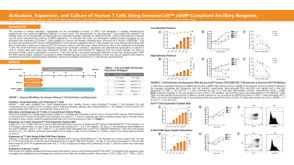 科学海报Activation, Expansion, and Culture of Human T Cells Using ImmunoCult™ cGMP-Compliant Ancillary Reagents
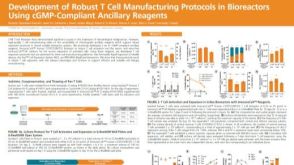 科学海报Development of Robust T Cell Manufacturing Protocols in Bioreactors Using cGMP-Compliant Ancillary Reagents



 沪公网安备31010102008431号