Uchida N et al. (OCT 2009)
Journal of virology 83 19 9854--62
Development of a human immunodeficiency virus type 1-based lentiviral vector that allows efficient transduction of both human and rhesus blood cells.
Human immunodeficiency virus type 1 (HIV-1) vectors transduce rhesus blood cells poorly due to a species-specific block by TRIM5alpha and APOBEC3G,which target HIV-1 capsid and viral infectivity factor (Vif),respectively. We sought to develop a lentiviral vector capable of transducing both human and rhesus blood cells by combining components of both HIV-1 and simian immunodeficiency virus (SIV),including SIV capsid (sCA) and SIV Vif. A chimeric HIV-1 vector including sCA (chiHIV) was superior to the conventional SIV in transducing a human blood cell line and superior to the conventional HIV-1 vector in transducing a rhesus blood cell line. Among human CD34(+) hematopoietic stem cells (HSCs),the chiHIV and HIV-1 vectors showed similar transduction efficiencies; in rhesus CD34(+) HSCs,the chiHIV vector yielded superior transduction rates. In in vivo competitive repopulation experiments with two rhesus macaques,the chiHIV vector demonstrated superior marking levels over the conventional HIV-1 vector in all blood lineages (first rhesus,15 to 30% versus 1 to 5%; second rhesus,7 to 15% versus 0.5 to 2%,respectively) 3 to 7 months postinfusion. In summary,we have developed an HIV-1-based lentiviral vector system that should allow comprehensive preclinical testing of HIV-1-based therapeutic vectors in the rhesus macaque model with eventual clinical application.
View Publication
产品号#:
04230
60132
产品名:
MethoCult™ H4230
抗恒河猴红细胞抗体,clone T3G6
Lambert AA et al. (AUG 2008)
Blood 112 4 1299--307
The C-type lectin surface receptor DCIR acts as a new attachment factor for HIV-1 in dendritic cells and contributes to trans- and cis-infection pathways.
The dynamic interplay between dendritic cells (DCs) and human immunodeficiency virus type-1 (HIV-1) is thought to result in viral dissemination and evasion of antiviral immunity. Although initial observations suggested that the C-type lectin receptor (CLR) DC-SIGN was responsible for the trans-infection function of the virus,subsequent studies demonstrated that trans-infection of CD4(+) T cells with HIV-1 can also occur through DC-SIGN-independent mechanisms. We demonstrate that a cell surface molecule designated DCIR (for DC immunoreceptor),a member of a recently described family of DC-expressing CLRs,can participate in the capture of HIV-1 and promote infection in trans and in cis of autologous CD4(+) T cells from human immature monocyte-derived DCs. The contribution of DCIR to these processes was revealed using DCIR-specific siRNAs and a polyclonal antibody specific for the carbohydrate recognition domain of DCIR. Data from transfection experiments indicated that DCIR acts as a ligand for HIV-1 and is involved in events leading to productive virus infection. Finally,we show that the neck domain of DCIR is important for the DCIR-mediated effect on virus binding and infection. These results point to a possible role for DCIR in HIV-1 pathogenesis by supporting the productive infection of DCs and promoting virus propagation.
View Publication
产品号#:
18058
18058RF
19052
19052RF
产品名:
EasySep™人CD4+ T细胞富集试剂盒
RoboSep™ 人CD4+ T细胞富集试剂盒含滤芯吸头
Maldonado-Arocho FJ and Bradley KA (MAY 2009)
Infection and immunity 77 5 2036--42
Anthrax edema toxin induces maturation of dendritic cells and enhances chemotaxis towards macrophage inflammatory protein 3beta.
Bacillus anthracis secretes two bipartite toxins,edema toxin (ET) and lethal toxin (LT),which impair immune responses and contribute directly to the pathology associated with the disease anthrax. Edema factor,the catalytic subunit of ET,is an adenylate cyclase that impairs host defenses by raising cellular cyclic AMP (cAMP) levels. Synthetic cAMP analogues and compounds that raise intracellular cAMP levels lead to phenotypic and functional changes in dendritic cells (DCs). Here,we demonstrate that ET induces a maturation state in human monocyte-derived DCs (MDDCs) similar to that induced by lipopolysaccharide (LPS). ET treatment results in downregulation of DC-SIGN,a marker of immature DCs,and upregulation of DC maturation markers CD83 and CD86. Maturation of DCs by ET is accompanied by an increased ability to migrate toward the lymph node-homing chemokine macrophage inflammatory protein 3beta,like LPS-matured DCs. Interestingly,cotreating with LT differentially affects the ET-induced maturation of MDDCs while not inhibiting ET-induced migration. These findings reveal a mechanism by which ET impairs normal innate immune function and may explain the reported adjuvant effect of ET.
View Publication
产品号#:
15028
15068
产品名:
RosetteSep™人单核细胞富集抗体混合物
RosetteSep™人单核细胞富集抗体混合物
Reeves EP et al. (FEB 2010)
Journal of immunology (Baltimore,Md. : 1950) 184 3 1642--52
IL-8 dictates glycosaminoglycan binding and stability of IL-18 in cystic fibrosis.
Dysregulation of airway inflammation contributes to lung disease in cystic fibrosis (CF). Inflammation is mediated by inflammatory cytokines,including IL-8,which illustrates an increase in biological half-life and proinflammatory activity when bound to glycosaminoglycans (GAGs). The aim of this project was to compare IL-8 and IL-18 for their relative stability,activity,and interaction with GAGs,including chondroitin sulfate,hyaluronic acid,and heparan sulfate,present in high quantities in the lungs of patients with CF. Bronchoalveolar lavage fluid was collected from patients with CF (n = 28),non-CF controls (n = 14),and patients with chronic obstructive pulmonary disease (n = 12). Increased levels of IL-8 and reduced concentrations of IL-18 were detected in bronchial samples obtained from CF individuals. The low level of IL-18 was not a defect in IL-18 production,as the pro- and mature forms of the molecule were expressed and produced by CF epithelial cells and monocytes. There was,however,a marked competition between IL-8 and IL-18 for binding to GAGs. A pronounced loss of IL-18 binding capacity occurred in the presence of IL-8,which displaced IL-18 from these anionic-matrices,rendering the cytokine susceptible to proteolytic degradation by neutrophil elastase. As a biological consequence of IL-18 degradation,reduced levels of IL-2 were secreted by Jurkat T lymphocytes. In conclusion,a novel mechanism has been identified highlighting the potential of IL-8 to determine the fate of other inflammatory molecules,such as IL-18,within the inflammatory milieu of the CF lung.
View Publication
产品号#:
18058
18058RF
产品名:
Kortylewski M et al. (MAR 2009)
Cancer research 69 6 2497--505
Toll-like receptor 9 activation of signal transducer and activator of transcription 3 constrains its agonist-based immunotherapy.
Although toll-like receptor (TLR) agonists,such as CpG,are used as immunotherapeutic agents in clinical trials for cancer and infectious diseases,their effects are limited and the underlying mechanism(s) that restrains CpG efficacy remains obscure. Here,we show that signal transducer and activator of transcription 3 (Stat3) plays a key role in down-modulating immunostimulatory effects of CpG. In the absence of interleukin-6 (IL-6) and IL-10 induction,CpG directly activates Stat3 within minutes through TLR9. Ablating Stat3 in hematopoietic cells results in rapid activation of innate immunity by CpG,with enhanced production of IFN-gamma,tumor necrosis factor-alpha,IL-12,and activation of macrophages,neutrophils,and natural killer cells marked with Stat1 activation. Innate immune responses induced by CpG in mice with a Stat3-ablated hematopoietic system cause potent antitumor effects,leading to eradication of large (textgreater1 cm) B16 melanoma tumors within 72 h. Moreover,ablating Stat3 in myeloid cells increases CpG-induced dendritic cell maturation,T-cell activation,generation of tumor antigen-specific T cells,and long-lasting antitumor immunity. A critical role of Stat3 in mediating immunosuppression by certain cytokines and growth factors in the tumor microenvironment has been recently documented. By demonstrating direct and rapid activation of Stat3 by TLR agonists,we identify a second level of Stat3-mediated immunosuppression. Our results further suggest that targeting Stat3 can drastically improve CpG-based immunotherapeutic approaches.
View Publication
产品号#:
18770
18770RF
18758
18758RF
18768
18768RF
产品名:
Pende D et al. (MAR 2009)
Blood 113 13 3119--29
Anti-leukemia activity of alloreactive NK cells in KIR ligand-mismatched haploidentical HSCT for pediatric patients: evaluation of the functional role of activating KIR and redefinition of inhibitory KIR specificity.
We analyzed 21 children with leukemia receiving haploidentical hematopoietic stem cell transplantation (haplo-HSCT) from killer immunoglobulin (Ig)-like receptors (KIR) ligand-mismatched donors. We showed that,in most transplantation patients,variable proportions of donor-derived alloreactive natural killer (NK) cells displaying anti-leukemia activity were generated and maintained even late after transplantation. This was assessed through analysis of donor KIR genotype,as well as through phenotypic and functional analyses of NK cells,both at the polyclonal and clonal level. Donor-derived KIR2DL1(+) NK cells isolated from the recipient displayed the expected capability of selectively killing C1/C1 target cells,including patient leukemia blasts. Differently,KIR2DL2/3(+) NK cells displayed poor alloreactivity against leukemia cells carrying human leukocyte antigen (HLA) alleles belonging to C2 group. Unexpectedly,this was due to recognition of C2 by KIR2DL2/3,as revealed by receptor blocking experiments and by binding assays of soluble KIR to HLA-C transfectants. Remarkably,however,C2/C2 leukemia blasts were killed by KIR2DL2/3(+) (or by NKG2A(+)) NK cells that coexpressed KIR2DS1. This could be explained by the ability of KIR2DS1 to directly recognize C2 on leukemia cells. A role of the KIR2DS2 activating receptor in leukemia cell lysis could not be demonstrated. Altogether,these results may have important clinical implications for the selection of optimal donors for haplo-HSCT.
View Publication


 EasySep™小鼠TIL(CD45)正选试剂盒




 3:04
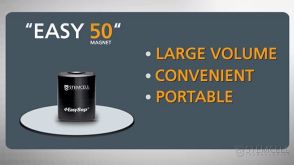
视频The Easy 50 EasySep™ Magnet: Portable Large-Volume Cell Separation In 25 Minutes发布日期: 10/10/2010
3:04
视频The Easy 50 EasySep™ Magnet: Portable Large-Volume Cell Separation In 25 Minutes发布日期: 10/10/2010


 沪公网安备31010102008431号