Thymoglobulin targets multiple plasma cell antigens and has in vitro and in vivo activity in multiple myeloma.
Multiple myeloma is characterized by the proliferation of clonal plasma cells that have a heterogeneous expression of various cell surface markers,precluding successful use of monoclonal antibodies for therapeutic targeting of the tumor cell. Thymoglobulin (rabbit-derived polyclonal anti-thymocyte globulin),by virtue of its method of preparation,contains antibodies against several B-cell and plasma cell antigens and offers an attractive option for immunotherapy of myeloma. Here,we demonstrate potent anti-myeloma activity of the rabbit anti-thymocyte globulin preparation Thymoglobulin in vitro and in vivo in an animal model of myeloma. Thymoglobulin was able to induce dose- and time-dependent apoptosis of several myeloma cell lines,including those resistant to conventional anti-myeloma agents. Importantly,the anti-myeloma activity was preserved even when myeloma cells were grown with different cytokines demonstrating the ability to overcome microenvironment-mediated resistance. Thymoglobulin induced apoptosis of freshly isolated primary myeloma cells from patients. Using a competitive flow cytometric analysis,we were able to identify the potential antigen targets for Thymoglobulin preparation. Finally,in a plasmacytoma mouse model of myeloma,Thymoglobulin delayed the tumor growth in a dose-dependent manner providing convincing evidence for continued evaluation of this agent in the clinic in patients with myeloma,either alone or in combination with other agents.
View Publication
产品号#:
18357
18357RF
21000
20119
20155
产品名:
RoboSep™- S
RoboSep™ 吸头组件抛光剂
RoboSep™分选管套装(9个塑料管)
Balakrishnan K et al. (OCT 2006)
Blood 108 7 2392--8
Forodesine, an inhibitor of purine nucleoside phosphorylase, induces apoptosis in chronic lymphocytic leukemia cells.
Purine nucleoside phosphorylase (PNP) deficiency in humans results in T lymphocytopenia. Forodesine,a potent inhibitor of PNP,was designed based on the transition-state structure stabilized by the enzyme. Previous studies established that forodesine in the presence of deoxyguanosine (dGuo) inhibits the proliferation of T lymphocytes. A phase 1 clinical trial of forodesine in T-cell malignancies demonstrated significant antileukemic activity with an increase in intracellular dGuo triphosphate (dGTP). High accumulation of dGTP in T cells may be dependent on the levels of deoxynucleoside kinases. Because B-cell chronic lymphocytic leukemia (B-CLL) cells have high activity of deoxycytidine kinase (dCK),we hypothesized that these lymphocytes would respond to forodesine. This postulate was tested in primary lymphocytes during in vitro investigations. Lymphocytes from 12 patients with CLL were incubated with forodesine and dGuo. These CLL cells showed a wide variation in the accumulation of intracellular dGTP without any effect on other deoxynucleotides. This was associated with DNA damage-induced p53 stabilization,phosphorylation of p53 at Ser15,and activation of p21. The dGTP accumulation was related to induction of apoptosis measured by caspase activation,changes in mitochondrial membrane potential,and PARP cleavage. Based on these data,a phase 2 clinical trial of forodesine has been initiated for CLL patients.
View Publication
产品号#:
19051
19051RF
19054
19054RF
产品名:
EasySep™人T细胞富集试剂盒
RoboSep™ 人T细胞富集试剂盒含滤芯吸头
EasySep™人B细胞富集试剂盒
RoboSep™ 人B细胞富集试剂盒含滤芯吸头
Peters PJ et al. (JUL 2006)
Journal of virology 80 13 6324--32
Non-macrophage-tropic human immunodeficiency virus type 1 R5 envelopes predominate in blood, lymph nodes, and semen: implications for transmission and pathogenesis.
Human immunodeficiency virus type 1 (HIV-1) R5 isolates that predominantly use CCR5 as a coreceptor are frequently described as macrophage tropic. Here,we compare macrophage tropism conferred by HIV-1 R5 envelopes that were derived directly by PCR from patient tissue. This approach avoids potentially selective culture protocols used in virus isolation. Envelopes were amplified (i) from blood and semen of adult patients and (ii) from plasma of pediatric patients. The phenotypes of these envelopes were compared to those conferred by an extended panel of envelopes derived from brain and lymph node that we reported previously. Our results show that R5 envelopes vary by up to 1,000-fold in their capacity to confer infection of primary macrophages. Highly macrophage-tropic envelopes were predominate in brain but were infrequent in semen,blood,and lymph node samples. We also confirmed that the presence of N283 in the C2 CD4 binding site of gp120 is associated with HIV-1 envelopes from the brain but absent from macrophage-tropic envelopes amplified from blood and semen. Finally,we compared infection of macrophages,CD4(+) T cells,and peripheral blood mononuclear cells (PBMCs) conferred by macrophage-tropic and non-macrophage-tropic envelopes in the context of full-length replication competent viral clones. Non-macrophage-tropic envelopes conferred low-level infection of macrophages yet infected CD4(+) T cells and PBMCs as efficiently as highly macrophage-tropic brain envelopes. The lack of macrophage tropism for the majority of the envelopes amplified from lymph node,blood,and semen is striking and contrasts with the current consensus that R5 primary isolates are generally macrophage tropic. The extensive variation in R5 tropism reported here is likely to have an important impact on pathogenesis and on the capacity of HIV-1 to transmit.
View Publication
产品号#:
19052
19052RF
产品名:
EasySep™人CD4+ T细胞富集试剂盒
RoboSep™ 人CD4+ T细胞富集试剂盒含滤芯吸头
Dykstra B et al. (MAY 2006)
Proceedings of the National Academy of Sciences of the United States of America 103 21 8185--90
High-resolution video monitoring of hematopoietic stem cells cultured in single-cell arrays identifies new features of self-renewal.
To search for new indicators of self-renewing hematopoietic stem cells (HSCs),highly purified populations were isolated from adult mouse marrow,micromanipulated into a specially designed microscopic array,and cultured for 4 days in 300 ng/ml Steel factor,20 ng/ml IL-11,and 1 ng/ml flt3-ligand. During this period,each cell and its progeny were imaged at 3-min intervals by using digital time-lapse photography. Individual clones were then harvested and assayed for HSCs in mice by using a 4-month multilineage repopulation endpoint (textgreater1% contribution to lymphoid and myeloid lineages). In a first experiment,6 of 14 initial cells (43%) and 17 of 61 clones (28%) had HSC activity,demonstrating that HSC self-renewal divisions had occurred in vitro. Characteristics associated with HSC activity included longer cell-cycle times and the absence of uropodia on a majority of cells within the clone during the final 12 h of culture. Combining these criteria maximized the distinction of clones with HSC activity from those without and identified a subset of 27 of the 61 clones. These 27 clones included all 17 clones that had HSC activity; a detection efficiency of 63% (2.26 times more frequently than in the original group). The utility of these characteristics for discriminating HSC-containing clones was confirmed in two independent experiments where all HSC-containing clones were identified at a similar 2- to 3-fold-greater efficiency. These studies illustrate the potential of this monitoring system to detect new features of proliferating HSCs that are predictive of self-renewal divisions.
View Publication
产品号#:
19756
19756RF
产品名:
Rouhi A et al. (MAR 2006)
Journal of immunology (Baltimore,Md. : 1950) 176 5 2991--9
Evidence for epigenetic maintenance of Ly49a monoallelic gene expression.
Although structurally unrelated,the human killer cell Ig-like (KIR) genes and the rodent lectin-like Ly49 genes serve similar functional roles in NK cells. Moreover,both gene families display variegated,monoallelic expression patterns established at the transcriptional level. DNA methylation has been shown to play an important role in maintenance of expression patterns of KIR genes,which have CpG island promoters. The potential role of DNA methylation in expression of Ly49 genes,which have CpG-poor promoters,is unknown. In this study,we show that hypomethylation of the region encompassing the Pro-2 promoter of Ly49a and Ly49c in primary C57BL/6 NK cells correlates with expression of the gene. Using C57BL/6 x BALB/c F1 hybrid mice,we demonstrate that the expressed allele of Ly49a is hypomethylated while the nonexpressed allele is heavily methylated,indicating a role for epigenetics in maintaining monoallelic Ly49 gene expression. Furthermore,the Ly49a Pro-2 region is heavily methylated in fetal NK cells but variably methylated in nonlymphoid tissues. Finally,in apparent contrast to the KIR genes,we show that DNA methylation and the histone acetylation state of the Pro-2 region are strictly linked with Ly49a expression status.
View Publication
产品号#:
18554
18554RF
18564
18564RF
产品名:
Yu S et al. (FEB 2006)
The Journal of experimental medicine 203 2 349--58
B cell-deficient NOD.H-2h4 mice have CD4+CD25+ T regulatory cells that inhibit the development of spontaneous autoimmune thyroiditis.
Wild-type (WT) NOD.H-2h4 mice develop spontaneous autoimmune thyroiditis (SAT) when given 0.05% NaI in their drinking water,whereas B cell-deficient NOD.H-2h4 mice are SAT resistant. To test the hypothesis that resistance of B cell-deficient mice to SAT was due to the activity of regulatory CD4+CD25+ T (T reg) cells activated if autoantigen was initially presented on non-B cells,CD25+ T reg cells were transiently depleted in vivo using anti-CD25. B cell-deficient NOD.H-2h4 mice given three weekly injections of anti-CD25 developed SAT 8 wk after NaI water. Thyroid lesions were similar to those in WT mice except there were no B cells in thyroid infiltrates. WT and B cell-deficient mice had similar numbers of CD4+CD25+Foxp3+ cells. Mice with transgenic nitrophenyl-specific B cells unable to secrete immunoglobulin were also resistant to SAT,and transient depletion of T reg cells resulted in severe SAT with both T and B cells in thyroid infiltrates. T reg cells that inhibit SAT were eliminated by day 3 thymectomy,indicating they belong to the subset of naturally occurring T reg cells. However,T reg cell depletion did not increase SAT severity in WT mice,suggesting that T reg cells may be nonfunctional when effector T cells are activated; i.e.,by autoantigen-presenting B cells.
View Publication
产品号#:
19782
19792
产品名:
Zimmerman Z et al. (AUG 2005)
Biology of Blood and Marrow Transplantation 11 8 576--86
Effector cells derived from host CD8 memory T cells mediate rapid resistance against minor histocompatibility antigen-mismatched allogeneic marrow grafts without participation of perforin, Fas ligand, and the simultaneous inhibition of 3 tumor necrosis Fa
Reduced-intensity conditioning regimens for transplant recipients have heightened awareness of immunologic resistance to allogeneic bone marrow transplants (BMT). Although T cell-mediated cytotoxicity has been assumed to play a role in the resistance against donor allogeneic hematopoietic stem and progenitor cell grafts,several studies have reported relatively unimpaired resistance by recipients who lack perforin,Fas ligand (FasL),and other cytotoxic mediators. This study compared the early kinetics of T cell-mediated resistance in B6 (H2b) cytotoxically normal versus deficient recipients after transplantation with major histocompatibility complex-matched,minor histocompatibility antigen (MiHA)-mismatched allogeneic marrow grafts. Wild-type B6 or cytotoxic double-deficient perforin-/-/ gld+/+ (B6-cdd) mice were sensitized against major histocompatibility complex-matched BALB.B or C3H.SW (H2b) MiHA and transplanted with a high dose (1 ?? 107) of T cell-depleted bone marrow. CD8 T memory cells were shown to be present in recipients before BMT,and anti-CD8 monoclonal antibody infusion abolished resistance,thus demonstrating that CD8 T cells are the host effector population. Donor-committed and high proliferative potential progenitor numbers were markedly diminished by 48 hours after transplantation in both wild-type B6 and B6-cdd anti-donor MiHA-sensitized recipients. These observations indicate that the resistance pathway used in the cytotoxic deficient mice was both potent and rapidly induced - consistent with a CD8 memory T-cell response. To examine the role of Tumor necrosis factor-like weak inducer of apoptosis (TWEAK)- and TL1A-mediated cytotoxicity in this strong resistance,newly generated monoclonal antibodies specific for these ligands were administered to B6-cdd recipients sensitized to donor antigens. Recipients of syngeneic B6-gfp bone marrow exhibited significant donor colony-forming unit numbers after BMT. In contrast,low or absent colony-forming unit levels were detected in allogeneic recipients,including those that lacked perforin and FasL and that received anti-TWEAK,anti-tumor necrosis factor-related apoptosis-inducing ligand,and anti-TL1A monoclonal antibodies. These findings extend previous observations by demonstrating the existence of a rapidly effected resistance pathway mediated by memory CD8 effector T cells independent of the 2 major pathways of cytotoxicity. Together with previous findings,these results support the notion that effector cells derived from memory CD8 T-cell populations can mediate strong resistance against donor allogeneic MiHA-disparate hematopoietic engraftment by using a mechanism that is independent of the contribution of perforin,FasL,and the known death ligand receptor pathways. ?? 2005 American Society for Blood and Marrow Transplantation.
View Publication
产品号#:
03800
03801
03802
03803
03804
03805
03806
产品名:
ClonaCell™-HY杂交瘤试剂盒
ClonaCell™-HY培养基A
ClonaCell™-HY 培养基 B
ClonaCell™-HY 培养基 C
ClonaCell™-HY 培养基 D
ClonaCell™-HY 培养基 E
ClonaCell™-HY PEG
Zhang Q et al. (AUG 2005)
Infection and immunity 73 8 5166--72
Production and characterization of monoclonal antibodies against Enterocytozoon bieneusi purified from rhesus macaques.
Enterocytozoon bieneusi spores derived from rhesus macaque feces were purified by serial salt-Percoll-sucrose-iodixanol centrifugation,resulting in two bands with different specific densities of 95.6% and 99.5% purity and with a recovery efficiency of 10.8%. An ultrastructural examination revealed typical E. bieneusi spores. Twenty-six stable hybridomas were derived from BALB/c mice immunized with spores and were cloned twice by limiting dilution or growth on semisolid medium. Four monoclonal antibodies (MAbs),reacting exclusively with spores,were further characterized. These MAbs specifically reacted with spores present in stools of humans and macaques,as visualized by immunofluorescence,and with spore walls,as visualized by immunoelectron microscopy. A blocking enzyme-linked immunosorbent assay and Western blotting revealed that the epitope recognized by 8E2 was different from those recognized by 7G2,7H2,and 12G8,which identified the same 40-kDa protein. These MAbs will be valuable tools for diagnostics,for epidemiological investigations,for host-pathogen interaction studies,and for comparative genomics and proteomics.
View Publication
产品号#:
产品名:
Le Y et al. (MAR 2005)
Journal of immunology (Baltimore,Md. : 1950) 174 5 2582--90
CXC chemokine ligand 12-induced focal adhesion kinase activation and segregation into membrane domains is modulated by regulator of G protein signaling 1 in pro-B cells.
CXCL12-induced chemotaxis and adhesion to VCAM-1 decrease as B cells differentiate in the bone marrow. However,the mechanisms that regulate CXCL12/CXCR4-mediated signaling are poorly understood. We report that after CXCL12 stimulation of progenitor B cells,focal adhesion kinase (FAK) and PI3K are inducibly recruited to raft-associated membrane domains. After CXCL12 stimulation,phosphorylated FAK is also localized in membrane domains. The CXCL12/CXCR4-FAK pathway is membrane cholesterol dependent and impaired by metabolic inhibitors of G(i),Src family,and the GTPase-activating protein,regulator of G protein signaling 1 (RGS1). In the bone marrow,RGS1 mRNA expression is low in progenitor B cells and high in mature B cells,implying developmental regulation of CXCL12/CXCR4 signaling by RGS1. CXCL12-induced chemotaxis and adhesion are impaired when FAK recruitment and phosphorylation are inhibited by either membrane cholesterol depletion or overexpression of RGS1 in progenitor B cells. We conclude that the recruitment of signaling molecules to specific membrane domains plays an important role in CXCL12/CXCR4-induced cellular responses.
View Publication
产品号#:
产品名:
Vasir B et al. (FEB 2005)
Journal of immunology (Baltimore,Md. : 1950) 174 4 2376--86
Dendritic cells induce MUC1 expression and polarization on human T cells by an IL-7-dependent mechanism.
The MUC1 transmembrane mucin is expressed on the surface of activated human T cells; however,the physiologic signals responsible for the regulation of MUC1 in T cells are not known. The present studies demonstrate that IL-7,but not IL-2 or IL-4,markedly induces MUC1 expression on CD3+ T cells. MUC1 was also up-regulated by IL-15,but to a lesser extent than that found with IL-7. The results show that IL-7 up-regulates MUC1 on CD4+,CD8+,CD25+,CD69+,naive CD45RA+,and memory CD45RO+ T cells. In concert with induction of MUC1 expression by IL-7,activated dendritic cells (DC) that produce IL-7 up-regulate MUC1 on allogeneic CD3+ T cells. DC also induce MUC1 expression on autologous CD3+ T cells in the presence of recall Ag. Moreover,DC-induced MUC1 expression on T cells is blocked by a neutralizing anti-IL-7 Ab. The results also demonstrate that DC induce polarization of MUC1 on T cells at sites opposing the DC-T cell synapse. These findings indicate that DC-mediated activation of Ag-specific T cells is associated with induction and polarization of MUC1 expression by an IL-7-dependent mechanism.
View Publication
产品号#:
15271HLA
产品名:
RosetteSep™ HLA 淋系细胞富集试剂盒
挂图
Human Immune Cytokines
Infographic of key cytokines for expansion, differentiation and characterization of major immune cell types


 EasySep™小鼠TIL(CD45)正选试剂盒




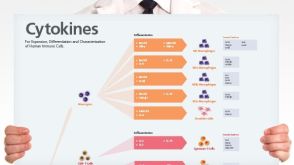 挂图Human Immune Cytokines Infographic of key cytokines for expansion, differentiation and characterization of major immune cell types

 沪公网安备31010102008431号