Lentiviral vectors pseudotyped with a modified RD114 envelope glycoprotein show increased stability in sera and augmented transduction of primary lymphocytes and CD34+ cells derived from human and nonhuman primates.
Generating lentiviral vectors pseudotyped with different viral glycoproteins (GPs) may modulate the physicochemical properties of the vectors,their interaction with the host immune system,and their host range. We have investigated the capacity of a panel of GPs of both retroviral (amphotropic murine leukemia virus [MLV-A]; gibbon ape leukemia virus [GALV]; RD114,feline endogenous virus) and nonretroviral (fowl plague virus [FPV]; Ebola virus [EboV]; vesicular stomatitis virus [VSV]; lymphocytic choriomeningitis virus [LCMV]) origins to pseudotype lentiviral vectors derived from simian immunodeficiency virus (SIVmac251). SIV vectors were efficiently pseudotyped with the FPV hemagglutinin,VSV-G,LCMV,and MLV-A GPs. In contrast,the GALV and RD114 GPs conferred much lower infectivity to the vectors. Capitalizing on the conservation of some structural features in the transmembrane domains and cytoplasmic tails of the incorporation-competent MLV-A GP and in RD114 and GALV GPs,we generated chimeric GPs encoding the extracellular and transmembrane domains of GALV or RD114 GPs fused to the cytoplasmic tail (designated TR) of MLV-A GP. Importantly,SIV-derived vectors pseudotyped with these GALV/TR and RD114/TR GP chimeras had significantly higher titers than vectors coated with the parental GPs. Additionally,RD114/TR-pseudotyped vectors were efficiently concentrated and were resistant to inactivation induced by the complement of both human and macaque sera,indicating that modified RD114 GP-pseudotyped lentiviral vectors may be of particular interest for in vivo gene transfer applications. Furthermore,as compared to vectors pseudotyped with other retroviral GPs or with VSV-G,RD114/TR-pseudotyped vectors showed augmented transduction of human and macaque primary blood lymphocytes and CD34+ cells.
View Publication
产品号#:
02690
09600
09650
产品名:
StemSpan™ CC100
StemSpan™ SFEM
StemSpan™ SFEM
Chang Q et al. (SEP 2002)
Infection and Immunity 70 9 4977--86
Structure-function relationships for human antibodies to pneumococcal capsular polysaccharide from transgenic mice with human immunoglobulin Loci.
To investigate the influence of antibody structure and specificity on antibody efficacy against Streptococcus pneumoniae,human monospecific antibodies (MAbs) to serotype 3 pneumococcal capsular polysaccharide (PPS-3) were generated from transgenic mice reconstituted with human immunoglobulin loci (XenoMouse mice) vaccinated with a PPS-3-tetanus toxoid conjugate and their molecular genetic structures,epitope specificities,and protective efficacies in normal and complement-deficient mice were determined. Nucleic acid sequence analysis of three MAbs (A7,1A2,and 7C5) revealed that they use two different V(H)3 genes (A7 and 1A2 both use V3-15) and three different V(kappa) gene segments. The MAbs were found to have similar affinities for PPS-3 but different epitope specificities and CDR3 regions. Both A7 and 7C5 had a lysine at the V(H)-D junction,whereas 1A2 had a threonine. Challenge experiments with serotype 3 S. pneumoniae in BALB/c mice revealed that both 10- and 1- micro g doses of A7 and 7C5 were protective,while only a 10- micro g dose of 1A2 was protective. Both A7 and 7C5 were also protective in mice lacking either an intact alternative (FB(-/-)) or classical (C4(-/-)) complement pathway,but 1A2 was not protective in either strain. Our data suggest that PPS-3 consists of epitopes that can elicit both highly protective and less protective antibodies and that the superior efficacies of certain antibodies may be a function of their structures and/or specificities. Further investigation of relationships between structure,specificity,and efficacy for defined MAbs to PPS may identify antibody features that might be useful surrogates for antibody (and vaccine) efficacy.
View Publication
产品号#:
03800
03801
03802
03803
03804
03805
03806
产品名:
ClonaCell™-HY杂交瘤试剂盒
ClonaCell™-HY培养基A
ClonaCell™-HY 培养基 B
ClonaCell™-HY 培养基 C
ClonaCell™-HY 培养基 D
ClonaCell™-HY 培养基 E
ClonaCell™-HY PEG
Hideshima T et al. (FEB 2003)
Blood 101 4 1530--4
Molecular mechanisms mediating antimyeloma activity of proteasome inhibitor PS-341.
We have recently shown that proteasome inhibitor PS-341 induces apoptosis in drug-resistant multiple myeloma (MM) cells,inhibits binding of MM cells in the bone marrow microenvironment,and inhibits cytokines mediating MM cell growth,survival,drug resistance,and migration in vitro. PS-341 also inhibits human MM cell growth and prolongs survival in a SCID mouse model. Importantly,PS-341 has achieved remarkable clinical responses in patients with refractory relapsed MM. We here demonstrate molecular mechanisms whereby PS-341 mediates anti-MM activity by inducing p53 and MDM2 protein expression; inducing the phosphorylation (Ser15) of p53 protein; activating c-Jun NH(2)-terminal kinase (JNK),caspase-8,and caspase-3; and cleaving the DNA protein kinase catalytic subunit,ATM,and MDM2. Inhibition of JNK activity abrogates PS-341-induced MM cell death. These studies identify molecular targets of PS-341 and provide the rationale for the development of second-generation,more targeted therapies.
View Publication
产品号#:
15129
15169
产品名:
RosetteSep™人多发性骨髓瘤细胞富集抗体混合物
RosetteSep™人多发性骨髓瘤细胞富集抗体混合物
Bonaparte MI and Barker E (OCT 2004)
Blood 104 7 2087--94
Killing of human immunodeficiency virus-infected primary T-cell blasts by autologous natural killer cells is dependent on the ability of the virus to alter the expression of major histocompatibility complex class I molecules.
In the current study,we evaluated whether the capacity of HIV to modulate major histocompatibility complex (MHC) class I molecules has an impact on the ability of autologous natural killer (NK) cells to kill the HIV-infected cells. Analysis of HIV-infected T-cell blasts revealed that the decrease in MHC class I molecules on the infected cell surface was selective. HLA-A and -B were decreased on cells infected with HIV strains that could decrease MHC class I molecules,whereas HLA-C and -E remained on the surface. Blocking the interaction between HLA-C and -E and their corresponding inhibitory receptors increased NK cell killing of T-cell blasts infected with HIV strains that reduced MHC class I molecules. Moreover,we demonstrate that NK cells lacking HLA-C and -E inhibitory receptors kill T-cell blasts infected with HIV strains that decrease MHC class I molecules. In contrast,NK cells are incapable of destroying T-cell blasts infected with HIV strains that were unable to reduce MHC class I molecules. These findings suggest that NK cells lacking inhibitory receptors to HLA-C and -E kill HIV-infected CD4+ T cells,and they indicate that the capacity of NK cells to destroy HIV-infected cells depends on the ability of the virus to modulate MHC class I molecules.
View Publication
产品号#:
18055
18055RF
产品名:
Hunger RE et al. (MAR 2004)
The Journal of clinical investigation 113 5 701--8
Langerhans cells utilize CD1a and langerin to efficiently present nonpeptide antigens to T cells.
Langerhans cells (LCs) constitute a subset of DCs that initiate immune responses in skin. Using leprosy as a model,we investigated whether expression of CD1a and langerin,an LC-specific C-type lectin,imparts a specific functional role to LCs. LC-like DCs and freshly isolated epidermal LCs presented nonpeptide antigens of Mycobacterium leprae to T cell clones derived from a leprosy patient in a CD1a-restricted and langerin-dependent manner. LC-like DCs were more efficient at CD1a-restricted antigen presentation than monocyte-derived DCs. LCs in leprosy lesions coexpress CD1a and langerin,placing LCs in position to efficiently present a subset of antigens to T cells as part of the host response to human infectious disease.
View Publication
产品号#:
15026
15066
产品名:
RosetteSep™人造血祖细胞富集抗体混合物
RosetteSep™人造血祖细胞富集抗体混合物
Yu S et al. (FEB 2006)
The Journal of experimental medicine 203 2 349--58
B cell-deficient NOD.H-2h4 mice have CD4+CD25+ T regulatory cells that inhibit the development of spontaneous autoimmune thyroiditis.
Wild-type (WT) NOD.H-2h4 mice develop spontaneous autoimmune thyroiditis (SAT) when given 0.05% NaI in their drinking water,whereas B cell-deficient NOD.H-2h4 mice are SAT resistant. To test the hypothesis that resistance of B cell-deficient mice to SAT was due to the activity of regulatory CD4+CD25+ T (T reg) cells activated if autoantigen was initially presented on non-B cells,CD25+ T reg cells were transiently depleted in vivo using anti-CD25. B cell-deficient NOD.H-2h4 mice given three weekly injections of anti-CD25 developed SAT 8 wk after NaI water. Thyroid lesions were similar to those in WT mice except there were no B cells in thyroid infiltrates. WT and B cell-deficient mice had similar numbers of CD4+CD25+Foxp3+ cells. Mice with transgenic nitrophenyl-specific B cells unable to secrete immunoglobulin were also resistant to SAT,and transient depletion of T reg cells resulted in severe SAT with both T and B cells in thyroid infiltrates. T reg cells that inhibit SAT were eliminated by day 3 thymectomy,indicating they belong to the subset of naturally occurring T reg cells. However,T reg cell depletion did not increase SAT severity in WT mice,suggesting that T reg cells may be nonfunctional when effector T cells are activated; i.e.,by autoantigen-presenting B cells.
View Publication
产品号#:
19782
19792
产品名:
Rouhi A et al. (MAR 2006)
Journal of immunology (Baltimore,Md. : 1950) 176 5 2991--9
Evidence for epigenetic maintenance of Ly49a monoallelic gene expression.
Although structurally unrelated,the human killer cell Ig-like (KIR) genes and the rodent lectin-like Ly49 genes serve similar functional roles in NK cells. Moreover,both gene families display variegated,monoallelic expression patterns established at the transcriptional level. DNA methylation has been shown to play an important role in maintenance of expression patterns of KIR genes,which have CpG island promoters. The potential role of DNA methylation in expression of Ly49 genes,which have CpG-poor promoters,is unknown. In this study,we show that hypomethylation of the region encompassing the Pro-2 promoter of Ly49a and Ly49c in primary C57BL/6 NK cells correlates with expression of the gene. Using C57BL/6 x BALB/c F1 hybrid mice,we demonstrate that the expressed allele of Ly49a is hypomethylated while the nonexpressed allele is heavily methylated,indicating a role for epigenetics in maintaining monoallelic Ly49 gene expression. Furthermore,the Ly49a Pro-2 region is heavily methylated in fetal NK cells but variably methylated in nonlymphoid tissues. Finally,in apparent contrast to the KIR genes,we show that DNA methylation and the histone acetylation state of the Pro-2 region are strictly linked with Ly49a expression status.
View Publication
产品号#:
18554
18554RF
18564
18564RF
产品名:
Sasaki H et al. (FEB 2005)
Blood 105 3 1204--13
Overexpression of a cell adhesion molecule, TSLC1, as a possible molecular marker for acute-type adult T-cell leukemia.
Adult T-cell leukemia (ATL) caused by human T-cell leukemia virus type 1 (HTLV-1) infection,occurs in 2% to 4% of the HTLV-1 carriers with a long latent period,suggesting that additional alterations participate in the development of ATL. To characterize and identify novel markers of ATL,we examined the expression profiles of more than 12 000 genes in 8 cases of acute-type ATL using microarray. One hundred ninety-two genes containing interleukin 2 (IL-2) receptor alpha were up-regulated more than 2-fold compared with CD4(+) and CD4(+)CD45RO(+) T cells,and tumor suppressor in lung cancer 1 (TSLC1),caveolin 1,and prostaglandin D2 synthase showed increased expression of more than 30-fold. TSLC1 is a cell adhesion molecule originally identified as a tumor suppressor in the lung but lacks its expression in normal or activated T cells. We confirmed ectopic expression of the TSLC1 in all acute-type ATL cells and in 7 of 10 ATL- or HTLV-1-infected T-cell lines. Introduction of TSLC1 into a human ATL cell line ED enhanced both self-aggregation and adhesion ability to vascular endothelial cells. These results suggested that the ectopic expression of TSLC1 could provide a novel marker for acute-type ATL and may participate in tissue invasion,a characteristic feature of the malignant ATL cells.
View Publication


 EasySep™小鼠TIL(CD45)正选试剂盒




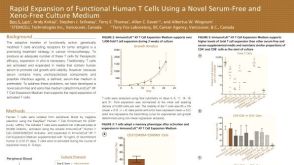 科学海报Rapid Expansion of Functional Human T Cells Using a Novel Serum-Free and Xeno-Free Culture Medium
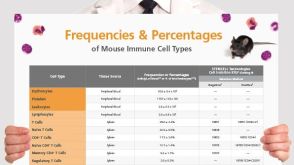 挂图Frequencies and Percentages of Mouse Immune Cell Types List of the frequencies of over 25 immune cell types in C57BL/6 mice
 沪公网安备31010102008431号