Hideshima T et al. (DEC 2003)
Cancer research 63 23 8428--36
Antitumor activity of lysophosphatidic acid acyltransferase-beta inhibitors, a novel class of agents, in multiple myeloma.
In this study,we examined the effects of isoform-specific functional inhibitors of lysophosphatidic acid acyltransferase (LPAAT),which converts lysophosphatidic acid to phosphatidic acid,on multiple myeloma (MM) cell growth and survival. The LPAAT-beta inhibitors CT-32176,CT-32458,and CT-32615 induced textgreater95% growth inhibition (P textless 0.01) in MM.1S,U266,and RPMI8226 MM cell lines,as well as MM cells from patients (IC(50),50-200 nM). We further characterized this LPAAT-beta inhibitory effect using CT-32615,the most potent inhibitor of MM cell growth. CT-32615 triggered apoptosis in MM cells via caspase-8,caspase-3,caspase-7,and poly (ADP-ribose) polymerase cleavage. Neither interleukin 6 nor insulin-like growth factor I inhibited CT-32615-induced apoptosis. Dexamethasone and immunomodulatory derivatives of thalidomide (IMiDs),but not proteasome inhibitor PS-341,augmented MM cell apoptosis triggered by LPAAT-beta inhibitors. CT-32615-induced apoptosis was associated with phosphorylation of p53 and c-Jun NH(2)-terminal kinase (JNK); conversely,JNK inhibitor SP600125 and dominant-negative JNK inhibited CT-32615-induced apoptosis. Importantly,CT-32615 inhibited tumor necrosis factor-alpha-triggered nuclear factor-kappaB activation but did not affect either tumor necrosis factor-alpha-induced p38 mitogen-activated protein kinase phosphorylation or interleukin 6-triggered signal transducers and activators of transcription 3 phosphorylation. Finally,although binding of MM cells to bone marrow stromal cells augments MM cell growth and protects against dexamethasone-induced apoptosis,CT-32615 induced apoptosis even of adherent MM cells. Our data therefore demonstrate for the first time that inhibiting LPAAT-beta induces cytotoxicity in MM cells in the bone marrow milieu,providing the framework for clinical trials of these novel agents in MM.
View Publication
产品号#:
15129
15169
产品名:
RosetteSep™人多发性骨髓瘤细胞富集抗体混合物
RosetteSep™人多发性骨髓瘤细胞富集抗体混合物
Costall B et al. (NOV 1975)
The Journal of pharmacy and pharmacology 27 11 875--7
Dissociation by the aporphine derivatives of the stereotypic and hyperactivity responses resulting from injections into the nucleus accumbens septi.
Ebstein F et al. (JUN 2004)
American journal of respiratory and critical care medicine 169 12 1322--30
Cytotoxic T cell responses against mesothelioma by apoptotic cell-pulsed dendritic cells.
Malignant pleural mesothelioma is an uncommon tumor largely confined to the thoracic cavity,which is resistant to conventional therapies,therefore prompting an intensive search for effective treatment alternatives. This study focuses on dendritic cell (DC) vaccination for malignant pleural mesothelioma and evaluates the in vitro efficacy of antigen-loaded DC-based vaccines for the induction of major histocompatibility complex Class I-restricted antimesothelioma cytotoxic T lymphocyte responses. The source of tumor-associated antigens for HLA-A2(+) DCs from healthy donors was apoptotic HLA-A2(-) mesothelioma cells either lacking or expressing heat shock protein 70 according to whether tumor cells were heat shocked or not before ultraviolet-mediated apoptosis. Our results show that both apoptotic preparations were equivalent regarding the responsiveness of DCs to combined treatment with tumor necrosis factor-alpha and poly(inosinic-cytidylic) acid,as determined by similar increased expression of costimulatory molecules and interleukin-12 production. However,only DCs loaded with apoptotic heat shock protein 70-expressing cells were found to be potent in vitro inducers of cytotoxic T lymphocyte activity against HLA-A2(+) mesothelioma cells. Such elicited cytotoxic T lymphocytes also exhibit cytotoxic activity against an HLA-A2(+) melanoma cell line,suggesting recognition of shared antigens. These findings therefore carry the potential of offering an alternative,promising approach for the therapy of patients with malignant pleural mesothelioma.
View Publication
产品号#:
15028
15068
产品名:
RosetteSep™人单核细胞富集抗体混合物
RosetteSep™人单核细胞富集抗体混合物
Bhattacharyya S et al. (AUG 2004)
Blood 104 4 1100--9
Immunoregulation of dendritic cells by IL-10 is mediated through suppression of the PI3K/Akt pathway and of IkappaB kinase activity.
Interleukin-10 (IL-10) has potent immunoregulatory effects on the maturation and the antigen-presenting cell (APC) function of dendritic cells (DCs). The molecular basis underlying these effects in DCs,however,is ill defined. It is well established that the transcription factor NF-kappaB is a key regulator of DC development,maturation,and APC function. This study was initiated to determine the effects of IL-10 on the NF-kappaB signaling pathway in immature DCs. IL-10 pretreatment of myeloid DCs cultured from bone marrow resulted in reduced DNA binding and nuclear translocation of NF-kappaB after anti-CD40 antibody or lipopolysaccharide (LPS) stimulation. Furthermore,inhibited NF-kappaB activation was characterized by reduced degradation,phosphorylation,or both of IkappaBalpha and IkappaBepsilon but not IkappaBbeta and by reduced phosphorylation of Ser536,located in the trans-activation domain of p65. Notably,IL-10-mediated inhibition of NF-kappaB coincided with suppressed IkappaB kinase (IKK) activity in vitro. Furthermore,IL-10 blocked inducible Akt phosphorylation,and inhibitors of phosphatidylinositol 3-kinase (PI3K) effectively suppressed the activation of Akt,IKK,and NF-kappaB. These findings demonstrate that IL-10 targets IKK activation in immature DCs and that suppressing the PI3K pathway in part mediates blockade of the pathway.
View Publication


 EasySep™小鼠TIL(CD45)正选试剂盒




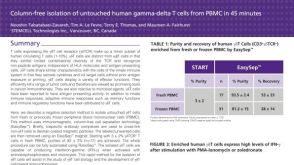
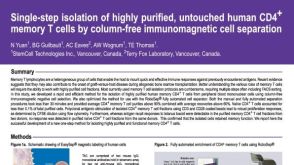 科学海报Cell Isolation of Human CD4+ Memory T Cells By Column-Free Immunomagnetic Cell Separation
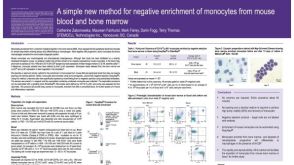 科学海报Method for Negative Enrichment of Monocytes from Mouse Blood and Bone Marrow
 挂图Antigen Processing and Presentation Overview of the mechanisms by which antigens are processed and presented to T cells
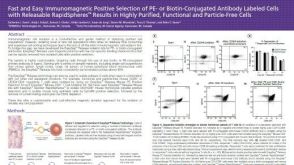 科学海报Positive Selection of PE- or Biotin-Conjugated Antibody Labeled Cells with Releasable Rapidspheres™


 沪公网安备31010102008431号