Shreffler WG et al. (SEP 2006)
Journal of immunology (Baltimore,Md. : 1950) 177 6 3677--85
The major glycoprotein allergen from Arachis hypogaea, Ara h 1, is a ligand of dendritic cell-specific ICAM-grabbing nonintegrin and acts as a Th2 adjuvant in vitro.
Nonmammalian glycan structures from helminths act as Th2 adjuvants. Some of these structures are also common on plant glycoproteins. We hypothesized that glycan structures present on peanut glycoallergens act as Th2 adjuvants. Peanut Ag (PNAg),but not deglycosylated PNAg,activated monocyte-derived dendritic cells (MDDCs) as measured by MHC/costimulatory molecule up-regulation,and by their ability to drive T cell proliferation. Furthermore,PNAg-activated MDDCs induced 2- to 3-fold more IL-4- and IL-13-secreting Th2 cells than immature or TNF/IL-1-activated MDDCs when cultured with naive CD4+ T cells. Human MDDCs rapidly internalized Ag in a calcium- and glycan-dependent manner consistent with recognition by C-type lectin. Dendritic cell (DC)-specific ICAM-grabbing nonintegrin (DC-SIGN) (CD209) was shown to recognize PNAg by enhanced uptake in transfected cell lines. To identify the DC-SIGN ligand from unfractionated PNAg,we expressed the extracellular portion of DC-SIGN as an Fc-fusion protein and used it to immunoprecipitate PNAg. A single glycoprotein was pulled down in a calcium-dependent manner,and its identity as Ara h 1 was proven by immunolabeling and mass spectrometry. Purified Ara h 1 was found to be sufficient for the induction of MDDCs that prime Th2-skewed T cell responses. Both PNAg and purified Ara h 1 induced Erk 1/2 phosphorylation of MDDCs,consistent with previous reports on the effect of Th2 adjuvants on DCs.
View Publication
Effector T Cells Abrogate Stroma-Mediated Chemoresistance in Ovarian Cancer.
Effector T cells and fibroblasts are major components in the tumor microenvironment. The means through which these cellular interactions affect chemoresistance is unclear. Here,we show that fibroblasts diminish nuclear accumulation of platinum in ovarian cancer cells,resulting in resistance to platinum-based chemotherapy. We demonstrate that glutathione and cysteine released by fibroblasts contribute to this resistance. CD8(+) T cells abolish the resistance by altering glutathione and cystine metabolism in fibroblasts. CD8(+) T-cell-derived interferon (IFN)γ controls fibroblast glutathione and cysteine through upregulation of gamma-glutamyltransferases and transcriptional repression of system xc(-) cystine and glutamate antiporter via the JAK/STAT1 pathway. The presence of stromal fibroblasts and CD8(+) T cells is negatively and positively associated with ovarian cancer patient survival,respectively. Thus,our work uncovers a mode of action for effector T cells: they abrogate stromal-mediated chemoresistance. Capitalizing upon the interplay between chemotherapy and immunotherapy holds high potential for cancer treatment.
View Publication
产品号#:
17953
17953RF
15022
15062
100-0710
产品名:
EasySep™人CD8+ T细胞分选试剂盒
RoboSep™ 人CD8+ T细胞分选试剂盒
RosetteSep™人CD4+ T细胞富集抗体混合物
RosetteSep™人CD4+ T细胞富集抗体混合物
EasySep™人CD8+ T细胞分选试剂盒
Yamin R et al. (MAY 2016)
Cell Reports 15 7 1542--53
HCMV vCXCL1 Binds Several Chemokine Receptors and Preferentially Attracts Neutrophils over NK Cells by Interacting with CXCR2.
HCMV is a highly sophisticated virus that has developed various mechanisms for immune evasion and viral dissemination throughout the body (partially mediated by neutrophils). NK cells play an important role in elimination of HCMV-infected cells. Both neutrophils and NK cells utilize similar sets of chemokine receptors to traffic,to and from,various organs. However,the mechanisms by which HCMV attracts neutrophils and not NK cells are largely unknown. Here,we show a unique viral protein,vCXCL1,which targets three chemokine receptors: CXCR1 and CXCR2 expressed on neutrophils and CXCR1 and CX3CR1 expressed on NK cells. Although vCXCL1 attracted both cell types,neutrophils migrated faster and more efficiently than NK cells through the binding of CXCR2. Therefore,we propose that HCMV has developed vCXCL1 to orchestrate its rapid systemic dissemination through preferential attraction of neutrophils and uses alternative mechanisms to counteract the later attraction of NK cells.
View Publication
产品号#:
19055
19055RF
产品名:
EasySep™人NK细胞富集试剂盒
RoboSep™ 人NK细胞富集试剂盒含滤芯吸头
Ben-Shaanan TL et al. (JUL 2016)
Nature medicine
Activation of the reward system boosts innate and adaptive immunity.
Positive expectations contribute to the clinical benefits of the placebo effect. Such positive expectations are mediated by the brain's reward system; however,it remains unknown whether and how reward system activation affects the body's physiology and,specifically,immunity. Here we show that activation of the ventral tegmental area (VTA),a key component of the reward system,strengthens immunological host defense. We used 'designer receptors exclusively activated by designer drugs' (DREADDs) to directly activate dopaminergic neurons in the mouse VTA and characterized the subsequent immune response after exposure to bacteria (Escherichia coli),using time-of-flight mass cytometry (CyTOF) and functional assays. We found an increase in innate and adaptive immune responses that were manifested by enhanced antibacterial activity of monocytes and macrophages,reduced in vivo bacterial load and a heightened T cell response in the mouse model of delayed-type hypersensitivity. By chemically ablating the sympathetic nervous system (SNS),we showed that the reward system's effects on immunity are,at least partly,mediated by the SNS. Thus,our findings establish a causal relationship between the activity of the VTA and the immune response to bacterial infection.
View Publication
产品号#:
19851
19851RF
19861
19861RF
产品名:
EasySep™小鼠T细胞分选试剂盒
RoboSep™ 小鼠T细胞分选试剂盒
EasySep™小鼠单核细胞分选试剂盒
RoboSep™ 小鼠单核细胞分选试剂盒
Martinez-Gonzalez I et al. (JUL 2016)
Immunity 45 1 198--208
Allergen-Experienced Group 2 Innate Lymphoid Cells Acquire Memory-like Properties and Enhance Allergic Lung Inflammation.
Group 2 innate lymphoid cells (ILC2s) in the lung are stimulated by inhaled allergens. ILC2s do not directly recognize allergens but they are stimulated by cytokines including interleukin (IL)-33 released by damaged epithelium. In response to allergens,lung ILC2s produce T helper 2 cell type cytokines inducing T cell-independent allergic lung inflammation. Here we examined the fate of lung ILC2s upon allergen challenges. ILC2s proliferated and secreted cytokines upon initial stimulation with allergen or IL-33,and this phase was followed by a contraction phase as cytokine production ceased. Some ILC2s persisted long after the resolution of the inflammation as allergen-experienced ILC2s and responded to unrelated allergens more potently than naive ILC2s,mediating severe allergic inflammation. The allergen-experienced ILC2s exhibited a gene expression profile similar to that of memory T cells. The memory-like properties of allergen-experienced ILC2s may explain why asthma patients are often sensitized to multiple allergens.
View Publication
产品号#:
19842
产品名:
EasySep™小鼠ILC2富集试剂盒
Mkhikian H et al. (JAN 2011)
Nature communications 2 334
Genetics and the environment converge to dysregulate N-glycosylation in multiple sclerosis.
How environmental factors combine with genetic risk at the molecular level to promote complex trait diseases such as multiple sclerosis (MS) is largely unknown. In mice,N-glycan branching by the Golgi enzymes Mgat1 and/or Mgat5 prevents T cell hyperactivity,cytotoxic T-lymphocyte antigen 4 (CTLA-4) endocytosis,spontaneous inflammatory demyelination and neurodegeneration,the latter pathologies characteristic of MS. Here we show that MS risk modulators converge to alter N-glycosylation and/or CTLA-4 surface retention conditional on metabolism and vitamin D(3),including genetic variants in interleukin-7 receptor-α (IL7RA*C),interleukin-2 receptor-α (IL2RA*T),MGAT1 (IV(A)V(T-T)) and CTLA-4 (Thr17Ala). Downregulation of Mgat1 by IL7RA*C and IL2RA*T is opposed by MGAT1 (IV(A)V(T-T)) and vitamin D(3),optimizing branching and mitigating MS risk when combined with enhanced CTLA-4 N-glycosylation by CTLA-4 Thr17. Our data suggest a molecular mechanism in MS whereby multiple environmental and genetic inputs lead to dysregulation of a final common pathway,namely N-glycosylation.
View Publication
产品号#:
15021
15061
产品名:
RosetteSep™人T细胞富集抗体混合物
RosetteSep™人T细胞富集抗体混合物
Li MMH et al. (NOV 2016)
The Journal of experimental medicine
Interferon regulatory factor 2 protects mice from lethal viral neuroinvasion.
The host responds to virus infection by activating type I interferon (IFN) signaling leading to expression of IFN-stimulated genes (ISGs). Dysregulation of the IFN response results in inflammatory diseases and chronic infections. In this study,we demonstrate that IFN regulatory factor 2 (IRF2),an ISG and a negative regulator of IFN signaling,influences alphavirus neuroinvasion and pathogenesis. A Sindbis virus strain that in wild-type (WT) mice only causes disease when injected into the brain leads to lethal encephalitis in Irf2(-/-) mice after peripheral inoculation. Irf2(-/-) mice fail to control virus replication and recruit immune infiltrates into the brain. Reduced B cells and virus-specific IgG are observed in the Irf2(-/-) mouse brains despite the presence of peripheral neutralizing antibodies,suggesting a defect in B cell trafficking to the central nervous system (CNS). B cell-deficient μMT mice are significantly more susceptible to viral infection,yet WT B cells and serum are unable to rescue the Irf2(-/-) mice. Collectively,our data demonstrate that proper localization of B cells and local production of antibodies in the CNS are required for protection. The work advances our understanding of host mechanisms that affect viral neuroinvasion and their contribution to immunity against CNS infections.
View Publication
产品号#:
19854
19854RF
产品名:
EasySep™小鼠B细胞分选试剂盒
RoboSep™ 小鼠B细胞分选试剂盒
T. Ulas et al. (MAY 2017)
Nature immunology
S100-alarmin-induced innate immune programming protects newborn infants from sepsis.
The high risk of neonatal death from sepsis is thought to result from impaired responses by innate immune cells; however,the clinical observation of hyperinflammatory courses of neonatal sepsis contradicts this concept. Using transcriptomic,epigenetic and immunological approaches,we demonstrated that high amounts of the perinatal alarmins S100A8 and S100A9 specifically altered MyD88-dependent proinflammatory gene programs. S100 programming prevented hyperinflammatory responses without impairing pathogen defense. TRIF-adaptor-dependent regulatory genes remained unaffected by perinatal S100 programming and responded strongly to lipopolysaccharide,but were barely expressed. Steady-state expression of TRIF-dependent genes increased only gradually during the first year of life in human neonates,shifting immune regulation toward the adult phenotype. Disruption of this critical sequence of transient alarmin programming and subsequent reprogramming of regulatory pathways increased the risk of hyperinflammation and sepsis. Collectively these data suggest that neonates are characterized by a selective,transient microbial unresponsiveness that prevents harmful hyperinflammation in the delicate neonate while allowing for sufficient immunological protection.
View Publication
产品号#:
19669
19669RF
产品名:
EasySep™ Direct人单核细胞分选试剂盒
RoboSep™ Direct人单核细胞分选试剂盒
Ichikawa S et al. (MAY 2011)
Journal of immunology (Baltimore,Md. : 1950) 186 10 5549--55
Hepatic stellate cells function as regulatory bystanders.
Regulatory T cells (Tregs) contribute significantly to the tolerogenic nature of the liver. The mechanisms,however,underlying liver-associated Treg induction are still elusive. We recently identified the vitamin A metabolite,retinoic acid (RA),as a key controller that promotes TGF-β-dependent Foxp3(+) Treg induction but inhibits TGF-β-driven Th17 differentiation. To investigate whether the RA producing hepatic stellate cells (HSC) are part of the liver tolerance mechanism,we investigated the ability of HSC to function as regulatory APC. Different from previous reports,we found that highly purified HSC did not express costimulatory molecules and only upregulated MHC class II after in vitro culture in the presence of exogenous IFN-γ. Consistent with an insufficient APC function,HSC failed to stimulate naive OT-II TCR transgenic CD4(+) T cells and only moderately stimulated α-galactosylceramide-primed invariant NKT cells. In contrast,HSC functioned as regulatory bystanders and promoted enhanced Foxp3 induction by OT-II TCR transgenic T cells primed by spleen dendritic cells,whereas they greatly inhibited the Th17 differentiation. Furthermore,the regulatory bystander capacity of the HSC was completely dependent on their ability to produce RA. Our data thus suggest that HSC can function as regulatory bystanders,and therefore,by promoting Tregs and suppressing Th17 differentiation,they might represent key players in the mechanism that drives liver-induced tolerance.
View Publication
产品号#:
01700
01705
01701
01702
19755
产品名:
ALDEFLUOR™ 试剂盒
ALDEFLUOR™ DEAB试剂, 1.5 mM, 1 mL
ALDEFLUOR™检测缓冲液
Jin Q et al. (SEP 2011)
Virology 417 2 449--56
Role for the conserved N-terminal cysteines in the anti-chemokine activities by the chemokine-like protein MC148R1 encoded by Molluscum contagiosum virus.
Molluscum contagiosum poxvirus (MCV) type 1 and type 2 encode two chemokine-like proteins MC148R1 and MC148R2. It is believed that MC148R proteins function by blocking the inflammatory response. However,the mechanism of the proposed biological activities of MC148R proteins and the role of the additional C-terminal cysteines that do not exist in other chemokines are not understood. Here,we demonstrated in two different assay systems that His-tagged MC148R1 displaces the interaction between CXCL12α and CXCR4. The N-terminal cysteines but not the additional C-terminal cysteines modulate this displacement. His-tagged MC148R1 blocked both CXCL12α-mediated and MIP-1α-mediated chemotaxis. In contrast,MC148R2 blocked MIP-1α-mediated but not CXCL12α-mediated chemotaxis. Immunoprecipitation by antibodies to MC148R1 or CXCL12α followed by immunoblotting and detection by antibodies to the other protein demonstrated physical interaction of His-tagged CXCL12α and His-tagged MC148R1. Interaction with chemokines might mask the receptor interaction site resulting in decreased binding and impairment of the biological activities.
View Publication


 EasySep™小鼠TIL(CD45)正选试剂盒




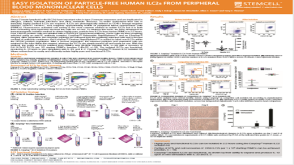 科学海报Easy Isolation of Particle-Free Human ILC2s from Peripheral Blood Mononuclear Cells
 科学海报A Robust, Xeno- and Feeder-Free Culture System for Expansion of Human Peripheral Blood NK Cells
 沪公网安备31010102008431号