Overexpression of a cell adhesion molecule, TSLC1, as a possible molecular marker for acute-type adult T-cell leukemia.
Adult T-cell leukemia (ATL) caused by human T-cell leukemia virus type 1 (HTLV-1) infection,occurs in 2% to 4% of the HTLV-1 carriers with a long latent period,suggesting that additional alterations participate in the development of ATL. To characterize and identify novel markers of ATL,we examined the expression profiles of more than 12 000 genes in 8 cases of acute-type ATL using microarray. One hundred ninety-two genes containing interleukin 2 (IL-2) receptor alpha were up-regulated more than 2-fold compared with CD4(+) and CD4(+)CD45RO(+) T cells,and tumor suppressor in lung cancer 1 (TSLC1),caveolin 1,and prostaglandin D2 synthase showed increased expression of more than 30-fold. TSLC1 is a cell adhesion molecule originally identified as a tumor suppressor in the lung but lacks its expression in normal or activated T cells. We confirmed ectopic expression of the TSLC1 in all acute-type ATL cells and in 7 of 10 ATL- or HTLV-1-infected T-cell lines. Introduction of TSLC1 into a human ATL cell line ED enhanced both self-aggregation and adhesion ability to vascular endothelial cells. These results suggested that the ectopic expression of TSLC1 could provide a novel marker for acute-type ATL and may participate in tissue invasion,a characteristic feature of the malignant ATL cells.
View Publication
产品号#:
15022
15062
产品名:
RosetteSep™人CD4+ T细胞富集抗体混合物
RosetteSep™人CD4+ T细胞富集抗体混合物
Frelin C et al. (JAN 2005)
Blood 105 2 804--11
Targeting NF-kappaB activation via pharmacologic inhibition of IKK2-induced apoptosis of human acute myeloid leukemia cells.
Acute myeloid leukemia (AML) cells are characterized by a constitutive and abnormal activation of the nuclear factor-kappaB (NF-kappaB) transcription factor. This study,conducted in vitro on 18 patients,shows that targeting the IKB kinase 2 (IKK2) kinase with the specific pharmacologic inhibitor AS602868 to block NF-kappaB activation led to apoptosis of human primary AML cells. Moreover,AS602868 potentiated the apoptotic response induced by the current chemotherapeutic drugs doxorubicin,cytarabine,or etoposide (VP16). AS602868-induced cell death was associated with rupture of the mitochondrial transmembrane potential and activation of cellular caspases. NF-kappaB inhibition did not affect normal CD34+ hematopoietic precursors,suggesting that it could represent a new adjuvant strategy for AML treatment.
View Publication
产品号#:
15026
15066
产品名:
RosetteSep™人造血祖细胞富集抗体混合物
RosetteSep™人造血祖细胞富集抗体混合物
Bonaparte MI and Barker E (OCT 2004)
Blood 104 7 2087--94
Killing of human immunodeficiency virus-infected primary T-cell blasts by autologous natural killer cells is dependent on the ability of the virus to alter the expression of major histocompatibility complex class I molecules.
In the current study,we evaluated whether the capacity of HIV to modulate major histocompatibility complex (MHC) class I molecules has an impact on the ability of autologous natural killer (NK) cells to kill the HIV-infected cells. Analysis of HIV-infected T-cell blasts revealed that the decrease in MHC class I molecules on the infected cell surface was selective. HLA-A and -B were decreased on cells infected with HIV strains that could decrease MHC class I molecules,whereas HLA-C and -E remained on the surface. Blocking the interaction between HLA-C and -E and their corresponding inhibitory receptors increased NK cell killing of T-cell blasts infected with HIV strains that reduced MHC class I molecules. Moreover,we demonstrate that NK cells lacking HLA-C and -E inhibitory receptors kill T-cell blasts infected with HIV strains that decrease MHC class I molecules. In contrast,NK cells are incapable of destroying T-cell blasts infected with HIV strains that were unable to reduce MHC class I molecules. These findings suggest that NK cells lacking inhibitory receptors to HLA-C and -E kill HIV-infected CD4+ T cells,and they indicate that the capacity of NK cells to destroy HIV-infected cells depends on the ability of the virus to modulate MHC class I molecules.
View Publication
产品号#:
18055
18055RF
产品名:
Rouhi A et al. (MAR 2006)
Journal of immunology (Baltimore,Md. : 1950) 176 5 2991--9
Evidence for epigenetic maintenance of Ly49a monoallelic gene expression.
Although structurally unrelated,the human killer cell Ig-like (KIR) genes and the rodent lectin-like Ly49 genes serve similar functional roles in NK cells. Moreover,both gene families display variegated,monoallelic expression patterns established at the transcriptional level. DNA methylation has been shown to play an important role in maintenance of expression patterns of KIR genes,which have CpG island promoters. The potential role of DNA methylation in expression of Ly49 genes,which have CpG-poor promoters,is unknown. In this study,we show that hypomethylation of the region encompassing the Pro-2 promoter of Ly49a and Ly49c in primary C57BL/6 NK cells correlates with expression of the gene. Using C57BL/6 x BALB/c F1 hybrid mice,we demonstrate that the expressed allele of Ly49a is hypomethylated while the nonexpressed allele is heavily methylated,indicating a role for epigenetics in maintaining monoallelic Ly49 gene expression. Furthermore,the Ly49a Pro-2 region is heavily methylated in fetal NK cells but variably methylated in nonlymphoid tissues. Finally,in apparent contrast to the KIR genes,we show that DNA methylation and the histone acetylation state of the Pro-2 region are strictly linked with Ly49a expression status.
View Publication
产品号#:
18554
18554RF
18564
18564RF
产品名:
Yu S et al. (FEB 2006)
The Journal of experimental medicine 203 2 349--58
B cell-deficient NOD.H-2h4 mice have CD4+CD25+ T regulatory cells that inhibit the development of spontaneous autoimmune thyroiditis.
Wild-type (WT) NOD.H-2h4 mice develop spontaneous autoimmune thyroiditis (SAT) when given 0.05% NaI in their drinking water,whereas B cell-deficient NOD.H-2h4 mice are SAT resistant. To test the hypothesis that resistance of B cell-deficient mice to SAT was due to the activity of regulatory CD4+CD25+ T (T reg) cells activated if autoantigen was initially presented on non-B cells,CD25+ T reg cells were transiently depleted in vivo using anti-CD25. B cell-deficient NOD.H-2h4 mice given three weekly injections of anti-CD25 developed SAT 8 wk after NaI water. Thyroid lesions were similar to those in WT mice except there were no B cells in thyroid infiltrates. WT and B cell-deficient mice had similar numbers of CD4+CD25+Foxp3+ cells. Mice with transgenic nitrophenyl-specific B cells unable to secrete immunoglobulin were also resistant to SAT,and transient depletion of T reg cells resulted in severe SAT with both T and B cells in thyroid infiltrates. T reg cells that inhibit SAT were eliminated by day 3 thymectomy,indicating they belong to the subset of naturally occurring T reg cells. However,T reg cell depletion did not increase SAT severity in WT mice,suggesting that T reg cells may be nonfunctional when effector T cells are activated; i.e.,by autoantigen-presenting B cells.
View Publication
产品号#:
19782
19792
产品名:
Esplugues E et al. (MAY 2003)
The Journal of experimental medicine 197 9 1093--106
Enhanced antitumor immunity in mice deficient in CD69.
We investigated the in vivo role of CD69 by analyzing the susceptibility of CD69-/- mice to tumors. CD69-/- mice challenged with MHC class I- tumors (RMA-S and RM-1) showed greatly reduced tumor growth and prolonged survival compared with wild-type (WT) mice. The enhanced anti-tumor response was NK cell and T lymphocyte-mediated,and was due,at least in part,to an increase in local lymphocytes. Resistance of CD69-/- mice to MHC class I- tumor growth was also associated with increased production of the chemokine MCP-1,diminished TGF-beta production,and decreased lymphocyte apoptosis. Moreover,the in vivo blockade of TGF-beta in WT mice resulted in enhanced anti-tumor response. In addition,CD69 engagement induced NK and T cell production of TGF-beta,directly linking CD69 signaling to TGF-beta regulation. Furthermore,anti-CD69 antibody treatment in WT mice induced a specific down-regulation in CD69 expression that resulted in augmented anti-tumor response. These data unmask a novel role for CD69 as a negative regulator of anti-tumor responses and show the possibility of a novel approach for the therapy of tumors.
View Publication
产品号#:
09500
09600
09650
产品名:
BIT 9500血清替代物
StemSpan™ SFEM
StemSpan™ SFEM
Chan H-W et al. (JAN 2003)
The Journal of experimental medicine 197 2 245--55
DNA methylation maintains allele-specific KIR gene expression in human natural killer cells.
Killer immunoglobulin-like receptors (KIR) bind self-major histocompatibility complex class I molecules,allowing natural killer (NK) cells to recognize aberrant cells that have down-regulated class I. NK cells express variable numbers and combinations of highly homologous clonally restricted KIR genes,but uniformly express KIR2DL4. We show that NK clones express both 2DL4 alleles and either one or both alleles of the clonally restricted KIR 3DL1 and 3DL2 genes. Despite allele-independent expression,3DL1 alleles differed in the core promoter by only one or two nucleotides. Allele-specific 3DL1 gene expression correlated with promoter and 5' gene DNA hypomethylation in NK cells in vitro and in vivo. The DNA methylase inhibitor,5-aza-2'-deoxycytidine,induced KIR DNA hypomethylation and heterogeneous expression of multiple KIR genes. Thus,NK cells use DNA methylation to maintain clonally restricted expression of highly homologous KIR genes and alleles.
View Publication
产品号#:
15025
15065
产品名:
RosetteSep™人NK细胞富集抗体混合物
RosetteSep™人NK细胞富集抗体混合物
Cilliers T et al. (APR 2003)
Journal of virology 77 7 4449--56
The CCR5 and CXCR4 coreceptors are both used by human immunodeficiency virus type 1 primary isolates from subtype C.
Human immunodeficiency virus type 1 (HIV-1) subtype C viruses with different coreceptor usage profiles were isolated from 29 South African patients with advanced AIDS. All 24 R5 isolates were inhibited by the CCR5-specific agents,PRO 140 and RANTES,while the two X4 viruses and the three R5X4 viruses were sensitive to the CXCR4-specific inhibitor,AMD3100. The five X4 or R5X4 viruses were all able to replicate in peripheral blood mononuclear cells that did not express CCR5. When tested using coreceptor-transfected cell lines,one R5 virus was also able to use CXCR6,and another R5X4 virus could use CCR3,BOB/GPR15,and CXCR6. The R5X4 and X4 viruses contained more-diverse V3 loop sequences,with a higher overall positive charge,than the R5 viruses. Hence,some HIV-1 subtype C viruses are able to use CCR5,CXCR4,or both CXCR4 and CCR5 for entry,and they are sensitive to specific inhibitors of entry via these coreceptors. These observations are relevant to understanding the rapid spread of HIV-1 subtype C in the developing world and to the design of intervention and treatment strategies.
View Publication
产品号#:
15023
15063
15623
15663
产品名:
RosetteSep™人CD8+ T细胞富集抗体混合物
RosetteSep™人CD8+ T细胞富集抗体混合物
RosetteSep™人CD8去除抗体混合物
RosetteSep™人CD8去除抗体混合物
Hayashi T et al. (AUG 2003)
Blood 102 4 1435--42
Ex vivo induction of multiple myeloma-specific cytotoxic T lymphocytes.
Multiple myeloma (MM) is an incurable plasma cell malignancy characterized by immunosuppression. In this study,we identified factors in patients' bone marrow (BM) sera inhibiting autologous anti-MM immunity and developed an ex vivo strategy for inducing MM-specific cytotoxic T lymphocytes (CTLs). We found that sera from BM of MM patients inhibited induction of dendritic cells (DCs),evidenced by both phenotype and only weak stimulation of T-cell proliferation. Anti-vascular endothelial growth factor (anti-VEGF) and/or anti-interleukin 6 (anti-IL-6) antibodies neutralized this inhibitory effect,confirming that VEGF and IL-6,at least in part,mediate immunosuppression in MM patients. To induce MM-specific CTLs ex vivo,immature DCs were generated by culture of adherent mononuclear cells in medium containing granulocyte-macrophage colony-stimulating factor (GM-CSF) and IL-4 for 5 days and then cocultured with apoptotic MM bodies in the presence of tumor necrosis factor alpha (TNF-alpha) for 3 days to induce their maturation. Autologous BM or peripheral blood mononuclear cells were stimulated weekly with these DCs,and cytotoxicity was examined against the MM cells used to pulse DCs. DCs cultured with apoptotic bodies stimulated significantly greater T-cell proliferation (stimulation index [SI] = 23.2 at a T-DC ratio of 360:1) than T cells stimulated by MM cells only (SI = 5.6),DCs only (SI = 9.3),or MM lysate-pulsed DCs (SI = 13.5). These CTLs from MM patients demonstrated specific cytotoxicity (24.7% at the effector-target [E/T] ratio of 40:1) against autologous primary MM cells. These studies therefore show that CTLs from MM patients can recognize and lyse autologous tumor cells and provide the framework for novel immunotherapy to improve patient outcome in MM.
View Publication
产品号#:
15129
15169
产品名:
RosetteSep™人多发性骨髓瘤细胞富集抗体混合物
RosetteSep™人多发性骨髓瘤细胞富集抗体混合物
Lim Y-P et al. (SEP 2003)
The Journal of infectious diseases 188 6 919--26
Correlation between mortality and the levels of inter-alpha inhibitors in the plasma of patients with severe sepsis.
Inter-alpha inhibitor protein (IalphaIp) is an endogenous serine protease inhibitor in human plasma. Circulating IalphaIp levels were lower in 51 patients with severe sepsis than in healthy volunteers. Mean levels were 688+/-295 mg/L in patients with severe sepsis who survived (n=32),486+/-193 mg/L in patients with sepsis who died (n=19),and 872+/-234 mg/L in control subjects (n=25). IalphaIp levels were lower in patients with shock versus those without (540+/-246 [n=33] vs. 746+/-290 [n=18] mg/L; P=.0102). IalphaIp levels were inversely correlated with 28-day mortality rates and Acute Physiology and Chronic Health Evaluation II scores and directly correlated with antithrombin III,protein C,and protein S levels. The administration of IalphaIp (30 mg/kg body weight intravenously) increased the 50% lethal dose in mice by 100-fold after an intravenous challenge of Escherichia coli. Thus,human IalphaIp may be a useful predictive marker and potential therapeutic agent in sepsis.
View Publication
产品号#:
03800
03801
03802
03803
03804
03805
03806
产品名:
ClonaCell™-HY杂交瘤试剂盒
ClonaCell™-HY培养基A
ClonaCell™-HY 培养基 B
ClonaCell™-HY 培养基 C
ClonaCell™-HY 培养基 D
ClonaCell™-HY 培养基 E
ClonaCell™-HY PEG
Heinonen KM et al. (MAY 2004)
Blood 103 9 3457--64
T-cell protein tyrosine phosphatase deletion results in progressive systemic inflammatory disease.
The deregulation of the immune response is a critical component in inflammatory disease. Recent in vitro data show that T-cell protein tyrosine phosphatase (TC-PTP) is a negative regulator of cytokine signaling. Furthermore,tc-ptp(-/-) mice display immune defects and die within 5 weeks of birth. We report here that tc-ptp(-/-) mice develop progressive systemic inflammatory disease as shown by chronic myocarditis,gastritis,nephritis,and sialadenitis as well as elevated serum interferon-gamma. The widespread mononuclear cellular infiltrates correlate with exaggerated interferon-gamma,tumor necrosis factor-alpha,interleukin-12,and nitric oxide production in vivo. Macrophages grown from tc-ptp(-/-) mice are inherently hypersensitive to lipopolysaccharide,which can also be detected in vivo as an increased susceptibility to endotoxic shock. These results identify T-cell protein tyrosine phosphatase as a key modulator of inflammatory signals and macrophage function.
View Publication


 EasySep™小鼠TIL(CD45)正选试剂盒




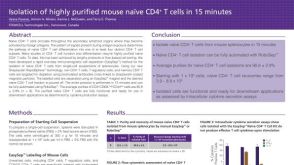 科学海报Immunomagnetic Cell Isolation of Highly Purified Mouse Naïve CD4+ T Cells in 15 Minutes
 沪公网安备31010102008431号