J. Jung et al. (apr 2019)
Cell host microbe 25 4 513--525.e6
Cleaved Cochlin Sequesters Pseudomonas aeruginosa and Activates Innate Immunity in the Inner Ear.
In the inner ear,endolymph fluid surrounds the organ of Corti,which is important for auditory function; notably,even slight environmental changes mediated by trauma or infection can have significant consequences. However,it is unclear how the immune response is modulated in these tissues. Here,we report the local immune surveillance role of cleaved cochlin LCCL (Limulus factor C,Cochlin,and Lgl1) during Pseudomonas aeruginosa infection in the cochlea. Upon infection,the LCCL domain is cleaved from cochlin and secreted into the perilymph. This cleaved fragment sequesters infiltrating bacteria in the scala tympani and subsequently recruits resident immune cells to eliminate the bacteria. Importantly,hearing loss in a cochlin knockout mouse model is remedied by treatment with a cochlin LCCL peptide. These findings suggest cleaved cochlin LCCL constitutes a critical factor in innate immunity and auditory function and may be a potential therapeutic target to treat chronic otitis media-induced hearing loss.
View Publication
产品号#:
19762
19762RF
产品名:
EasySep™小鼠中性粒细胞富集试剂盒
RoboSep™ 小鼠中性粒细胞富集试剂盒含滤芯吸头
N. Kuroda et al. (jun 2019)
Scientific reports 9 1 8568
Infiltrating CCR2+ monocytes and their progenies, fibrocytes, contribute to colon fibrosis by inhibiting collagen degradation through the production of TIMP-1.
Intestinal fibrosis is a serious complication in inflammatory bowel disease (IBD). Despite the remarkable success of recent anti-inflammatory therapies for IBD,incidence of intestinal fibrosis and need for bowel resection have not significantly changed. To clarify the contribution of haematopoietic-derived cells in intestinal fibrosis,we prepared bone marrow (BM) chimeric mice (chimeras),which were reconstituted with BM cells derived from enhanced green fluorescent protein (EGFP)-transgenic mice or CC chemokine receptor 2 (CCR2)-deficient mice. After 2 months of transplantation,BM chimeras were treated with azoxymethane/dextran sodium sulphate. During chronic inflammation,CCR2+ BM-derived monocyte and fibrocyte infiltration into the colon and CC chemokine ligand 2 production increased,leading to colon fibrosis in EGFP BM chimeras. In CCR2-deficient BM chimeras,monocyte and fibrocyte numbers in the colonic lamina propria significantly decreased,and colon fibrosis was attenuated. In colon tissue,mRNA expression of tissue inhibitor of metalloproteinase (TIMP)-1 but not of collagen I,transforming growth factor-beta1 or matrix metalloproteinases was significantly different between the two chimeras. CCR2+ monocytes and fibrocytes showed high Timp1 mRNA expression. Our results suggest that infiltrating CCR2+ monocytes and their progenies,fibrocytes,promote colon fibrosis by inhibiting collagen degradation through TIMP-1 production.
View Publication
产品号#:
19861
19861RF
产品名:
EasySep™小鼠单核细胞分选试剂盒
RoboSep™ 小鼠单核细胞分选试剂盒
A. Lisco et al. (apr 2019)
JCI insight 4 8
Identification of rare HIV-1-infected patients with extreme CD4+ T cell decline despite ART-mediated viral suppression.
BACKGROUND The goal of antiretroviral therapy (ART) is to suppress HIV-1 replication and reconstitute CD4+ T cells. Here,we report on HIV-infected individuals who had a paradoxical decline in CD4+ T cells despite ART-mediated suppression of plasma HIV-1 load (pVL). We defined such an immunological outcome as extreme immune decline (EXID). METHODS EXID's clinical and immunological characteristics were compared to immunological responders (IRs),immunological nonresponders (INRs),healthy controls (HCs),and idiopathic CD4+ lymphopenia (ICL) patients. T cell immunophenotyping and assembly/activation of inflammasomes were evaluated by flow cytometry. PBMC transcriptome analysis and genetic screening for pathogenic variants were performed. Levels of cytokines/chemokines were measured by electrochemiluminescence. Luciferase immunoprecipitation system and NK-mediated antibody-dependent cellular cytotoxicity (ADCC) assays were used to identify anti-lymphocyte autoantibodies. RESULTS EXIDs were infected with non-B HIV-1 subtypes and after 192 weeks of consistent ART-mediated pVL suppression had a median CD4+ decrease of 157 cells/mul,compared with CD4+ increases of 193 cells/mul and 427 cells/mul in INR and IR,respectively. EXID had reduced naive CD4+ T cells,but similar proportions of cycling CD4+ T cells and HLA-DR+CD38+CD8+ T cells compared with IR and INR. Levels of inflammatory cytokines were also similar in EXID and INR,but the IL-7 axis was profoundly perturbed compared with HC,IR,INR,and ICL. Genes involved in T cell and monocyte/macrophage function,autophagy,and cell migration were differentially expressed in EXID. Two of the 5 EXIDs had autoantibodies causing ADCC,while 2 different EXIDs had an increased inflammasome/caspase-1 activation despite consistently ART-suppressed pVL. CONCLUSIONS EXID is a distinct immunological outcome compared with previously described INR. Anti-CD4+ T cell autoantibodies and aberrant inflammasome/caspase-1 activation despite suppressed HIV-1 viremia are among the mechanisms responsible for EXID.
View Publication
产品号#:
17955
17955RF
100-0960
产品名:
EasySep™人NK细胞分选试剂盒
RoboSep™ 人NK细胞分选试剂盒
EasySep™人NK细胞分离试剂盒
A. Lopresti et al. (jun 2019)
JCI insight 5
Sensitive and easy screening for circulating tumor cells by flow cytometry.
Circulating Tumor Cells (CTCs) represent an easy,repeatable and representative access to information regarding solid tumors. However,their detection remains difficult because of their paucity,their short half-life,and the lack of reliable surface biomarkers. Flow cytometry (FC) is a fast,sensitive and affordable technique,ideal for rare cells detection. Adapted to CTCs detection (i.e. extremely rare cells),most FC-based techniques require a time-consuming pre-enrichment step,followed by a 2-hours staining procedure,impeding on the efficiency of CTCs detection. We overcame these caveats and reduced the procedure to less than one hour,with minimal manipulation. First,cells were simultaneously fixed,permeabilized,then stained. Second,using low-speed FC acquisition conditions and two discriminators (cell size and pan-cytokeratin expression),we suppressed the pre-enrichment step. Applied to blood from donors with or without known malignant diseases,this protocol ensures a high recovery of the cells of interest independently of their epithelial-mesenchymal plasticity and can predict which samples are derived from cancer donors. This proof-of-concept study lays the bases of a sensitive tool to detect CTCs from a small amount of blood upstream of in-depth analyses.
View Publication
产品号#:
15122
15162
产品名:
RosetteSep™人CD45去除抗体混合物
RosetteSep™人CD45去除抗体混合物
T. A. Mace et al. (mar 2019)
Scientific reports 9 1 5068
Soy isoflavones and their metabolites modulate cytokine-induced natural killer cell function.
Soybeans are a rich source of isoflavones that have been linked with anti-inflammatory processes and various health benefits. However,specific mechanisms whereby soy bioactives impact immune cell subsets are unclear. Isoflavones,such as genistein and daidzein,are metabolized by microbes to bioactive metabolites as O-desmethylangolensin (O-DMA) and equol,whose presence has been linked to health benefits. We examined how soy isoflavones and metabolites impact natural killer (NK) cell signaling and function. We observe no impact of isoflavones on viability of healthy donor peripheral blood mononuclear cells (PBMCs) or NK cells,even at high (25 µM) concentrations. However,pre-treatment of PBMCs with physiologically-relevant concentrations of genistein (p = 0.0023) and equol (p = 0.006) decreases interleukin (IL)-12/IL-18-induced interferon-gamma (IFN-gamma) production versus controls. Detailed cellular analyses indicate genistein and equol decrease IL-12/IL-18-induced IFN-gamma production by human NK cell subsets,but do not consistently alter cytotoxicity. At the level of signal transduction,genistein decreases IL-12/IL-18-induced total phosphorylated tyrosine,and phosphorylation MAPK pathway components. Further,genistein limits IL-12/IL-18-mediated upregulation of IL-18Ralpha expression on NK cells (p = 0.0109). Finally,in vivo studies revealed that C57BL/6 mice fed a soy-enriched diet produce less plasma IFN-gamma following administration of IL-12/IL-18 versus control-fed animals (p {\textless} 0.0001). This study provides insight into how dietary soy modulates NK cell functions.
View Publication
产品号#:
15025
15065
产品名:
RosetteSep™人NK细胞富集抗体混合物
RosetteSep™人NK细胞富集抗体混合物
D. Park et al. (may 2019)
Scientific reports 9 1 7094
Differences in the molecular signatures of mucosal-associated invariant T cells and conventional T cells.
Mucosal-associated invariant T (MAIT) cells exhibit different characteristics from those of TCRalpha7.2- conventional T cells. They play important roles in various inflammatory diseases,including rheumatoid arthritis and inflammatory bowel disease. MAIT cells express a single T cell receptor alpha chain,TCRalpha7.2 segment associated with Jalpha33 and CDR3 with fixed length,which recognizes bacteria-derived vitamin B metabolites. However,the characteristics of MAIT cells and TCRalpha7.2+ CD161- T cells have never been compared. Here,we performed RNA sequencing to compare the properties of MAIT cells,TCRalpha7.2- conventional T cells and TCRalpha7.2+ CD161- T cells. Genome-wide transcriptomes of MAIT cells,TCRalpha7.2- conventional T cells,and TCRalpha7.2+ CD161- T cells were compared and analyzed using causal network analysis. This is the first report comparing the transcriptomes of MAIT cells,TCRalpha7.2- conventional T cells and TCRalpha7.2+ CD161- T cells. We also identified the predominant signaling pathways of MAIT cells,which differed from those of TCRalpha7.2- conventional T cells and TCRalpha7.2+ CD161- T cells,through a gene set enrichment test and upstream regulator analysis and identified the genes responsible for the characteristic MAIT cell phenotypes. Our study advances the complete understanding of MAIT biology.
View Publication
产品号#:
15021
15061
产品名:
RosetteSep™人T细胞富集抗体混合物
RosetteSep™人T细胞富集抗体混合物
D. M. Previte et al. (apr 2019)
Cell reports 27 1 129--141.e4
Lymphocyte Activation Gene-3 Maintains Mitochondrial and Metabolic Quiescence in Naive CD4+ T Cells.
Lymphocyte activation gene-3 (LAG-3) is an inhibitory receptor expressed by CD4+ T cells and tempers their homeostatic expansion. Because CD4+ T cell proliferation is tightly coupled to bioenergetics,we investigate the role of LAG-3 in modulating naive CD4+ T cell metabolism. LAG-3 deficiency enhances the metabolic profile of naive CD4+ T cells by elevating levels of mitochondrial biogenesis. In vivo,LAG-3 blockade partially restores expansion and the metabolic phenotype of wild-type CD4+ T cells to levels of Lag3-/- CD4+ T cells,solidifying that LAG-3 controls these processes. Lag3-/- CD4+ T cells also demonstrate greater signal transducer and activator of transcription 5 (STAT5) activation,enabling resistance to interleukin-7 (IL-7) deprivation. These results implicate this pathway as a target of LAG-3-mediated inhibition. Additionally,enhancement of STAT5 activation,as a result of LAG-3 deficiency,contributes to greater activation potential in these cells. These results identify an additional mode of regulation elicited by LAG-3 in controlling CD4+ T cell responses.
View Publication


 EasySep™小鼠TIL(CD45)正选试剂盒




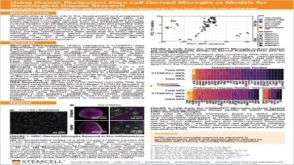 科学海报Using Human Pluripotent Stem Cell-Derived Microglia As Models For Neurological Disease Research


 沪公网安备31010102008431号