Grimaldi JC et al. (JUN 1999)
Journal of Leukocyte Biology 65 6 846--53
Depletion of eosinophils in mice through the use of antibodies specific for C-C chemokine receptor 3 (CCR3).
We have generated rat monoclonal antibodies specific for the mouse eotaxin receptor,C-C chemokine receptor 3 (CCR3). Several anti-CCR3 mAbs proved to be useful for in vivo depletion of CCR3-expressing cells and immunofluorescent staining. In vivo CCR3 mAbs of the IgG2b isotype substantially depleted blood eosinophil levels in Nippostrongyus brasiliensis-infected mice. Repeated anti-CCR3 mAb treatment in these mice significantly reduced tissue eosinophilia in the lung tissue and bronchoalveolar lavage fluid. Flow cytometry revealed that mCCR3 was expressed on eosinophils but not on stem cells,dendritic cells,or cells from the thymus,lymph node,or spleen of normal mice. Unlike human Th2 cells,mouse Th2 cells did not express detectable levels of CCR3 nor did they give a measurable response to eotaxin. None of the mAbs were antagonists or agonists of CCR3 calcium mobilization. To our knowledge,the antibodies described here are the first mAbs reported to be specific for mouse eosinophils and to be readily applicable for the detection,isolation,and in vivo depletion of eosinophils.
View Publication
产品号#:
03800
03801
03802
03803
03804
03805
03806
产品名:
ClonaCell™-HY杂交瘤试剂盒
ClonaCell™-HY培养基A
ClonaCell™-HY 培养基 B
ClonaCell™-HY 培养基 C
ClonaCell™-HY 培养基 D
ClonaCell™-HY 培养基 E
ClonaCell™-HY PEG
Brandl M et al. (AUG 1999)
Experimental hematology 27 8 1264--70
Bispecific antibody fragments with CD20 X CD28 specificity allow effective autologous and allogeneic T-cell activation against malignant cells in peripheral blood and bone marrow cultures from patients with B-cell lineage leukemia and lymphoma.
Bispecific antibodies directed against tumor-associated target antigens and to surface receptors mediating T-cell activation,such as the TCR/CD3 complex and the costimulatory receptor CD28,are capable of mediating T-cell activation resulting in tumor cell killing. In this study,we used the B-cell-associated antigens CD19 and CD20 as target structures on human leukemic cells. We found that a combination of bispecific antibody fragments (bsFab2) with target x CD3 and target x CD28 specificity induces vigorous autologous T-cell activation and killing of malignant cells in peripheral blood and bone marrow cultures from patients with chronic lymphocytic leukemia and follicular lymphoma. The bsFab2 targeting CD20 were considerably more effective than those binding to CD19. The colony-forming capacity of treated bone marrow was impaired due to large amounts of tumor necrosis factor alpha produced during bsFab2-induced T-cell activation. Neutralizing tumor necrosis factor alpha antibodies were found to reverse this negative effect without affecting T-cell activation and tumor cell killing. CD20 x CD28 bsFab2,when used alone rather than in combination,markedly improved the recognition of leukemic cells by allogeneic T cells. Therefore,these reagents may be capable of enhancing the immunogenicity of leukemic cells in general and,in particular,of increasing the antileukemic activity of allogeneic donor buffy coat cells in relapsed bone marrow transplanted patients.
View Publication
产品号#:
04431
产品名:
MethoCult™ H4431
Izard J et al. (FEB 2001)
Journal of Bacteriology 183 3 1078--84
Cytoplasmic filament-deficient mutant of Treponema denticola has pleiotropic defects
In Treponema denticola,a ribbon-like structure of cytoplasmic filaments spans the cytoplasm at all stages of the cell division process. Insertional inactivation was used as a first step to determine the function of the cytoplasmic filaments. A suicide plasmid was constructed that contained part of cfpA and a nonpolar erythromycin resistance cassette (ermF and ermAM) inserted near the beginning of the gene. The plasmid was electroporated into T. denticola,and double- crossover recombinants which had the chromosomal copy of cfpA insertionally inactivated were selected. Immunoblotting and electron microscopy confirmed the lack of cytoplasmic filaments. The mutant was further analyzed by dark-field microscopy to determine cell morphology and by the binding of two fluorescent dyes to DNA to assess the distribution of cellular nucleic acids. The cytoplasmic filament protein-deficient mutant exhibited pleiotropic defects,including highly condensed chromosomal DNA,compared to the homogeneous distribution of the DNA throughout the cytoplasm in a wild-type cell. Moreover,chains of cells are formed by the cytoplasmic filament- deficient mutant,and those cells show reduced spreading in agarose,which may be due to the abnormal cell length. The chains of cells and the highly condensed chromosomal DNA suggest that the cytoplasmic filaments may be involved in chromosome structure,segregation,or the cell division process in Treponema.
View Publication
产品号#:
03800
03801
03802
03803
03804
03805
03806
产品名:
ClonaCell™-HY杂交瘤试剂盒
ClonaCell™-HY培养基A
ClonaCell™-HY 培养基 B
ClonaCell™-HY 培养基 C
ClonaCell™-HY 培养基 D
ClonaCell™-HY 培养基 E
ClonaCell™-HY PEG
Garcí et al. ( 2014)
Journal of General Virology 95 PART 5 1033--42
Characterization of an enhanced antigenic change in the pandemic 2009 H1N1 influenza virus haemagglutinin
Murine hybridomas producing neutralizing mAbs specific to the pandemic influenza virus A/California/07/2009 haemagglutinin (HA) were isolated. These antibodies recognized at least two different but overlapping new epitopes that were conserved in the HA of most Spanish pandemic isolates. However,one of these isolates (A/Extremadura/RR6530/2010) lacked reactivity with the mAbs and carried two unique mutations in the HA head (S88Y and K136N) that were required simultaneously to eliminate reactivity with the murine antibodies. This unusual requirement directly illustrates the phenomenon of enhanced antigenic change proposed previously for the accumulation of simultaneous amino acid substitutions at antigenic sites of the influenza A virus HA during virus evolution (Shih et al.,Proc Natl Acad Sci USA,104,6283-6288,2007). The changes found in the A/Extremadura/RR6530/2010 HA were not found in escape mutants selected in vitro with one of the mAbs,which contained instead nearby single amino acid changes in the HA head. Thus,either single or double point mutations may similarly alter epitopes of the new antigenic site identified in this work in the 2009 H1N1 pandemic virus HA. Moreover,this site is relevant for the human antibody response,as shown by competition of mAbs and human post-infection sera for virus binding. The results are discussed in the context of the HA antigenic structure and challenges posed for identification of sequence changes with possible antigenic impact during virus surveillance.
View Publication
产品号#:
03805
03806
03831
03800
产品名:
ClonaCell™-HY 培养基 E
ClonaCell™-HY PEG
ClonaCell™-HY 液体 HAT 筛选培养基
ClonaCell™-HY杂交瘤试剂盒
Callahan KP et al. (OCT 2014)
Leukemia 28 10 1960--8
Flavaglines target primitive leukemia cells and enhance anti-leukemia drug activity.
Identification of agents that target human leukemia stem cells is an important consideration for the development of new therapies. The present study demonstrates that rocaglamide and silvestrol,closely related natural products from the flavagline class of compounds,are able to preferentially kill functionally defined leukemia stem cells,while sparing normal stem and progenitor cells. In addition to efficacy as single agents,flavaglines sensitize leukemia cells to several anticancer compounds,including front-line chemotherapeutic drugs used to treat leukemia patients. Mechanistic studies indicate that flavaglines strongly inhibit protein synthesis,leading to the reduction of short-lived antiapoptotic proteins. Notably though,treatment with flavaglines,alone or in combination with other drugs,yields a much stronger cytotoxic activity toward leukemia cells than the translational inhibitor temsirolimus. These results indicate that the underlying cell death mechanism of flavaglines is more complex than simply inhibiting general protein translation. Global gene expression profiling and cell biological assays identified Myc inhibition and the disruption of mitochondrial integrity to be features of flavaglines,which we propose contribute to their efficacy in targeting leukemia cells. Taken together,these findings indicate that rocaglamide and silvestrol are distinct from clinically available translational inhibitors and represent promising candidates for the treatment of leukemia.
View Publication
产品号#:
07930
07931
07940
07955
07956
07959
07954
100-1061
07952
产品名:
CryoStor® CS10
CryoStor® CS10
CryoStor® CS10
CryoStor® CS10
CryoStor® CS10
CryoStor® CS10
CryoStor® CS10
Chatzouli M et al. ( 2014)
The Journal of Immunology 192 10 4518--4524
Heterogeneous Functional Effects of Concomitant B Cell Receptor and TLR Stimulation in Chronic Lymphocytic Leukemia with Mutated versus Unmutated Ig Genes
We recently reported that chronic lymphocytic leukemia (CLL) subgroups with distinct clonotypic BCRs present discrete patterns of TLR expression,function,and/or tolerance. In this study,to explore whether specific types of BCR/TLR collaboration exist in CLL,we studied the effect of single versus concomitant BCR and/or TLR stimulation on CLL cells from mutated (M-CLL) and unmutated CLL (U-CLL) cases. We stimulated negatively isolated CLL cells by using anti-IgM,imiquimod,and CpG oligodeoxynucleotide for BCR,TLR7,and TLR9,respectively,alone or in combination for different time points. After in vitro culture in the absence of stimulation,differences in p-ERK were identified at any time point,with higher p-ERK levels in U-CLL versus M-CLL. Pronounced p-ERK induction was seen by single stimulation in U-CLL,whereas BCR/TLR synergism was required in
View Publication
产品号#:
15024
15064
产品名:
RosetteSep™人B细胞富集抗体混合物
RosetteSep™人B细胞富集抗体混合物
Kofanova OA et al. (JUN 2014)
Biopreservation and biobanking 12 3 206--16
Viable mononuclear cell stability study for implementation in a proficiency testing program: impact of shipment conditions.
The impact of shipping temperatures and preservation media used during transport of either peripheral blood mononuclear cells (PBMCs) or Jurkat cells was assessed,in view of implementing of a proficiency testing scheme on mononuclear cell viability. Samples were analyzed before and after shipment at different temperatures (ambient temperature,dry ice,and liquid nitrogen) and in different preservation media (serum with cryoprotectant,commercial cryopreservation solution,and room temperature transport medium). Sample quality was assessed by viability assays (Trypan Blue dye exclusion,flow cytometry,Cell Analysis System cell counting (CASY)),and by ELISpot functional assay. The liquid nitrogen storage and shipment were found to be the most stable conditions to preserve cell viability and functionality. However,we show that alternative high quality shipment conditions for viable cells are dry ice shipment and commercial cryopreservation solution. These were also cost-efficient shipment conditions,satisfying the requirements of a proficiency testing scheme for viable mononuclear cells. Room temperature transport medium dramatically and adversely affected the integrity of mononuclear cells.
View Publication


 EasySep™小鼠TIL(CD45)正选试剂盒






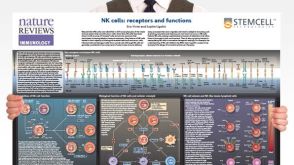 挂图Natural Killer Cells Overview of NK cell receptors, subsets, activation and function
 沪公网安备31010102008431号