Chuck MI et al. (MAR 2010)
Journal of immunology (Baltimore,Md. : 1950) 184 5 2476--86
The role of the LAT-PLC-gamma1 interaction in T regulatory cell function.
The interaction between the linker for activation of T cells (LAT) with PLC-gamma1 is important for TCR-mediated Ca(2+) signaling and MAPK activation. Knock-in mice harboring a mutation at the PLC-gamma1 binding site (Y136) of LAT develop a severe lymphoproliferative syndrome. These mice have defective thymic development and selection and lack natural regulatory T cells,implicating a breakdown of both central and peripheral tolerance. To bypass this developmental defect,we developed a conditional knock-in line in which only LATY136F is expressed in mature T cells after deletion of the wild type LAT allele. Analysis of LATY136F T cells indicated that the interaction between LAT and PLC-gamma1 plays an important role in TCR-mediated signaling,proliferation,and IL-2 production. Furthermore,the deletion of LAT induced development of the lymphoproliferative syndrome in these mice. Although Foxp3(+) natural Treg cells were present in these mice after deletion,they were unable to suppress the proliferation of conventional T cells. Our data indicate that the binding of LAT to PLC-gamma1 is essential for the suppressive function of CD4(+)CD25(+) regulatory T cells.
View Publication
产品号#:
19782
19792
产品名:
Wagner MJ and Smiley JR (DEC 2009)
Journal of virology 83 23 12452--61
Herpes simplex virus requires VP11/12 to induce phosphorylation of the activation loop tyrosine (Y394) of the Src family kinase Lck in T lymphocytes.
Herpes simplex virus (HSV) tegument proteins are released into the cytoplasm during viral entry and hence are among the first viral proteins encountered by an infected cell. Despite the implied importance of these proteins in the evasion of host defenses,the function of some,like virion protein 11/12 (VP11/12),have not been clearly defined. Previously,we reported that VP11/12 is strongly tyrosine phosphorylated during the infection of lymphocytes but not in fibroblasts or an epithelial cell line (G. Zahariadis,M. J. Wagner,R. C. Doepker,J. M. Maciejko,C. M. Crider,K. R. Jerome,and J. R. Smiley,J. Virol. 82:6098-6108,2008). We also showed that tyrosine phosphorylation depends in part on the activity of the lymphocyte-specific Src family kinase (SFK) Lck in Jurkat T cells. These data suggested that VP11/12 is a substrate of Lck and that Lck is activated during HSV infection. Here,we show that HSV infection markedly increases the fraction of Lck phosphorylated on its activation loop tyrosine (Y394),a feature characteristic of activated Lck. A previous report implicated the immediate-early protein ICP0 and the viral serine/threonine kinases US3 and UL13 in the induction of a similar activated phenotype of SFKs other than Lck in fibroblasts and suggested that ICP0 interacts directly with SFKs through their SH3 domain. However,we were unable to detect an interaction between ICP0 and Lck in T lymphocytes,and we show that ICP0,US3,and UL13 are not strictly required for Lck activation. In contrast,VP11/12 interacted with Lck or Lck signaling complexes and was strictly required for Lck activation during HSV infection. Thus,VP11/12 likely modulates host cell signaling pathways for the benefit of the virus.
View Publication
产品号#:
15023
15063
产品名:
RosetteSep™人CD8+ T细胞富集抗体混合物
RosetteSep™人CD8+ T细胞富集抗体混合物
Yu J et al. (JAN 2010)
Blood 115 2 274--81
CD94 surface density identifies a functional intermediary between the CD56bright and CD56dim human NK-cell subsets.
Human CD56(bright) natural killer (NK) cells possess little or no killer immunoglobulin-like receptors (KIRs),high interferon-gamma (IFN-gamma) production,but little cytotoxicity. CD56(dim) NK cells have high KIR expression,produce little IFN-gamma,yet display high cytotoxicity. We hypothesized that,if human NK maturation progresses from a CD56(bright) to a CD56(dim) phenotype,an intermediary NK cell must exist,which demonstrates more functional overlap than these 2 subsets,and we used CD94 expression to test our hypothesis. CD94(high)CD56(dim) NK cells express CD62L,CD2,and KIR at levels between CD56(bright) and CD94(low)CD56(dim) NK cells. CD94(high)CD56(dim) NK cells produce less monokine-induced IFN-gamma than CD56(bright) NK cells but much more than CD94(low)CD56(dim) NK cells because of differential interleukin-12-mediated STAT4 phosphorylation. CD94(high)CD56(dim) NK cells possess a higher level of granzyme B and perforin expression and CD94-mediated redirected killing than CD56(bright) NK cells but lower than CD94(low)CD56(dim) NK cells. Collectively,our data suggest that the density of CD94 surface expression on CD56(dim) NK cells identifies a functional and likely developmental intermediary between CD56(bright) and CD94(low)CD56(dim) NK cells. This supports the notion that,in vivo,human CD56(bright) NK cells progress through a continuum of differentiation that ends with a CD94(low)CD56(dim) phenotype.
View Publication
产品号#:
15025
15065
产品名:
RosetteSep™人NK细胞富集抗体混合物
RosetteSep™人NK细胞富集抗体混合物
Crabé et al. (DEC 2009)
Journal of immunology (Baltimore,Md. : 1950) 183 12 7692--702
The IL-27 p28 subunit binds cytokine-like factor 1 to form a cytokine regulating NK and T cell activities requiring IL-6R for signaling.
IL-27 is formed by the association of a cytokine subunit,p28,with the soluble cytokine receptor EBV-induced gene 3 (EBI3). The IL-27R comprises gp130 and WSX-1. The marked difference between EBI3(-/-) and WSX-1(-/-) mice suggests that p28 has functions independent of EBI3. We have identified an alternative secreted complex formed by p28 and the soluble cytokine receptor cytokine-like factor 1 (CLF). Like IL-27,p28/CLF is produced by dendritic cells and is biologically active on human NK cells,increasing IL-12- and IL-2-induced IFN-gamma production and activation marker expression. Experiments with Ba/F3 transfectants indicate that p28/CLF activates cells expressing IL-6Ralpha in addition to the IL-27R subunits. When tested on CD4 and CD8 T cells,p28/CLF induces IL-6Ralpha-dependent STAT1 and STAT3 phosphorylation. Furthermore,p28/CLF inhibits CD4 T cell proliferation and induces IL-17 and IL-10 secretion. These results indicate that p28/CLF may participate in the regulation of NK and T cell functions by dendritic cells. The p28/CLF complex engages IL-6R and may therefore be useful for therapeutic applications targeting cells expressing this receptor. Blocking IL-6R using humanized mAbs such as tocilizumab has been shown to be beneficial in pathologies like rheumatoid arthritis and juvenile idiopathic arthritis. The identification of a new IL-6R ligand is therefore important for a complete understanding of the mechanism of action of this emerging class of immunosuppressors.
View Publication
产品号#:
19752
19752RF
产品名:
Reeves EP et al. (FEB 2010)
Journal of immunology (Baltimore,Md. : 1950) 184 3 1642--52
IL-8 dictates glycosaminoglycan binding and stability of IL-18 in cystic fibrosis.
Dysregulation of airway inflammation contributes to lung disease in cystic fibrosis (CF). Inflammation is mediated by inflammatory cytokines,including IL-8,which illustrates an increase in biological half-life and proinflammatory activity when bound to glycosaminoglycans (GAGs). The aim of this project was to compare IL-8 and IL-18 for their relative stability,activity,and interaction with GAGs,including chondroitin sulfate,hyaluronic acid,and heparan sulfate,present in high quantities in the lungs of patients with CF. Bronchoalveolar lavage fluid was collected from patients with CF (n = 28),non-CF controls (n = 14),and patients with chronic obstructive pulmonary disease (n = 12). Increased levels of IL-8 and reduced concentrations of IL-18 were detected in bronchial samples obtained from CF individuals. The low level of IL-18 was not a defect in IL-18 production,as the pro- and mature forms of the molecule were expressed and produced by CF epithelial cells and monocytes. There was,however,a marked competition between IL-8 and IL-18 for binding to GAGs. A pronounced loss of IL-18 binding capacity occurred in the presence of IL-8,which displaced IL-18 from these anionic-matrices,rendering the cytokine susceptible to proteolytic degradation by neutrophil elastase. As a biological consequence of IL-18 degradation,reduced levels of IL-2 were secreted by Jurkat T lymphocytes. In conclusion,a novel mechanism has been identified highlighting the potential of IL-8 to determine the fate of other inflammatory molecules,such as IL-18,within the inflammatory milieu of the CF lung.
View Publication
产品号#:
18058
18058RF
产品名:
Song Z et al. (JAN 2010)
Clinical cancer research : an official journal of the American Association for Cancer Research 16 2 587--99
Activities of SYK and PLCgamma2 predict apoptotic response of CLL cells to SRC tyrosine kinase inhibitor dasatinib.
PURPOSE: B-cell receptor signaling plays an important role in the pathogenesis of chronic lymphocytic leukemia (CLL). However,blocking B-cell receptor signaling with dasatinib,an inhibitor of SRC kinase,produced variable results in preclinical and clinical studies. We aim to define the molecular mechanisms underlying the differential dasatinib sensitivity and to uncover more effective therapeutic targets in CLL. EXPERIMENTAL DESIGN: Fresh CLL B cells were treated with dasatinib,and cell viability was followed. The CLL cases were then divided into good and poor responders. The cellular response was correlated with the activities of B-cell receptor signaling molecules,as well as with molecular and cytogenetic prognostic factors. RESULTS: Among 50 CLL cases,dasatinib treatment reduced cell viability by 2% to 90%,with an average reduction of 47% on day 4 of culture. The drug induced CLL cell death through the intrinsic apoptotic pathway mediated by reactive oxygen species. Unexpectedly,phosphorylation of SRC family kinases was inhibited by dasatinib in good,as well as poor,responders. As opposed to SRC family kinases,activities of two downstream molecules,SYK and phospholipase Cgamma2,correlate well with the apoptotic response of CLL cells to dasatinib. CONCLUSIONS: Thus,SYK inhibition predicts cellular response to dasatinib. SYK,together with phospholipase Cgamma2,may serve as potential biomarkers to predict dasatinib therapeutic response in patients. From the pathogenic perspective,our study suggests the existence of alternative mechanisms or pathways that activate SYK,independent of SRC kinase activities. The study further implicates that SYK might serve as a more effective therapeutic target in CLL treatment.
View Publication
产品号#:
15024
15064
产品名:
RosetteSep™人B细胞富集抗体混合物
RosetteSep™人B细胞富集抗体混合物
Guilliams M et al. (MAR 2010)
Blood 115 10 1958--68
Skin-draining lymph nodes contain dermis-derived CD103(-) dendritic cells that constitutively produce retinoic acid and induce Foxp3(+) regulatory T cells.
Small intestinal CD103(+) dendritic cells (DCs) have the selective ability to promote de novo generation of regulatory T cells via the production of retinoic acid (RA). Considering that aldehyde dehydrogenase (ALDH) activity controls the production of RA,we used a flow cytometry-based assay to measure ALDH activity at the single-cell level and to perform a comprehensive analysis of the RA-producing DC populations present in lymphoid and nonlymphoid mouse tissues. RA-producing DCs were primarily of the tissue-derived,migratory DC subtype and can be readily found in the skin and in the lungs as well as in their corresponding draining lymph nodes. The RA-producing skin-derived DCs were capable of triggering the generation of regulatory T cells,a finding demonstrating that the presence of RA-producing,tolerogenic DCs is not restricted to the intestinal tract as previously thought. Unexpectedly,the production of RA by skin DCs was restricted to CD103(-) DCs,indicating that CD103 expression does not constitute a universal" marker for RA-producing mouse DCs. Finally�
View Publication
产品号#:
01700
01705
01702
产品名:
ALDEFLUOR™ 试剂盒
ALDEFLUOR™ DEAB试剂, 1.5 mM, 1 mL
ALDEFLUOR™检测缓冲液
Asslaber D et al. (MAY 2010)
Blood 115 21 4191--7
microRNA-34a expression correlates with MDM2 SNP309 polymorphism and treatment-free survival in chronic lymphocytic leukemia.
In chronic lymphocytic leukemia (B-CLL),aberrations along the p53 axis lead to decreased overall survival and therapy resistance. Recent studies identified microRNA-34a (miR-34a) as a major downstream target of p53. We monitored the expression of miR-34a during disease development in a murine B-CLL model. miR-34a was up-regulated more than 20-fold during the leukemic but not during the preleukemic phase. In the human system,B-CLL cells also had 4.6-fold higher miR-34a expression compared with B cells of healthy controls. In B-CLL cells of patients with p53 aberrations,miR-34a expression was consistently low. The broad distribution of miR-34a levels in p53 wild-type patients prompted us to study the correlation between single nucleotide polymorphism 309 (SNP309) in the intronic promoter of MDM2 and miR-34a expression. B-CLL cells of patients with the SNP309 GG genotype had significantly lower miR-34a expression levels compared with patients with the TT genotype (P = .002). Low miR-34a levels were able to predict shorter time to treatment (P = .003) and were associated with an abbreviated lymphocyte doubling time. Further,overexpression of miR-34a in primary B-CLL cells induced apoptosis. These findings suggest miR-34a as a possible therapeutic avenue and a sensitive indicator of the activity of the p53 axis in B-CLL.
View Publication
Hicar MD et al. (JUL 2010)
Journal of acquired immune deficiency syndromes (1999) 54 3 223--35
Pseudovirion particles bearing native HIV envelope trimers facilitate a novel method for generating human neutralizing monoclonal antibodies against HIV.
Monomeric HIV envelope vaccines fail to elicit broadly neutralizing antibodies or to protect against infection. Neutralizing antibodies against HIV bind to native functionally active Env trimers on the virion surface. Gag-Env pseudovirions recapitulate the native trimer and could serve as an effective epitope presentation platform for study of the neutralizing antibody response in HIV-infected individuals. To address if pseudovirions can recapitulate native HIV virion epitope structures,we carefully characterized these particles,concentrating on the antigenic structure of the coreceptor binding site. By blue native gel shift assays,Gag-Env pseudovirions were shown to contain native trimers that were competent for binding to neutralizing monoclonal antibodies. In enzyme-linked immunosorbent assay,pseudovirions exhibited increased binding of known CD4-induced antibodies after addition of CD4. Using flow cytometric analysis,fluorescently labeled pseudovirions specifically identified a subset of antigen-specific B cells in HIV-infected subjects. Interestingly,the sequence of one of these novel human antibodies,identified during cloning of single HIV-specific B cells and designated 2C6,exhibited homology to mAb 47e,a known anti-CD4-induced coreceptor binding site antibody. The secreted monoclonal antibody 2C6 did not bind monomeric gp120,but specifically bound envelope on pseudovirions. A recombinant form of the antibody 2C6 acted as a CD4-induced epitope-specific antibody in neutralization assays,yet did not bind monomeric gp120. These findings imply specificity against a quaternary epitope presented on the pseudovirion envelope spike. These data demonstrate that Gag-Env pseudovirions recapitulate CD4 and coreceptor binding pocket antigenic structures and can facilitate identification of B-cell clones that secrete neutralizing antibodies.
View Publication
产品号#:
18054
18054RF
产品名:
Lambrianides A et al. (JUN 2010)
Journal of immunology (Baltimore,Md. : 1950) 184 12 6622--8
Effects of polyclonal IgG derived from patients with different clinical types of the antiphospholipid syndrome on monocyte signaling pathways.
A major mechanism of hypercoagulability in the antiphospholipid syndrome (APS) is antiphospholipid Ab-mediated upregulation of tissue factor (TF) on monocytes via activation of TLRs,p38 MAPK,and NF-kappaB pathways. We examined whether monocyte signaling pathways are differentially activated by IgG from patients with vascular thrombosis (VT) alone compared with IgG from patients with pregnancy morbidity (PM) alone. We purified IgG from 49 subjects. A human monocyte cell line and ex vivo healthy monocytes were treated with 100 microg/ml IgG for 6 h,and cell extracts were examined by immunoblot using Abs to p38 MAPK and NF-kappaB. To further investigate intracellular signaling pathways induced by these IgGs,specific inhibitors of p38 MAPK,NF-kappaB,TLR4,and TLR2 were used to determine their effect on TF activity. Only IgG from patients with VT but no PM (VT+/PM-) caused phosphorylation of NF-kappaBand p38 MAPK and upregulation of TF activity in monocytes. These effects were not seen with IgG from patients with PM alone (VT-/PM+),anti-phospholipid Ab-positive patients without APS,or healthy controls. TF upregulation caused by the VT+/PM- samples was reduced by inhibitors of p38 MAPK,NF-kappaB,and TLR4. The effects of VT+/PM- IgG on signaling and TF upregulation were concentrated in the fraction that bound beta-2-glycoprotein I. Our findings demonstrate that IgGs from patients with diverse clinical manifestations of APS have differential effects upon phosphorylation of NF-kappaB and p38 MAPK and TF activity that may be mediated by differential activation of TLR4.
View Publication
产品号#:
18058
18058RF
产品名:
Falco M et al. (JUL 2010)
Journal of immunology (Baltimore,Md. : 1950) 185 1 433--41
Combined genotypic and phenotypic killer cell Ig-like receptor analyses reveal KIR2DL3 alleles displaying unexpected monoclonal antibody reactivity: identification of the amino acid residues critical for staining.
In humans,recent clinical and experimental data from hematopoietic stem cell transplantation revealed that donor-derived alloreactive NK cells exert a beneficial graft versus leukemia effect. The existence of donor-derived alloreactive NK cells can be predicted on the basis of donor killer cell Ig-like receptor (KIR) gene profile and HLA class I typing of both donor and recipient. Moreover,the size of the alloreactive NK cell population can be directly assessed by the combined use of anti-KIR-specific mAb. In this study,in an attempt to improve the definition of alloreactive NK cell subsets,we assessed the KIR genotype and phenotype in a cohort of 44 donors. This approach allowed the identification of two different KIR2DL3 alleles (KIR2DL3*005 and the novel allele KIR2DL3*015) that did not react with the anti-KIR2DL3-specific ECM41 mAb. In contrast,both alleles were recognized at the cell surface by several mAb reacting with KIR2DL2/L3/S2. Notably,KIR2DL3*005 was also stained by the anti-KIR2DL1/S1-specific EB6B and 11PB6 mAb. Functional analysis revealed that,despite its particular mAb reactivity,the specificity of KIR2DL3*005 for HLA-C molecules did not differ from that of other KIR2DL2/L3 alleles. Finally,site-directed mutagenesis demonstrated that glutamine at position 35 is required for ECM41 staining,whereas glutamic acid 35 and arginine 50 are relevant for staining with EB6B or 11PB6 mAb. Our present data represent a substantial progress in the characterization of the NK cell repertoire and an improved phenotypic/functional definition of given KIR(+) subsets.
View Publication


 EasySep™小鼠TIL(CD45)正选试剂盒




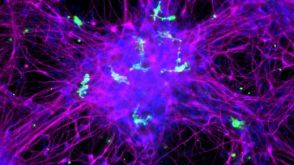 实验方案How to Co-Culture Human Pluripotent Stem Cell (hPSC)-Derived Forebrain Neurons and Microglia
 沪公网安备31010102008431号