D. Duluc et al. ( 2014)
The Journal of Immunology 192 5776-88
Induction and activation of human Th17 by targeting antigens to dendritic cells via dectin-1
Recent compelling evidence indicates that Th17 confer host immunity against a variety of microbes,including extracellular and intracellular pathogens. Therefore,understanding mechanisms for the induction and activation of Ag-specific Th17 is important for the rational design of vaccines against pathogens. To study this,we employed an in vitro system in which influenza hemagglutinin (HA) 1 was delivered to dendritic cells (DCs) via Dectin-1 using anti-human Dectin-1 (hDectin-1)-HA1 recombinant fusion proteins. We found that healthy individuals maintained broad ranges of HA1-specific memory Th17 that were efficiently activated by DCs targeted with anti-hDectin-1-HA1. Nonetheless,these DCs were not able to induce a significant level of HA1-specific Th17 responses even in the presence of the Th17-promoting cytokines IL-1? and IL-6. We further found that the induction of surface IL-1R1 expression by signals via TCRs and common ?-chain receptors was essential for naive CD4(+) T cell differentiation into HA1-specific Th17. This process was dependent on MyD88,but not IL-1R-associated kinase 1/4. Thus,interruptions in STAT3 or MyD88 signaling led to substantially diminished HA1-specific Th17 induction. Taken together,the de novo generation of pathogen-specific human Th17 requires complex,but complementary,actions of multiple signals. Data from this study will help us design a new and effective vaccine strategy that can promote Th17-mediated immunity against microbial pathogens.
View Publication
Vogel I et al. ( 2015)
The European Journal of Immunology 45 6 1832--1841
CD28/CTLA-4/B7 costimulatory pathway blockade affects regulatory T-cell function in autoimmunity
Naïve T cells require B7/CD28 costimulation in order to be fully activated. Attempts to block this pathway have been effective in preventing unwanted immune reactions. As B7 blockade might also affect Treg cells and interfere with negative signaling through membrane CTLA-4 on effector T (Teff) cells,its immune-modulatory effects are potentially more complex. Here,we used the mouse model of multiple sclerosis (MS),EAE,to study the effect of B7 blockade. An effective therapy for MS patients has to interfere with ongoing inflammation,and therefore we injected CTLA-4Ig at day 7 and 9 after immunization,when myelin-reactive T cells have been primed and start migrating toward the CNS. Surprisingly,B7 blockade exacerbated disease signs and resulted in more severe CNS inflammation and demyelination,and was associated with an enhanced production of the inflammatory cytokines IL-17 and IFN-γ. Importantly,CTLA-4Ig treatment resulted in a transient reduction of Ki67 and CTLA-4 expression and function of peripheral Treg cells. Taken together,B7 blockade at a particular stage of the autoimmune response can result in the suppression of Treg cells,leading to a more severe disease.
View Publication


 EasySep™小鼠TIL(CD45)正选试剂盒




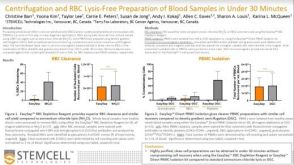 科学海报Centrifugation and RBC Lysis-Free Preparation of Blood Samples in Under 30 Minutes
 实验方案How to Process Leukocyte Reduction System (LRS) Cones/Chambers for Downstream Cell Isolation
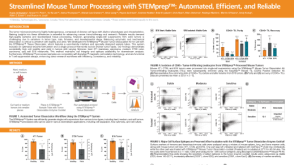 科学海报Streamlined Mouse Tumor Processing with STEMprep™: Automated, Efficient, and Reliable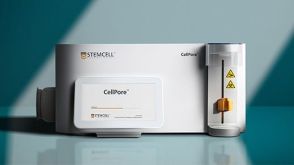




 沪公网安备31010102008431号