Y. Ode et al. (apr 2019)
Scientific reports 9 1 6252
Cold-inducible RNA-binding Protein Induces Neutrophil Extracellular Traps in the Lungs during Sepsis.
Extracellular cold-inducible RNA-binding protein (CIRP) exaggerates inflammation and tissue injury in sepsis. Neutrophil extracellular traps (NETs) are released by activated neutrophils during sepsis. NETs contribute to pathogen clearance,but excessive NET formation (NETosis) causes inflammation and tissue damage. Peptidylarginine deiminase 4 (PAD4) is associated with NETosis by increasing histone citrullination and chromatin decondensation. We hypothesized that CIRP induces NETosis in the lungs during sepsis via upregulating PAD4 expression. Sepsis was induced in C57BL/6 wild-type (WT) and CIRP-/- mice by cecal ligation and puncture (CLP). After 20 h of CLP induction,NETs in the lungs of WT and CIRP-/- mice were quantified by flow cytometry by staining the single cell suspensions with MPO and CitH3 Abs. PAD4 expression in the lungs of WT and CIRP-/- mice after sepsis was assessed by Western blotting. In vitro effects of recombinant mouse (rm) CIRP for NETosis and PAD4 expression in the bone marrow-derived neutrophils (BMDN) were assessed by flow cytometry and Western blotting,respectively. After 20 h of CLP,NETosis in the lungs was significantly decreased in CIRP-/- mice compared to WT mice,which also correlated with the decreased PAD4 expression. Intratracheal administration of rmCIRP into WT mice significantly increased NETosis and PAD4 expression in the lungs compared to vehicle-injected mice. In vitro culture of BMDN with rmCIRP significantly increased NETosis and PAD4 expression compared to PBS-treated control. Fluorescence microscopy revealed typical web-like structures consistent with NETs in rmCIRP-treated BMDN. Thus,CIRP serves as a novel inducer of NETosis via PAD4 during sepsis.
View Publication
Miner JJ et al. (MAR 2011)
The Journal of biological chemistry 286 11 9577--86
Cytoplasmic domain of P-selectin glycoprotein ligand-1 facilitates dimerization and export from the endoplasmic reticulum.
P-selectin glycoprotein ligand-1 (PSGL-1) is a homodimeric transmembrane mucin on leukocytes. During inflammation,reversible interactions of PSGL-1 with selectins mediate leukocyte rolling on vascular surfaces. The transmembrane domain of PSGL-1 is required for dimerization,and the cytoplasmic domain propagates signals that activate β(2) integrins to slow rolling on integrin ligands. Leukocytes from knock-in ΔCD" mice express a truncated PSGL-1 that lacks the cytoplasmic domain. Unexpectedly�
View Publication
产品号#:
03434
03444
产品名:
MethoCult™ GF M3434
MethoCult™ GF M3434
C. Yacoob et al. (JUN 2018)
PLoS pathogens 14 6 e1007120
B cell clonal lineage alterations upon recombinant HIV-1 envelope immunization of rhesus macaques.
Broadly neutralizing HIV-1 antibodies (bNAbs) isolated from infected subjects display protective potential in animal models. Their elicitation by immunization is thus highly desirable. The HIV-1 envelope glycoprotein (Env) is the sole viral target of bnAbs,but is also targeted by binding,non-neutralizing antibodies. Env-based immunogens tested so far in various animal species and humans have elicited binding and autologous neutralizing antibodies but not bNAbs (with a few notable exceptions). The underlying reasons for this are not well understood despite intensive efforts to characterize the binding specificities of the elicited antibodies; mostly by employing serologic methodologies and monoclonal antibody isolation and characterization. These approaches provide limited information on the ontogenies and clonal B cell lineages that expand following Env-immunization. Thus,our current understanding on how the expansion of particular B cell lineages by Env may be linked to the development of non-neutralizing antibodies is limited. Here,in addition to serological analysis,we employed high-throughput BCR sequence analysis from the periphery,lymph nodes and bone marrow,as well as B cell- and antibody-isolation and characterization methods,to compare in great detail the B cell and antibody responses elicited in non-human primates by two forms of the clade C HIV Env 426c: one representing the full length extracellular portion of Env while the other lacking the variable domains 1,2 and 3 and three conserved N-linked glycosylation sites. The two forms were equally immunogenic,but only the latter elicited neutralizing antibodies by stimulating a more restricted expansion of B cells to a narrower set of IGH/IGK/IGL-V genes that represented a small fraction (0.003-0.02{\%}) of total B cells. Our study provides new information on how Env antigenic differences drastically affect the expansion of particular B cell lineages and supports immunogen-design efforts aiming at stimulating the expansion of cells expressing particular B cell receptors.
View Publication


 EasySep™小鼠TIL(CD45)正选试剂盒




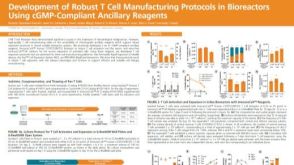 科学海报Development of Robust T Cell Manufacturing Protocols in Bioreactors Using cGMP-Compliant Ancillary Reagents




 沪公网安备31010102008431号