Guan H et al. (JUL 2007)
Journal of immunology (Baltimore,Md. : 1950) 179 1 590--6
NK cells enhance dendritic cell response against parasite antigens via NKG2D pathway.
Recent studies have shown that NK-dendritic cell (DC) interaction plays an important role in the induction of immune response against tumors and certain viruses. Although the effect of this interaction is bidirectional,the mechanism or molecules involved in this cross-talk have not been identified. In this study,we report that coculture with NK cells causes several fold increase in IL-12 production by Toxoplasma gondii lysate Ag-pulsed DC. This interaction also leads to stronger priming of Ag-specific CD8+ T cell response by these cells. In vitro blockade of NKG2D,a molecule present on human and murine NK cells,neutralizes the NK cell-induced up-regulation of DC response. Moreover,treatment of infected animals with Ab to NKG2D receptor compromises the development of Ag-specific CD8+ T cell immunity and reduces their ability to clear parasites. These studies emphasize the critical role played by NKG2D in the NK-DC interaction,which apparently is important for the generation of robust CD8+ T cell immunity against intracellular pathogens. To the best of our knowledge,this is the first work that describes in vivo importance of NKG2D during natural infection.
View Publication
产品号#:
18556
18556RF
产品名:
A. A. Titov et al. (jul 2019)
Journal of immunology (Baltimore,Md. : 1950) 203 2 338--348
Metformin Inhibits the Type 1 IFN Response in Human CD4+ T Cells.
In systemic lupus erythematosus,defective clearance of apoptotic debris and activation of innate cells result in a chronically activated type 1 IFN response,which can be measured in PBMCs of most patients. Metformin,a widely used prescription drug for Type 2 diabetes,has a therapeutic effect in several mouse models of lupus through mechanisms involving inhibition of oxidative phosphorylation and a decrease in CD4+ T cell activation. In this study,we report that in CD4+ T cells from human healthy controls and human systemic lupus erythematosus patients,metformin inhibits the transcription of IFN-stimulated genes (ISGs) after IFN-alpha treatment. Accordingly,metformin inhibited the phosphorylation of pSTAT1 (Y701) and its binding to IFN-stimulated response elements that control ISG expression. These effects were independent of AMPK activation or mTORC1 inhibition but were replicated using inhibitors of the electron transport chain respiratory complexes I,III,and IV. This indicates that mitochondrial respiration is required for ISG expression in CD4+ T cells and provides a novel mechanism by which metformin may exert a therapeutic effect in autoimmune diseases.
View Publication
F. Stehle et al. ( 2013)
The Journal of Biological Chemistry 288 16334-16347
Reduced immunosuppressive properties of axitinib in comparison with other tyrosine kinase inhibitors
The multikinase inhibitors sunitinib,sorafenib,and axitinib have an impact not only on tumor growth and angiogenesis,but also on the activity and function of immune effector cells. In this study,a comparative analysis of the growth inhibitory properties and apoptosis induction potentials of tyrosine kinase inhibitors on T cells was performed. Tyrosine kinase inhibitor treatment resulted in a dramatic decrease in T cell proliferation along with distinct impacts on the cell cycle progression. This was at least partially associated with an enhanced induction of apoptosis although triggered by distinct apoptotic mechanisms. In contrast to sunitinib and sorafenib,axitinib did not affect the mitochondrial membrane potential but resulted in an induction or stabilization of the induced myeloid leukemia cell differentiation protein (Mcl-1),leading to an irreversible arrest in the G2/M cell cycle phase and delayed apoptosis. Furthermore,the sorafenib-mediated suppression of immune effector cells,in particular the reduction of the CD8(+) T cell subset along with the down-regulation of key immune cell markers such as chemokine CC motif receptor 7 (CCR7),CD26,CD69,CD25,and CXCR3,was not observed in axitinib-treated immune effector cells. Therefore,axitinib rather than sorafenib seems to be suitable for implementation in complex treatment regimens of cancer patients including immunotherapy.
View Publication
R. Lorenzetti et al. (jul 2019)
Journal of autoimmunity 101 145--152
Abatacept modulates CD80 and CD86 expression and memory formation in human B-cells.
BACKGROUND Cytotoxic T lymphocyte antigen-4 (CTLA-4) limits T-cell activation and is expressed on T-regulatory cells. Human CTLA-4 deficiency results in severe immune dysregulation. Abatacept (CTLA-4 Ig) is approved for the treatment of rheumatoid arthritis (RA) and its mechanism of action is attributed to effects on T-cells. It is known that CTLA-4 modulates the expression of its ligands CD80 and CD86 on antigen presenting cells (APC) by transendocytosis. As B-cells express CD80/CD86 and function as APC,we hypothesize that B-cells are a direct target of abatacept. OBJECTIVES To investigate direct effects of abatacept on human B-lymphocytes in vitro and in RA patients. METHODS The effect of abatacept on healthy donor B-cells' phenotype,activation and CD80/CD86 expression was studied in vitro. Nine abatacept-treated RA patients were studied. Seven of these were followed up to 24 months,and two up to 12 months only and treatment response,immunoglobulins,ACPA,RF concentrations,B-cell phenotype and ACPA-specific switched memory B-cell frequency were assessed. RESULTS B-cell development was unaffected by abatacept. Abatacept treatment resulted in a dose-dependent decrease of CD80/CD86 expression on B-cells in vitro,which was due to dynamin-dependent internalization. RA patients treated with abatacept showed a progressive decrease in plasmablasts and serum IgG. While ACPA-titers only moderately declined,the frequency of ACPA-specific switched memory B-cells significantly decreased. CONCLUSIONS Abatacept directly targets B-cells by reducing CD80/CD86 expression. Impairment of antigen presentation and T-cell activation may result in altered B-cell selection,providing a new therapeutic mechanism and a base for abatacept use in B-cell mediated autoimmunity.
View Publication
产品号#:
17954
17954RF
100-0971
产品名:
EasySep™人B细胞分选试剂盒
RoboSep™ 人B细胞分选试剂盒
EasySep™人B细胞分离试剂盒
L. L. Lu et al. ( 2019)
Nature medicine 25 6 977--987
IFN-gamma-independent immune markers of Mycobacterium tuberculosis exposure.
Exposure to Mycobacterium tuberculosis (Mtb) results in heterogeneous clinical outcomes including primary progressive tuberculosis and latent Mtb infection (LTBI). Mtb infection is identified using the tuberculin skin test and interferon-gamma (IFN-gamma) release assay IGRA,and a positive result may prompt chemoprophylaxis to prevent progression to tuberculosis. In the present study,we report on a cohort of Ugandan individuals who were household contacts of patients with TB. These individuals were highly exposed to Mtb but tested negative disease by IFN-gamma release assay and tuberculin skin test,'resisting' development of classic LTBI. We show that 'resisters' possess IgM,class-switched IgG antibody responses and non-IFN-gamma T cell responses to the Mtb-specific proteins ESAT6 and CFP10,immunologic evidence of exposure to Mtb. Compared to subjects with classic LTBI,'resisters' display enhanced antibody avidity and distinct Mtb-specific IgG Fc profiles. These data reveal a distinctive adaptive immune profile among Mtb-exposed subjects,supporting an expanded definition of the host response to Mtb exposure,with implications for public health and the design of clinical trials.
View Publication


 EasySep™小鼠TIL(CD45)正选试剂盒




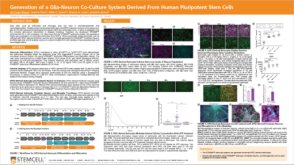 科学海报Generation of a Glia-Neuron Co-Culture System Derived From Human Pluripotent Stem Cells

 科学海报Generation of a Glia-Midbrain Neuron Co-Culture System Derived From Human Pluripotent Stem Cells

 沪公网安备31010102008431号