Critchley-Thorne RJ et al. (JUN 2009)
Proceedings of the National Academy of Sciences of the United States of America 106 22 9010--5
Impaired interferon signaling is a common immune defect in human cancer.
Immune dysfunction develops in patients with many cancer types and may contribute to tumor progression and failure of immunotherapy. Mechanisms underlying cancer-associated immune dysfunction are not fully understood. Efficient IFN signaling is critical to lymphocyte function; animals rendered deficient in IFN signaling develop cancer at higher rates. We hypothesized that altered IFN signaling may be a key mechanism of immune dysfunction common to cancer. To address this,we assessed the functional responses to IFN in peripheral blood lymphocytes from patients with 3 major cancers: breast cancer,melanoma,and gastrointestinal cancer. Type-I IFN (IFN-alpha)-induced signaling was reduced in T cells and B cells from all 3 cancer-patient groups compared to healthy controls. Type-II IFN (IFN-gamma)-induced signaling was reduced in B cells from all 3 cancer patient groups,but not in T cells or natural killer cells. Impaired-IFN signaling was equally evident in stage II,III,and IV breast cancer patients,and downstream functional defects in T cell activation were identified. Taken together,these findings indicate that defects in lymphocyte IFN signaling arise in patients with breast cancer,melanoma,and gastrointestinal cancer,and these defects may represent a common cancer-associated mechanism of immune dysfunction.
View Publication
产品号#:
15624
15664
15628
15668
产品名:
RosetteSep™人粒细胞去除抗体混合物
RosetteSep™人粒细胞去除抗体混合物
RosetteSep™人单核细胞去除抗体混合物
RosetteSep™人单核细胞去除抗体混合物
Zuccolo J et al. (JAN 2009)
BMC immunology 10 30
Efficient isolation of highly purified tonsil B lymphocytes using RosetteSep with allogeneic human red blood cells.
BACKGROUND: Human tonsils are a rich source of B lymphocytes exhibiting a variety of phenotypes and activation states. Existing methods of purification are time consuming or costly. The aim of the present study was to optimize conditions to isolate large numbers of highly purified primary B lymphocytes from tonsils in a short and cost-effective single step,using a commercially available reagent designed for purifying cells from whole blood (RosetteSep). This technique relies on the presence of the large excess of red blood cells in whole blood for the formation of immunorosettes,whereas single cell suspensions from tonsils contain relatively few red blood cells. RESULTS: B cell enrichment from tonsils was achieved using RosetteSep with no modification to the whole blood procedure; however,the degree of purity depended on the extent of red blood cell contamination of the starting tonsil cell suspension. Addition of a 50-fold excess of allogeneic human red blood cells,but not sheep red blood cells,reproducibly resulted in high levels of purity. Depletion of mononuclear cells from the donor red blood cells eliminated potential contamination with allogeneic B cells. CONCLUSION: RosetteSep reagent can be used in combination with allogeneic human red blood cells to reproducibly isolate tonsil B lymphocytes to high levels of purity with no change in phenotype or loss of cells. This method provides considerable time and cost savings compared to other methods.
View Publication
产品号#:
15024
15064
产品名:
RosetteSep™人B细胞富集抗体混合物
RosetteSep™人B细胞富集抗体混合物
Doreau A et al. (JUL 2009)
Nature immunology 10 7 778--85
Interleukin 17 acts in synergy with B cell-activating factor to influence B cell biology and the pathophysiology of systemic lupus erythematosus.
Studies have suggested involvement of interleukin 17 (IL-17) in autoimmune diseases,although its effect on B cell biology has not been clearly established. Here we demonstrate that IL-17 alone or in combination with B cell-activating factor controlled the survival and proliferation of human B cells and their differentiation into immunoglobulin-secreting cells. This effect was mediated mainly through the nuclear factor-kappaB-regulated transcription factor Twist-1. In support of the relevance of our observations and the potential involvement of IL-17 in B cell biology,we found that the serum of patients with systemic lupus erythematosus had higher concentrations of IL-17 than did the serum of healthy people and that IL-17 abundance correlated with the disease severity of systemic lupus erythematosus.
View Publication


 EasySep™小鼠TIL(CD45)正选试剂盒




 技术公告Achieve Scalable, High-Quality Nucleic Acid Extractions with the EasySep™ Total Nucleic Acid Extraction Kit
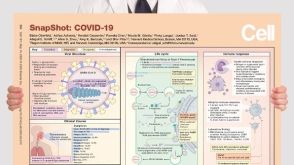 挂图SnapShot: COVID-19 Overview of the life cycle, viral structure, and human immune response to SARS-CoV-2




 沪公网安备31010102008431号