Chaetocin: a promising new antimyeloma agent with in vitro and in vivo activity mediated via imposition of oxidative stress.
Chaetocin,a thiodioxopiperazine natural product previously unreported to have anticancer effects,was found to have potent antimyeloma activity in IL-6-dependent and -independent myeloma cell lines in freshly collected sorted and unsorted patient CD138(+) myeloma cells and in vivo. Chaetocin largely spares matched normal CD138(-) patient bone marrow leukocytes,normal B cells,and neoplastic B-CLL (chronic lymphocytic leukemia) cells,indicating a high degree of selectivity even in closely lineage-related B cells. Furthermore,chaetocin displays superior ex vivo antimyeloma activity and selectivity than doxorubicin and dexamethasone,and dexamethasone- or doxorubicin-resistant myeloma cell lines are largely non-cross-resistant to chaetocin. Mechanistically,chaetocin is dramatically accumulated in cancer cells via a process inhibited by glutathione and requiring intact/unreduced disulfides for uptake. Once inside the cell,its anticancer activity appears mediated primarily through the imposition of oxidative stress and consequent apoptosis induction. Moreover,the selective antimyeloma effects of chaetocin appear not to reflect differential intracellular accumulation of chaetocin but,instead,heightened sensitivity of myeloma cells to the cytotoxic effects of imposed oxidative stress. Considered collectively,chaetocin appears to represent a promising agent for further study as a potential antimyeloma therapeutic.
View Publication
产品号#:
18054
18054RF
21000
20119
20155
19154
19154RF
73592
产品名:
RoboSep™- S
RoboSep™ 吸头组件抛光剂
RoboSep™分选管套装(9个塑料管)
毛壳素
Balakrishnan K et al. (OCT 2006)
Blood 108 7 2392--8
Forodesine, an inhibitor of purine nucleoside phosphorylase, induces apoptosis in chronic lymphocytic leukemia cells.
Purine nucleoside phosphorylase (PNP) deficiency in humans results in T lymphocytopenia. Forodesine,a potent inhibitor of PNP,was designed based on the transition-state structure stabilized by the enzyme. Previous studies established that forodesine in the presence of deoxyguanosine (dGuo) inhibits the proliferation of T lymphocytes. A phase 1 clinical trial of forodesine in T-cell malignancies demonstrated significant antileukemic activity with an increase in intracellular dGuo triphosphate (dGTP). High accumulation of dGTP in T cells may be dependent on the levels of deoxynucleoside kinases. Because B-cell chronic lymphocytic leukemia (B-CLL) cells have high activity of deoxycytidine kinase (dCK),we hypothesized that these lymphocytes would respond to forodesine. This postulate was tested in primary lymphocytes during in vitro investigations. Lymphocytes from 12 patients with CLL were incubated with forodesine and dGuo. These CLL cells showed a wide variation in the accumulation of intracellular dGTP without any effect on other deoxynucleotides. This was associated with DNA damage-induced p53 stabilization,phosphorylation of p53 at Ser15,and activation of p21. The dGTP accumulation was related to induction of apoptosis measured by caspase activation,changes in mitochondrial membrane potential,and PARP cleavage. Based on these data,a phase 2 clinical trial of forodesine has been initiated for CLL patients.
View Publication
产品号#:
19051
19051RF
19054
19054RF
产品名:
EasySep™人T细胞富集试剂盒
RoboSep™ 人T细胞富集试剂盒含滤芯吸头
EasySep™人B细胞富集试剂盒
RoboSep™ 人B细胞富集试剂盒含滤芯吸头
Lagresle-Peyrou C et al. (JAN 2006)
Blood 107 1 63--72
Long-term immune reconstitution in RAG-1-deficient mice treated by retroviral gene therapy: a balance between efficiency and toxicity.
Severe combined immunodeficiency (SCID) caused by mutations in RAG1 or RAG2 genes is characterized by a complete block in T- and B-cell development. The only curative treatment is allogeneic hematopoietic stem cell transplantation,which gives a high survival rate (90%) when an HLA-genoidentical donor exists but unsatisfactory results when only partially compatible donors are available. We have thus been interested in the development of a potential alternative treatment by using retroviral gene transfer of a normal copy of RAG1 cDNA. We show here that this approach applied to RAG-1-deficient mice restores normal B- and T-cell function even in the presence of a reduced number of mature B cells. The reconstitution is stable over time,attesting to a selective advantage of transduced progenitors. Notably,a high transgene copy number was detected in all lymphoid organs,and this was associated with a risk of lymphoproliferation as observed in one mouse. Altogether,these results demonstrate that correction of RAG-1 deficiency can be achieved by gene therapy in immunodeficient mice but that human application would require the use of self-inactivated vector to decrease the risk of lymphoproliferative diseases.
View Publication
产品号#:
09600
09650
产品名:
StemSpan™ SFEM
StemSpan™ SFEM
Makui H et al. (SEP 2005)
Blood 106 6 2189--95
Contribution of Hfe expression in macrophages to the regulation of hepatic hepcidin levels and iron loading.
Hereditary hemochromatosis (HH),an iron overload disease associated with mutations in the HFE gene,is characterized by increased intestinal iron absorption and consequent deposition of excess iron,primarily in the liver. Patients with HH and Hfe-deficient (Hfe-/-) mice manifest inappropriate expression of the iron absorption regulator hepcidin,a peptide hormone produced by the liver in response to iron loading. In this study,we investigated the contribution of Hfe expression in macrophages to the regulation of liver hepcidin levels and iron loading. We used bone marrow transplantation to generate wild-type (wt) and Hfe-/- mice chimeric for macrophage Hfe gene expression. Reconstitution of Hfe-deficient mice with wt bone marrow resulted in augmented capacity of the spleen to store iron and in significantly decreased liver iron loading,accompanied by a significant increase of hepatic hepcidin mRNA levels. Conversely,wt mice reconstituted with Hfe-deficient bone marrow had a diminished capacity to store iron in the spleen but no significant alterations of liver iron stores or hepcidin mRNA levels. Our results suggest that macrophage Hfe participates in the regulation of splenic and liver iron concentrations and liver hepcidin expression.
View Publication
产品号#:
18751
18751RF
18754
18754RF
18755
18755RF
产品名:
EasySep™ 小鼠CD49b正选试剂盒
RoboSep™ 小鼠CD49b正选试剂盒含滤芯吸头
Wulff H et al. (JUL 2004)
Journal of immunology (Baltimore,Md. : 1950) 173 2 776--86
K+ channel expression during B cell differentiation: implications for immunomodulation and autoimmunity.
Using whole-cell patch-clamp,fluorescence microscopy and flow cytometry,we demonstrate a switch in potassium channel expression during differentiation of human B cells from naive to memory cells. Naive and IgD(+)CD27(+) memory B cells express small numbers of the voltage-gated Kv1.3 and the Ca(2+)-activated intermediate-conductance IKCa1 channel when quiescent,and increase IKCa1 expression 45-fold upon activation with no change in Kv1.3 levels. In contrast,quiescent class-switched memory B cells express high levels of Kv1.3 ( approximately 2000 channels/cell) and maintain their Kv1.3(high) expression after activation. Consistent with their channel phenotypes,proliferation of naive and IgD(+)CD27(+) memory B cells is suppressed by the specific IKCa1 inhibitor TRAM-34 but not by the potent Kv1.3 blocker Stichodactyla helianthus toxin,whereas the proliferation of class-switched memory B cells is suppressed by Stichodactyla helianthus toxin but not TRAM-34. These changes parallel those reported for T cells. Therefore,specific Kv1.3 and IKCa1 inhibitors may have use in therapeutic manipulation of selective lymphocyte subsets in immunological disorders.
View Publication


 EasySep™小鼠TIL(CD45)正选试剂盒




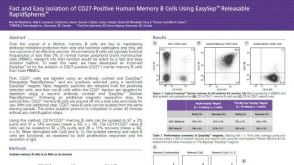 科学海报Fast and Easy Isolation of CD27-Positive Human Memory B Cells Using EasySep™ Releasable RapidSpheres™
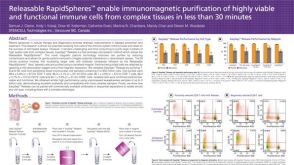 科学海报Releasable RapidSpheres Enable Immunomagnetic Purification of Highly Viable and Functional Immune Cells from Complex Tissues in Less Than 30 Minutes

 沪公网安备31010102008431号