Deficiency of Socs3 leads to brain-targeted EAE via enhanced neutrophil activation and ROS production.
Dysregulation of the JAK/STAT signaling pathway is associated with Multiple Sclerosis (MS) and its mouse model,Experimental Autoimmune Encephalomyelitis (EAE). Suppressors Of Cytokine Signaling (SOCS) negatively regulate the JAK/STAT pathway. We previously reported a severe,brain-targeted,atypical form of EAE in mice lacking Socs3 in myeloid cells (Socs3DeltaLysM),which is associated with cerebellar neutrophil infiltration. There is emerging evidence that neutrophils are detrimental in the pathology of MS/EAE,however,their exact function is unclear. Here we demonstrate that neutrophils from the cerebellum of Socs3DeltaLysM mice show a hyper-activated phenotype with excessive production of reactive oxygen species (ROS) at the peak of EAE. Neutralization of ROS in vivo delayed the onset and reduced severity of atypical EAE. Mechanistically,Socs3-deficient neutrophils exhibit enhanced STAT3 activation,a hyper-activated phenotype in response to G-CSF,and upon G-CSF priming,increased ROS production. Neutralization of G-CSF in vivo significantly reduced the incidence and severity of the atypical EAE phenotype. Overall,our work elucidates that hypersensitivity of G-CSF/STAT3 signaling in Socs3DeltaLysM mice leads to atypical EAE by enhanced neutrophil activation and increased oxidative stress,which may explain the detrimental role of G-CSF in MS patients.
View Publication
Aflaki E et al. (JUN 2014)
Science translational medicine 6 240 240ra73
Macrophage models of Gaucher disease for evaluating disease pathogenesis and candidate drugs.
Gaucher disease is caused by an inherited deficiency of glucocerebrosidase that manifests with storage of glycolipids in lysosomes,particularly in macrophages. Available cell lines modeling Gaucher disease do not demonstrate lysosomal storage of glycolipids; therefore,we set out to develop two macrophage models of Gaucher disease that exhibit appropriate substrate accumulation. We used these cellular models both to investigate altered macrophage biology in Gaucher disease and to evaluate candidate drugs for its treatment. We generated and characterized monocyte-derived macrophages from 20 patients carrying different Gaucher disease mutations. In addition,we created induced pluripotent stem cell (iPSC)-derived macrophages from five fibroblast lines taken from patients with type 1 or type 2 Gaucher disease. Macrophages derived from patient monocytes or iPSCs showed reduced glucocerebrosidase activity and increased storage of glucocerebroside and glucosylsphingosine in lysosomes. These macrophages showed efficient phagocytosis of bacteria but reduced production of intracellular reactive oxygen species and impaired chemotaxis. The disease phenotype was reversed with a noninhibitory small-molecule chaperone drug that enhanced glucocerebrosidase activity in the macrophages,reduced glycolipid storage,and normalized chemotaxis and production of reactive oxygen species. Macrophages differentiated from patient monocytes or patient-derived iPSCs provide cellular models that can be used to investigate disease pathogenesis and facilitate drug development.
View Publication
产品号#:
05850
05857
05870
05875
19059
19059RF
85850
85857
85870
85875
27845
27945
27840
27865
27940
27965
产品名:
EasySep™人单核细胞富集试剂盒
RoboSep™ 人单核细胞富集试剂盒含滤芯吸头
mTeSR™1
mTeSR™1
Nanua S et al. (MAR 2011)
Blood 117 13 3539--47
Activation of the unfolded protein response is associated with impaired granulopoiesis in transgenic mice expressing mutant Elane.
Severe congenital neutropenia (SCN) is an inborn disorder of granulopoiesis that in many cases is caused by mutations of the ELANE gene,which encodes neutrophil elastase (NE). Recent data suggest a model in which ELANE mutations result in NE protein misfolding,induction of endoplasmic reticulum (ER) stress,activation of the unfolded protein response (UPR),and ultimately a block in granulocytic differentiation. To test this model,we generated transgenic mice carrying a targeted mutation of Elane (G193X) reproducing a mutation found in SCN. The G193X Elane allele produces a truncated NE protein that is rapidly degraded. Granulocytic precursors from G193X Elane mice,though without significant basal UPR activation,are sensitive to chemical induction of ER stress. Basal and stress granulopoiesis after myeloablative therapy are normal in these mice. Moreover,inaction of protein kinase RNA-like ER kinase (Perk),one of the major sensors of ER stress,either alone or in combination with G193X Elane,had no effect on basal granulopoiesis. However,inhibition of the ER-associated degradation (ERAD) pathway using a proteosome inhibitor resulted in marked neutropenia in G193X Elane. The selective sensitivity of G913X Elane granulocytic cells to ER stress provides new and strong support for the UPR model of disease patho-genesis in SCN.
View Publication
产品号#:
03231
03434
03444
产品名:
MethoCult™M3231
MethoCult™GF M3434
MethoCult™GF M3434
Kim M-H et al. (MAR 2011)
Blood 117 12 3343--52
Neutrophil survival and c-kit(+)-progenitor proliferation in Staphylococcus aureus-infected skin wounds promote resolution.
Polymorphonuclear neutrophils (PMNs) are critical for the formation,maintenance,and resolution of bacterial abscesses. However,the mechanisms that regulate PMN survival and proliferation during the evolution of an abscess are not well defined. Using a mouse model of Staphylococcus aureus abscess formation within a cutaneous wound,combined with real-time imaging of genetically tagged PMNs,we observed that a high bacterial burden elicited a sustained mobilization of PMNs from the bone marrow to the infected wound,where their lifespan was markedly extended. A continuous rise in wound PMN number,which was not accounted for by trafficking from the bone marrow or by prolonged survival,was correlated with the homing of c-kit(+)-progenitor cells from the blood to the wound,where they proliferated and formed mature PMNs. Furthermore,by blocking their recruitment with an antibody to c-kit,which severely limited the proliferation of mature PMNs in the wound and shortened mouse survival,we confirmed that progenitor cells are not only important contributors to PMN expansion in the wound,but are also functionally important for immune protection. We conclude that the abscess environment provides a niche capable of regulating PMN survival and local proliferation of bone marrow-derived c-kit(+)-progenitor cells.
View Publication
产品号#:
03434
03444
产品名:
MethoCult™GF M3434
MethoCult™GF M3434
Yang Q et al. (MAR 2011)
Blood 117 13 3529--38
E47 regulates hematopoietic stem cell proliferation and energetics but not myeloid lineage restriction.
The immune system is replenished by self-renewing hematopoietic stem cells (HSCs) that produce multipotent progenitors (MPPs) with little renewal capacity. E-proteins,the widely expressed basic helix-loop-helix transcription factors,contribute to HSC and MPP activity,but their specific functions remain undefined. Using quantitative in vivo and in vitro approaches,we show that E47 is dispensable for the short-term myeloid differentiation of HSCs but regulates their long-term capabilities. E47-deficient progenitors show competent myeloid production in short-term assays in vitro and in vivo. However,long-term myeloid and lymphoid differentiation is compromised because of a progressive loss of HSC self-renewal that is associated with diminished p21 expression and hyperproliferation. The activity of E47 is shown to be cell-intrinsic. Moreover,E47-deficient HSCs and MPPs have altered expression of genes associated with cellular energy metabolism,and the size of the MPP pool but not downstream lymphoid precursors in bone marrow or thymus is rescued in vivo by antioxidant. Together,these observations suggest a role for E47 in the tight control of HSC proliferation and energy metabolism,and demonstrate that E47 is not required for short-term myeloid differentiation.
View Publication
产品号#:
03434
03444
产品名:
MethoCult™GF M3434
MethoCult™GF M3434
Grzywacz B et al. (MAR 2011)
Blood 117 13 3548--58
Natural killer-cell differentiation by myeloid progenitors.
Because lymphoid progenitors can give rise to natural killer (NK) cells,NK ontogeny has been considered to be exclusively lymphoid. Here,we show that rare human CD34(+) hematopoietic progenitors develop into NK cells in vitro in the presence of cytokines (interleukin-7,interleukin-15,stem cell factor,and fms-like tyrosine kinase-3 ligand). Adding hydrocortisone and stromal cells greatly increases the frequency of progenitor cells that give rise to NK cells through the recruitment of myeloid precursors,including common myeloid progenitors and granulocytic-monocytic precursors to the NK-cell lineage. WNT signaling was involved in this effect. Cells at more advanced stages of myeloid differentiation (with increasing expression of CD13 and macrophage colony-stimulating factor receptor [M-CSFR]) could also differentiate into NK cells in the presence of cytokines,stroma,and hydrocortisone. NK cells derived from myeloid precursors (CD56(-)CD117(+)M-CSFR(+)) showed more expression of killer immunoglobulin-like receptors,a fraction of killer immunoglobulin-like receptor-positive-expressing cells that lacked NKG2A,a higher cytotoxicity compared with CD56(-)CD117(+)M-CSFR(-) precursor-derived NK cells and thus resemble the CD56(dim) subset of NK cells. Collectively,these studies show that NK cells can be derived from the myeloid lineage.
View Publication
产品号#:
04435
04445
84435
84445
产品名:
MethoCult™H4435富集
MethoCult™H4435富集
MacNamara KC et al. (JAN 2011)
Journal of immunology (Baltimore,Md. : 1950) 186 2 1032--43
Infection-induced myelopoiesis during intracellular bacterial infection is critically dependent upon IFN-γ signaling.
Although microbial infections can alter steady-state hematopoiesis,the mechanisms that drive such changes are not well understood. We addressed a role for IFN-γ signaling in infection-induced bone marrow suppression and anemia in a murine model of human monocytic ehrlichiosis,an emerging tick-borne disease. Within the bone marrow of Ehrlichia muris-infected C57BL/6 mice,we observed a reduction in myeloid progenitor cells,as defined both phenotypically and functionally. Infected mice exhibited a concomitant increase in developing myeloid cells within the bone marrow,an increase in the frequency of circulating monocytes,and an increase in splenic myeloid cells. The infection-induced changes in progenitor cell phenotype were critically dependent on IFN-γ,but not IFN-α,signaling. In mice deficient in the IFN-γ signaling pathway,we observed an increase in myeloid progenitor cells and CDllb(lo)Gr1(lo) promyelocytic cells within the bone marrow,as well as reduced frequencies of mature granulocytes and monocytes. Furthermore,E. muris-infected IFN-γR-deficient mice did not exhibit anemia or an increase in circulating monocytes,and they succumbed to infection. Gene transcription studies revealed that IFN-γR-deficient CDllb(lo)Gr1(lo) promyelocytes from E. muris-infected mice exhibited significantly reduced expression of irf-1 and irf-8,both key transcription factors that regulate the differentiation of granulocytes and monocytes. Finally,using mixed bone marrow chimeric mice,we show that IFN-γ-dependent infection-induced myelopoiesis occurs via the direct effect of the cytokine on developing myeloid cells. We propose that,in addition to its many other known roles,IFN-γ acts to control infection by directly promoting the differentiation of myeloid cells that contribute to host defense.
View Publication


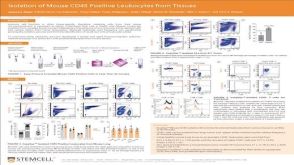
 EasySep™小鼠TIL(CD45)正选试剂盒




 24:08
线上讲座Streamline Your Tissue Processing Using the Automated STEMprep™ Tissue Dissociator发布日期: 06/12/2025
24:08
线上讲座Streamline Your Tissue Processing Using the Automated STEMprep™ Tissue Dissociator发布日期: 06/12/2025



 沪公网安备31010102008431号