Song DH et al. (AUG 2000)
Journal of Biological Chemistry 275 31 23790--97
Endogenous protein kinase CK2 participates in Wnt signaling in mammary epithelial cells
Protein kinase CK2 (formerly casein kinase II) is a serine/threonine kinase overexpressed in many human tumors,transformed cell lines,and rapidly proliferating tissues. Recent data have shown that many cancers involve inappropriate reactivation of Wnt signaling through ectopic expression of Wnts themselves,as has been seen in a number of human breast cancers,or through mutation of intermediates in the Wnt pathway,such as adenomatous polyposis coli or beta-catenin,as described in colon and other cancers. Wnts are secreted factors that are important in embryonic development,but overexpression of certain Wnts,such as Wnt-1,leads to proliferation and transformation of cells. We report that upon stable transfection of Wnt-1 into the mouse mammary epithelial cell line C57MG,morphological changes and increased proliferation are accompanied by increased levels of CK2,as well as of beta-catenin. CK2 and beta-catenin co-precipitate with the Dvl proteins,which are Wnt signaling intermediates. A major phosphoprotein of the size of beta-catenin appears in in vitro kinase reactions performed on the Dvl immunoprecipitates. In vitro translated beta-catenin,Dvl-2,and Dvl-3 are phosphorylated by CK2. The selective CK2 inhibitor apigenin blocks proliferation of Wnt-1-transfected cells,abrogates phosphorylation of beta-catenin,and reduces beta-catenin and Dvl protein levels. These results demonstrate that endogenous CK2 is a positive regulator of Wnt signaling and growth of mammary epithelial cells.
View Publication
产品号#:
03800
03801
03802
03803
03804
03805
03806
产品名:
ClonaCell™-HY杂交瘤试剂盒
ClonaCell™-HY培养基A
ClonaCell™-HY 培养基 B
ClonaCell™-HY 培养基 C
ClonaCell™-HY 培养基 D
ClonaCell™-HY 培养基 E
ClonaCell™-HY PEG
Richmond MH (JAN 1975)
Methods in enzymology 43 4 672--7
Lee WT et al. (DEC 2016)
Developmental & Comparative Immunology 65 114--123
Identification of secreted and membrane-bound bat immunoglobulin using a Microchiropteran-specific mouse monoclonal antibody
Bat immunity has received increasing attention because some bat species are being decimated by the fungal disease,White Nose Syndrome,while other species are potential reservoirs of zoonotic viruses. Identifying specific immune processes requires new specific tools and reagents. In this study,we describe a new mouse monoclonal antibody (mAb) reactive with Eptesicus fuscus immunoglobulins. The epitope recognized by mAb BT1-4F10 was localized to immunoglobulin light (lambda) chains; hence,the mAb recognized serum immunoglobulins and B lymphocytes. The BT1-4F10 epitope appeared to be restricted to Microchiropteran immunoglobulins and absent from Megachiropteran immunoglobulins. Analyses of sera and other E. fuscus fluids showed that most,if not all,secreted immunoglobulins utilized lambda light chains. Finally,mAb BT1-4F10 permitted the identification of B cell follicles in splenic white pulp. This Microchiropteran-specific mAb has potential utility in seroassays; hence,this reagent may have both basic and practical applications for studying immune process.
View Publication
产品号#:
03800
03801
03802
03803
03804
03805
03806
产品名:
ClonaCell™-HY杂交瘤试剂盒
ClonaCell™-HY培养基A
ClonaCell™-HY 培养基 B
ClonaCell™-HY 培养基 C
ClonaCell™-HY 培养基 D
ClonaCell™-HY 培养基 E
ClonaCell™-HY PEG
Alvarado G and Crowe JE ( 2016)
1442 63--76
Development of human monoclonal antibodies against respiratory syncytial virus using a high efficiency human hybridoma technique.
Human monoclonal antibodies against RSV have high potential for use as prophylaxis or therapeutic molecules,and they also can be used to define the structure of protective epitopes for rational vaccine design. In the past,however,isolation of human monoclonal antibodies was difficult and inefficient. Here,we describe contemporary methods for activation and proliferation of primary human memory B cells followed by cytofusion to non-secreting myeloma cells by dielectrophoresis to generate human hybridomas secreting RSV-specific monoclonal antibodies. We also provide experimental methods for screening human B cell lines to obtain RSV-specific lines,especially lines secreting neutralizing antibodies.
View Publication
产品号#:
03800
03801
03802
03803
03804
03805
03806
产品名:
ClonaCell™-HY杂交瘤试剂盒
ClonaCell™-HY培养基A
ClonaCell™-HY 培养基 B
ClonaCell™-HY 培养基 C
ClonaCell™-HY 培养基 D
ClonaCell™-HY 培养基 E
ClonaCell™-HY PEG
Sapparapu G et al. (NOV 2016)
Nature
Neutralizing human antibodies prevent Zika virus replication and fetal disease in mice.
Zika virus (ZIKV) is an emerging mosquito-transmitted flavivirus that can cause severe disease,including congenital birth defects during pregnancy(1). To develop candidate therapeutic agents against ZIKV,we isolated a panel of human monoclonal antibodies (mAbs) from subjects with prior ZIKV infection. A subset of mAbs recognized diverse epitopes on the envelope (E) protein and exhibited potently neutralizing activity. One of the most inhibitory mAbs,ZIKV-117,broadly neutralized infection of ZIKV strains corresponding to African,Asian,and American lineages. Epitope mapping studies revealed that ZIKV-117 recognized a unique quaternary epitope on the E protein dimer-dimer interface. We evaluated the therapeutic efficacy of ZIKV-117 in pregnant and non-pregnant mice. mAb treatment markedly reduced tissue pathology,placental and fetal infection,and mortality in mice. Thus,neutralizing human mAbs can protect against maternal-fetal transmission,infection and disease,and reveal important determinants for structure-based rational vaccine design efforts.
View Publication
Retamal M et al. (NOV 2014)
Journal of General Virology 95 Pt{\_}11 2377--89
Epitope mapping of the 2009 pandemic and the A/Brisbane/59/2007 seasonal (H1N1) influenza virus haemagglutinins using mAbs and escape mutants
mAbs constitute an important biological tool for influenza virus haemagglutinin (HA) epitope mapping through the generation of escape mutants,which could provide insights into immune evasion mechanisms and may benefit the future development of vaccines. Several influenza A (H1N1) pandemic 2009 (pdm09) HA escape mutants have been recently described. However,the HA antigenic sites of the previous seasonal A/Brisbane/59/2007 (H1N1) (Bris07) virus remain poorly documented. Here,we produced mAbs against pdm09 and Bris07 HA proteins expressed in human HEK293 cells. Escape mutants were generated using mAbs that exhibited HA inhibition and neutralizing activities. The resulting epitope mapping of the pdm09 HA protein revealed 11 escape mutations including three that were previously described (G172E,N173D and K256E) and eight novel ones (T89R,F128L,G157E,K180E,A212E,R269K,N311T and G478E). Among the six HA mutations that were part of predicted antigenic sites (Ca1,Ca2,Cb,Sa or Sb),three (G172E,N173D and K180E) were within the Sa site. Eight escape mutations (H54N,N55D,N55K,L60H,N203D,A231T,V314I and K464E) were obtained for Bris07 HA,and all but one (N203D,Sb site) were outside the predicted antigenic sites. Our results suggest that the Sa antigenic site is immunodominant in pdm09 HA,whereas the N203D mutation (Sb site),present in three different Bris07 escape mutants,appears as the immunodominant epitope in that strain. The fact that some mutations were not part of predicted antigenic sites reinforces the necessity of further characterizing the HA of additional H1N1 strains.
View Publication
产品号#:
03800
03801
03802
03803
03804
03805
03806
产品名:
ClonaCell™-HY杂交瘤试剂盒
ClonaCell™-HY培养基A
ClonaCell™-HY 培养基 B
ClonaCell™-HY 培养基 C
ClonaCell™-HY 培养基 D
ClonaCell™-HY 培养基 E
ClonaCell™-HY PEG
de Boer AS et al. (AUG 2014)
Science Translational Medicine 6 248 248ra104--248ra104
Genetic validation of a therapeutic target in a mouse model of ALS
AbstractBack to TopbackslashnNeurons produced from stem cells have emerged as a tool to identify new therapeutic targets for neurological diseases such as amyotrophic lateral sclerosis (ALS). However,it remains unclear to what extent these new mechanistic insights will translate to animal models,an important step in the validation of new targets. Previously,we found that glia from mice carrying the SOD1G93A mutation,a model of ALS,were toxic to stem cell–derived human motor neurons. We use pharmacological and genetic approaches to demonstrate that the prostanoid receptor DP1 mediates this glial toxicity. Furthermore,we validate the importance of this mechanism for neural degeneration in vivo. Genetic ablation of DP1 in SOD1G93A mice extended life span,decreased microglial activation,and reduced motor neuron loss. Our findings suggest that blocking DP1 may be a therapeutic strategy in ALS and demonstrate that discoveries from stem cell models of disease can be corroborated in vivo.
View Publication
产品号#:
05850
05857
05870
05875
85850
85857
85870
85875
产品名:
mTeSR™1
mTeSR™1
Tan GS et al. ( 2014)
Journal of virology 88 23 13580--92
Characterization of a broadly neutralizing monoclonal antibody that targets the fusion domain of group 2 influenza a virus hemagglutinin.
UNLABELLED: Due to continuous changes to its antigenic regions,influenza viruses can evade immune detection and cause a significant amount of morbidity and mortality around the world. Influenza vaccinations can protect against disease but must be annually reformulated to match the current circulating strains. In the development of a broad-spectrum influenza vaccine,the elucidation of conserved epitopes is paramount. To this end,we designed an immunization strategy in mice to boost the humoral response against conserved regions of the hemagglutinin (HA) glycoprotein. Of note,generation and identification of broadly neutralizing antibodies that target group 2 HAs are rare and thus far have yielded only a few monoclonal antibodies (MAbs). Here,we demonstrate that mouse MAb 9H10 has broad and potent in vitro neutralizing activity against H3 and H10 group 2 influenza A subtypes. In the mouse model,MAb 9H10 protects mice against two divergent mouse-adapted H3N2 strains,in both pre- and postexposure administration regimens. In vitro and cell-free assays suggest that MAb 9H10 inhibits viral replication by blocking HA-dependent fusion of the viral and endosomal membranes early in the replication cycle and by disrupting viral particle egress in the late stage of infection. Interestingly,electron microscopy reconstructions of MAb 9H10 bound to the HA reveal that it binds a similar binding footprint to MAbs CR8020 and CR8043.backslashnbackslashnIMPORTANCE: The influenza hemagglutinin is the major antigenic target of the humoral immune response. However,due to continuous antigenic changes that occur on the surface of this glycoprotein,influenza viruses can escape the immune system and cause significant disease to the host. Toward the development of broad-spectrum therapeutics and vaccines against influenza virus,elucidation of conserved regions of influenza viruses is crucial. Thus,defining these types of epitopes through the generation and characterization of broadly neutralizing monoclonal antibodies (MAbs) can greatly assist others in highlighting conserved regions of hemagglutinin. Here,we demonstrate that MAb 9H10 that targets the hemagglutinin stalk has broadly neutralizing activity against group 2 influenza A viruses in vitro and in vivo.
View Publication


 EasySep™小鼠TIL(CD45)正选试剂盒





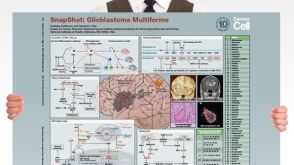 挂图SnapShot: Glioblastoma Multiforme Overview of the key concepts and mechanisms in glioblastoma multiforme biology

 沪公网安备31010102008431号