Chang Q et al. (SEP 2002)
Infection and Immunity 70 9 4977--86
Structure-function relationships for human antibodies to pneumococcal capsular polysaccharide from transgenic mice with human immunoglobulin Loci.
To investigate the influence of antibody structure and specificity on antibody efficacy against Streptococcus pneumoniae,human monospecific antibodies (MAbs) to serotype 3 pneumococcal capsular polysaccharide (PPS-3) were generated from transgenic mice reconstituted with human immunoglobulin loci (XenoMouse mice) vaccinated with a PPS-3-tetanus toxoid conjugate and their molecular genetic structures,epitope specificities,and protective efficacies in normal and complement-deficient mice were determined. Nucleic acid sequence analysis of three MAbs (A7,1A2,and 7C5) revealed that they use two different V(H)3 genes (A7 and 1A2 both use V3-15) and three different V(kappa) gene segments. The MAbs were found to have similar affinities for PPS-3 but different epitope specificities and CDR3 regions. Both A7 and 7C5 had a lysine at the V(H)-D junction,whereas 1A2 had a threonine. Challenge experiments with serotype 3 S. pneumoniae in BALB/c mice revealed that both 10- and 1- micro g doses of A7 and 7C5 were protective,while only a 10- micro g dose of 1A2 was protective. Both A7 and 7C5 were also protective in mice lacking either an intact alternative (FB(-/-)) or classical (C4(-/-)) complement pathway,but 1A2 was not protective in either strain. Our data suggest that PPS-3 consists of epitopes that can elicit both highly protective and less protective antibodies and that the superior efficacies of certain antibodies may be a function of their structures and/or specificities. Further investigation of relationships between structure,specificity,and efficacy for defined MAbs to PPS may identify antibody features that might be useful surrogates for antibody (and vaccine) efficacy.
View Publication
产品号#:
03800
03801
03802
03803
03804
03805
03806
产品名:
ClonaCell™-HY杂交瘤试剂盒
ClonaCell™-HY培养基A
ClonaCell™-HY 培养基 B
ClonaCell™-HY 培养基 C
ClonaCell™-HY 培养基 D
ClonaCell™-HY 培养基 E
ClonaCell™-HY PEG
Lim Y-P et al. (SEP 2003)
The Journal of infectious diseases 188 6 919--26
Correlation between mortality and the levels of inter-alpha inhibitors in the plasma of patients with severe sepsis.
Inter-alpha inhibitor protein (IalphaIp) is an endogenous serine protease inhibitor in human plasma. Circulating IalphaIp levels were lower in 51 patients with severe sepsis than in healthy volunteers. Mean levels were 688+/-295 mg/L in patients with severe sepsis who survived (n=32),486+/-193 mg/L in patients with sepsis who died (n=19),and 872+/-234 mg/L in control subjects (n=25). IalphaIp levels were lower in patients with shock versus those without (540+/-246 [n=33] vs. 746+/-290 [n=18] mg/L; P=.0102). IalphaIp levels were inversely correlated with 28-day mortality rates and Acute Physiology and Chronic Health Evaluation II scores and directly correlated with antithrombin III,protein C,and protein S levels. The administration of IalphaIp (30 mg/kg body weight intravenously) increased the 50% lethal dose in mice by 100-fold after an intravenous challenge of Escherichia coli. Thus,human IalphaIp may be a useful predictive marker and potential therapeutic agent in sepsis.
View Publication


 EasySep™小鼠TIL(CD45)正选试剂盒




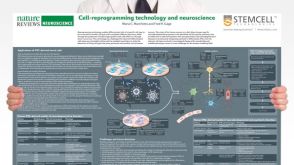 挂图Cell-Reprogramming Technology and Neuroscience Details on human iPSC-derived models of neuropsychiatric and neurodegenerative disorders
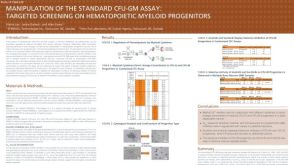 科学海报Manipulation of the Standard CFU-GM Assay Targeted Screening of Hematopoietic Myeloid Progenitors






 沪公网安备31010102008431号