Ma Z et al. (JUL 2015)
Nature communications 6 May 7413
Self-organizing human cardiac microchambers mediated by geometric confinement.
Tissue morphogenesis and organ formation are the consequences of biochemical and biophysical cues that lead to cellular spatial patterning in development. To model such events in vitro,we use PEG-patterned substrates to geometrically confine human pluripotent stem cell colonies and spatially present mechanical stress. Modulation of the WNT/β-catenin pathway promotes spatial patterning via geometric confinement of the cell condensation process during epithelial-mesenchymal transition,forcing cells at the perimeter to express an OCT4+ annulus,which is coincident with a region of higher cell density and E-cadherin expression. The biochemical and biophysical cues synergistically induce self-organizing lineage specification and creation of a beating human cardiac microchamber confined by the pattern geometry. These highly defined human cardiac microchambers can be used to study aspects of embryonic spatial patterning,early cardiac development and drug-induced developmental toxicity.
View Publication
产品号#:
05850
05857
05870
05875
85850
85857
85870
85875
产品名:
mTeSR™1
mTeSR™1
Rodrí et al. (NOV 2015)
Journal of Virological Methods 224 1--8
Generation of monoclonal antibodies specific of the postfusion conformation of the Pneumovirinae fusion (F) protein
Paramyxovirus entry into cells requires fusion of the viral and cell membranes mediated by one of the major virus glycoproteins,the fusion (F) glycoprotein which transits from a metastable pre-fusion conformation to a highly stable post-fusion structure during the membrane fusion process. F protein refolding involves large conformational changes of the protein trimer. One of these changes results in assembly of two heptad repeat sequences (HRA and HRB) from each protomer into a six-helix bundle (6HB) motif. To assist in distinguishing pre- and post-fusion conformations of the Pneumovirinae F proteins,and as extension of previous work (Palomo et al.,2014),a general strategy was designed to obtain polyclonal and particularly monoclonal antibodies specific of the 6HB motif of the Pneumovirinae fusion protein. The antibodies reported here should assist in the characterization of the structural changes that the F protein of human metapneumovirus or respiratory syncytial virus experiences during the process of membrane fusion.
View Publication
产品号#:
03810
产品名:
ClonaCell™-HY培养基D型(不含HAT)
Marí et al. ( 2016)
1349 137--50
Generation of recombinant modified Vaccinia Virus Ankara encoding VP2, NS1, and VP7 proteins of bluetongue virus
Modified Vaccinia Virus Ankara (MVA) is employed widely as an experimental vaccine vector for its lack of replication in mammalian cells and high expression level of foreign/heterologous genes. Recombinant MVAs (rMVAs) are used as platforms for protein production as well as vectors to generate vaccines against a high number of infectious diseases and other pathologies. The portrait of the virus combines desirable elements such as high-level biological safety,the ability to activate appropriate innate immune mediators upon vaccination,and the capacity to deliver substantial amounts of heterologous antigens. Recombinant MVAs encoding proteins of bluetongue virus (BTV),an Orbivirus that infects domestic and wild ruminants transmitted by biting midges of the Culicoides species,are excellent vaccine candidates against this virus. In this chapter we describe the methods for the generation of rMVAs encoding VP2,NS1,and VP7 proteins of bluetongue virus as a model example for orbiviruses. The protocols included cover the cloning of VP2,NS1,and VP7 BTV-4 genes in a transfer plasmid,the construction of recombinant MVAs,the titration of virus working stocks and the protein expression analysis by immunofluorescence and radiolabeling of rMVA infected cells as well as virus purification.
View Publication
产品号#:
03814
产品名:
ClonaCell™-TCS 培养基
Shiozawa T et al. (FEB 2016)
Virchows Archiv 468 2 179--90
Dimethylarginine dimethylaminohydrolase 2 promotes tumor angiogenesis in lung adenocarcinoma
Although embryonal proteins have been used as tumor marker,most are not useful for detection of early malignancy. In the present study,we developed mouse monoclonal antibodies against fetal lung of miniature swine,and screened them to find an embryonal protein that is produced at the early stage of malignancy,focusing on lung adenocarcinoma. We found an antibody clone that specifically stained stroma of lung adenocarcinoma. LC-MS/MS identified the protein recognized by this clone as dimethylarginine dimethylaminohydrolase 2 (DDAH2),an enzyme known for antiatherosclerotic activity. DDAH2 was found to be expressed in fibroblasts of stroma of malignancies,with higher expression in minimally invasive adenocarcinoma (MIA) and invasive adenocarcinoma than in adenocarcinoma in situ (AIS). Moreover,tumors with high stromal expression of DDAH2 had a poorer prognosis than those without. In vitro analysis showed that DDAH2 increases expression of endothelial nitric oxide synthase (eNOS),inducing proliferation and capillary-like tube formation of vascular endothelial cells. In resected human tissues,eNOS also showed higher expression in invasive adenocarcinoma than in AIS and normal lung,similarly to DDAH2. Our data indicate that expression of DDAH2 is associated with invasiveness of lung adenocarcinoma via tumor angiogenesis. DDAH2 expression might be a prognostic factor in lung adenocarcinoma.
View Publication
产品号#:
03800
03801
03802
03803
03804
03805
03806
产品名:
ClonaCell™-HY杂交瘤试剂盒
ClonaCell™-HY培养基A
ClonaCell™-HY 培养基 B
ClonaCell™-HY 培养基 C
ClonaCell™-HY 培养基 D
ClonaCell™-HY 培养基 E
ClonaCell™-HY PEG
Lee Y-KK et al. (JAN 2016)
International journal of cardiology 203 964--971
Efficient attenuation of Friedreich's ataxia (FRDA) cardiomyopathy by modulation of iron homeostasis-human induced pluripotent stem cell (hiPSC) as a drug screening platform for FRDA.
BACKGROUND Friedreich's ataxia (FRDA),a recessive neurodegenerative disorder commonly associated with hypertrophic cardiomyopathy,is caused by silencing of the frataxin (FXN) gene encoding the mitochondrial protein involved in iron-sulfur cluster biosynthesis. METHODS Application of our previously established FRDA human induced pluripotent stem cell (hiPSC) derived cardiomyocytes model as a platform to assess the efficacy of treatment with either the antioxidant coenzyme Q10 analog,idebenone (IDE) or the iron chelator,deferiprone (DFP),which are both under clinical trial. RESULTS DFP was able to more significantly suppress synthesis of reactive oxygen species (ROS) than IDE at the dosages of 25 $\$ and 10nM respectively which agreed with the reduced rate of intracellular accumulation of iron by DFP treatment from 25 to 50 $\$ With regard to cardiac electrical-contraction (EC) coupling function,decay velocity of calcium handling kinetics in FRDA-hiPSC-cardiomyocytes was significantly improved by DFP treatment but not by IDE. Further mechanistic studies revealed that DFP also modulated iron induced mitochondrial stress as reflected by mitochondria network disorganization and decline level of respiratory chain protein,succinate dehydrogenase (CxII) and cytochrome c oxidase (COXIV). In addition,iron-response protein (IRP-1) regulatory loop was overridden by DFP as reflected by resumed level of ferritin (FTH) back to basal level and the attenuated transferrin receptor (TSFR) mRNA level suppression thereby reducing further iron uptake. CONCLUSIONS DFP modulated iron homeostasis in FRDA-hiPSC-cardiomyocytes and effectively relieved stress-stimulation related to cardiomyopathy. The resuming of redox condition led to the significantly improved cardiac prime events,cardiac electrical-coupling during contraction.
View Publication
Water-in-Water Droplets by Passive Microfluidic Flow Focusing.
We present a simple microfluidic system that generates water-in-water,aqueous two phase system (ATPS) droplets,by passive flow focusing. ATPS droplet formation is achieved by applying weak hydrostatic pressures,with liquid-filled pipette tips as fluid columns at the inlets,to introduce low speed flows to the flow focusing junction. To control the size of the droplets,we systematically vary the interfacial tension and viscosity of the ATPS fluids and adjust the fluid column height at the fluid inlets. The size of the droplets scales with a power law of the ratio of viscous stresses in the two ATPS phases. Overall,we find a drop size coefficient of variation (CV; i.e.,polydispersity) of about 10%. We also find that when drops form very close to the flow focusing junction,the drops have a CV of less than 1%. Our droplet generation method is easily scalable: we demonstrate a parallel system that generates droplets simultaneously and improves the droplet production rate by up to one order of magnitude. Finally,we show the potential application of our system for encapsulating cells in water-in-water emulsions by encapsulating microparticles and cells. To the best of our knowledge,our microfluidic technique is the first that forms low interfacial tension ATPS droplets without applying external perturbations. We anticipate that this simple approach will find utility in drug and cell delivery applications because of the all-biocompatible nature of the water-in-water ATPS environment.
View Publication
A. Calvert and A. Brault ( 2015)
American Journal of Tropical Medicine and Hygiene 93 1338-40
Development and characterization of monoclonal antibodies directed against the nucleoprotein of heartland virus
Heartland virus (HRTV),a phlebovirus first isolated from two Missouri farmers in 2009,has been proposed to be transmitted to humans by the bite of infected Amblyomma americanum ticks. It is closely related to severe fever with thrombocytopenia syndrome virus (SFTSV) from China,another previously unrecognized phlebovirus that has subsequently been associated with hundreds of cases of severe disease in humans. To expand diagnostic capacity to detect HRTV infections,20 hybridoma clones secreting anti-HRTV murine monoclonal antibodies (MAbs) were developed using splenocytes from HRTV-inoculated AG129 alpha/beta and gamma interferon receptor-deficient mice. Nine of these MAbs were characterized herein for inclusion in future HRTV diagnostic assay development. All of the MAbs developed were found to be non-neutralizing and reactive to linear epitopes on HRTV nucleocapsid protein. MAb 2AF11 was found to be cross-reactive with SFTSV.
View Publication


 EasySep™小鼠TIL(CD45)正选试剂盒




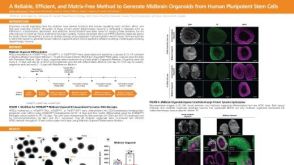 科学海报A Reliable, Efficient, and Matrix-Free Method to Generate Midbrain Organoids from Human Pluripotent Stem Cells




 沪公网安备31010102008431号