Shi S et al. (SEP 2011)
Journal of Visualized Experiments 55 e3010
A high-throughput automated platform for the development of manufacturing cell lines for protein therapeutics
The fast-growing biopharmaceutical industry demands speedy development of highly efficient and reliable production systems to meet the increasing requirement for drug supplies. The generation of production cell lines has traditionally involved manual operations that are labor-intensive,low-throughput and vulnerable to human errors. We report here an integrated high-throughput and automated platform for development of manufacturing cell lines for the production of protein therapeutics. The combination of BD FACS Aria Cell Sorter,CloneSelect Imager and TECAN Freedom EVO liquid handling system has enabled a high-throughput and more efficient cell line development process. In this operation,production host cells are first transfected with an expression vector carrying the gene of interest (1),followed by the treatment with a selection agent. The stably-transfected cells are then stained with fluorescence-labeled anti-human IgG antibody,and are subsequently subject to flow cytometry analysis (2-4). Highly productive cells are selected based on fluorescence intensity and are isolated by single-cell sorting on a BD FACSAria. Colony formation from single-cell stage was detected microscopically and a series of time-laps digital images are taken by CloneSelect Imager for the documentation of cell line history. After single clones have formed,these clones were screened for productivity by ELISA performed on a TECAN Freedom EVO liquid handling system. Approximately 2,000 - 10,000 clones can be screened per operation cycle with the current system setup. This integrated approach has been used to generate high producing Chinese hamster ovary (CHO) cell lines for the production of therapeutic monoclonal antibody (mAb) as well as their fusion proteins. With the aid of different types of detecting probes,the method can be used for developing other protein therapeutics or be applied to other production host systems. Comparing to the traditional manual procedure,this automated platform demonstrated advantages of significantly increased capacity,ensured clonality,traceability in cell line history with electronic documentation and much reduced opportunity in operator error.
View Publication
产品号#:
30000
产品名:
Cabral TM et al. (JUL 2012)
Journal of Virological Methods 183 1 25--33
Development and characterization of neutralizing monoclonal antibodies against the pandemic H1N1 virus (2009).
The 2009 H1N1 influenza pandemic was a major international public health crisis which caused considerable morbidity and mortality worldwide. The goal of this study was to produce anti-H1 monoclonal antibodies (MAbs) for improving diagnostic immunological assays and to develop potential immunotherapeutics. Nine MAbs were produced after immunizing mice with recombinant hemagglutinin (HA) protein from A/California/06/09. Two spleenocyte myeloma fusions yielded 1588 hybridoma cultures. After screening the hybridoma culture supernatants for antibody reactivity to rHA,nine clones were selected for further characterization. Cross-reactivity studies of the anti-rHA antibodies against a panel of influenza viruses (H1-H16) revealed eight out of nine MAbs were specific to the pandemic H1 subtype,except for MAb F256G2sc1 which also cross-reacted with H5 subtype virus. All MAbs were of the IgG1κ isotype,except F256G2sc1 which was IgG2aκ. The anti-rHA MAbs had binding affinities to rHA that ranged from a K(D) (disassociation constant) of 1.34×10(-9)M (F255G7sc1) to the weakest affinity of 4.60×10(-8)M (F255G4sc1). Interestingly,in a plaque reduction neutralization assay,all MAbs except F255G3sc1 demonstrated neutralizing ability. Furthermore,all MAbs except F255G3sc1 and F255G9sc1 exhibited anti-hemagglutinin activity against pandemic H1N1 viruses,but not against classical North American swine influenza viruses of the same subtype. Immunofluorescence assay (IFA) demonstrated that all MAbs except F255G1sc1 and F255G3sc1 were able to detect 2009 pandemic H1N1 (2009) virus- infected MDCK cells. The MAbs were also evaluated for potential use in competitive ELISA (cELISA),and with the exception of F255G3sc1,all MAbs showed competitive activity with serum collected from pigs infected with pandemic H1N1 virus (2009). The developed MAbs have demonstrated utility as immunodiagnostic and research reagents,and their neutralizing capabilities also hold potential for designing antiviral drugs against pandemic influenza.
View Publication
产品号#:
03800
03801
03802
03803
03804
03805
03806
产品名:
ClonaCell™-HY杂交瘤试剂盒
ClonaCell™-HY培养基A
ClonaCell™-HY 培养基 B
ClonaCell™-HY 培养基 C
ClonaCell™-HY 培养基 D
ClonaCell™-HY 培养基 E
ClonaCell™-HY PEG
Singbrant S et al. (MAY 2011)
Blood 117 21 5631--42
Erythropoietin couples erythropoiesis, B-lymphopoiesis, and bone homeostasis within the bone marrow microenvironment.
Erythropoietin (Epo) has been used in the treatment of anemia resulting from numerous etiologies,including renal disease and cancer. However,its effects are controversial and the expression pattern of the Epo receptor (Epo-R) is debated. Using in vivo lineage tracing,we document that within the hematopoietic and mesenchymal lineage,expression of Epo-R is essentially restricted to erythroid lineage cells. As expected,adult mice treated with a clinically relevant dose of Epo had expanded erythropoiesis because of amplification of committed erythroid precursors. Surprisingly,we also found that Epo induced a rapid 26% loss of the trabecular bone volume and impaired B-lymphopoiesis within the bone marrow microenvironment. Despite the loss of trabecular bone,hematopoietic stem cell populations were unaffected. Inhibition of the osteoclast activity with bisphosphonate therapy blocked the Epo-induced bone loss. Intriguingly,bisphosphonate treatment also reduced the magnitude of the erythroid response to Epo. These data demonstrate a previously unrecognized in vivo regulatory network coordinating erythropoiesis,B-lymphopoiesis,and skeletal homeostasis. Importantly,these findings may be relevant to the clinical application of Epo.
View Publication
产品号#:
03334
09500
产品名:
MethoCult™ M3334
BIT 9500血清替代物
Currie KS et al. (MAY 2014)
Journal of medicinal chemistry 57 9 3856--73
Discovery of GS-9973, a selective and orally efficacious inhibitor of spleen tyrosine kinase.
Spleen tyrosine kinase (Syk) is an attractive drug target in autoimmune,inflammatory,and oncology disease indications. The most advanced Syk inhibitor,R406,1 (or its prodrug form fostamatinib,2),has shown efficacy in multiple therapeutic indications,but its clinical progress has been hampered by dose-limiting adverse effects that have been attributed,at least in part,to the off-target activities of 1. It is expected that a more selective Syk inhibitor would provide a greater therapeutic window. Herein we report the discovery and optimization of a novel series of imidazo[1,2-a]pyrazine Syk inhibitors. This work culminated in the identification of GS-9973,68,a highly selective and orally efficacious Syk inhibitor which is currently undergoing clinical evaluation for autoimmune and oncology indications.
View Publication
产品号#:
70034
70023
70023.1
200-0167
200-0166
产品名:
冻存的人外周血单核细胞
冻存的人外周血B细胞
冻存的人外周血B细胞
人外周血单核细胞,冷冻
人外周血单核细胞,冷冻
Baatz JE et al. (JUL 2014)
In vivo (Athens,Greece) 28 4 411--423
Cryopreservation of viable human lung tissue for versatile post-thaw analyses and culture.
Clinical trials are currently used to test therapeutic efficacies for lung cancer,infections and diseases. Animal models are also used as surrogates for human disease. Both approaches are expensive and time-consuming. The utility of human biospecimens as models is limited by specialized tissue processing methods that preserve subclasses of analytes (e.g. RNA,protein,morphology) at the expense of others. We present a rapid and reproducible method for the cryopreservation of viable lung tissue from patients undergoing lobectomy or transplant. This method involves the pseudo-diaphragmatic expansion of pieces of fresh lung tissue with cryoprotectant formulation (pseudo-diaphragmatic expansion-cryoprotectant perfusion or PDX-CP) followed by controlled-rate freezing in cryovials. Expansion-perfusion rates,volumes and cryoprotectant formulation were optimized to maintain tissue architecture,decrease crystal formation and increase long-term cell viability. Rates of expansion of 4 cc/min or less and volumes ranging from 0.8-1.2 × tissue volume were well-tolerated by lung tissue obtained from patients with chronic obstructive pulmonary disease or idiopathic pulmonary fibrosis,showing minimal differences compared to standard histopathology. Morphology was greatly improved by the PDX-CP procedure compared to simple fixation. Fresh versus post-thawed lung tissue showed minimal differences in histology,RNA integrity numbers and post-translational modified protein integrity (2-dimensional differential gel electrophoresis). It was possible to derive numerous cell types,including alveolar epithelial cells,fibroblasts and stem cells,from the tissue for at least three months after cryopreservation. This new method should provide a uniform,cost-effective approach to the banking of biospecimens,with versatility to be amenable to any post-acquisition process applicable to fresh tissue samples.
View Publication
Fuhrmann G et al. (MAY 2015)
Journal of controlled release : official journal of the Controlled Release Society 205 35--44
Active loading into extracellular vesicles significantly improves the cellular uptake and photodynamic effect of porphyrins
Extracellular vesicles (EVs) are phospholipid-based particles endogenously produced by cells. Their natural composition and selective cell interactions make them promising drug carriers. However,in order to harness their properties,efficient exogenous drug encapsulation methods need to be investigated. Here,EVs from various cellular origins (endothelial,cancer and stem cells) were produced and characterised for size and composition. Porphyrins of different hydrophobicities were employed as model drugs and encapsulated into EVs using various passive and active methods (electroporation,saponin,extrusion and dialysis). Hydrophobic compounds loaded very efficiently into EVs and at significantly higher amounts than into standard liposomes composed of phosphocholine and cholesterol using passive incubation. Moreover,loading into EVs significantly increased the cellular uptake by textgreater60% and the photodynamic effect of hydrophobic porphyrins in vitro compared to free or liposome encapsulated drug. The active encapsulation techniques,with the saponin-assisted method in particular,allowed an up to 11 fold higher drug loading of hydrophilic porphyrins compared to passive methods. EVs loaded with hydrophilic porphyrins induced a stronger phototoxic effect than free drug in a cancer cell model. Our findings create a firm basis for the development of EVs as smart drug carriers based on straightforward and transferable methods.
View Publication
Graham B et al. (JUL 2014)
International Journal of Environmental Research and Public Health 11 7 7524--7536
Enhancement of arsenic trioxide-mediated changes in human induced pluripotent stem cells (IPS)
Induced pluripotent stem cells (IPS) are an artificially derived type of pluripotent stem cell,showing many of the same characteristics as natural pluripotent stem cells. IPS are a hopeful therapeutic model; however there is a critical need to determine their response to environmental toxins. Effects of arsenic on cells have been studied extensively; however,its effect on IPS is yet to be elucidated. Arsenic trioxide (ATO) has been shown to inhibit cell proliferation,induce apoptosis and genotoxicity in many cells. Based on ATOs action in other cells,we hypothesize that it will induce alterations in morphology,inhibit cell viability and induce a genotoxic effect on IPS. Cells were treated for 24 hours with ATO (0-9 µg/mL). Cell morphology,viability and DNA damage were documented. Results indicated sufficient changes in morphology of cell colonies mainly in cell ability to maintain grouping and ability to remain adherent. Cell viability decreased in a dose dependent manner. There were significant increases in tail length and moment as well as destruction of intact DNA as concentration increased. Exposure to ATO resulted in a reproducible dose dependent sequence of events marked by changes in morphology,decrease of cell viability,and induction of genotoxicity in IPS.
View Publication
产品号#:
05850
05857
05870
05875
85850
85857
85870
85875
产品名:
mTeSR™1
mTeSR™1
Ting S et al. (SEP 2014)
Stem Cell Research 13 2 202--213
An intermittent rocking platform for integrated expansion and differentiation of human pluripotent stem cells to cardiomyocytes in suspended microcarrier cultures
The development of novel platforms for large scale production of human embryonic stem cells (hESC) derived cardiomyocytes (CM) becomes more crucial as the demand for CMs in preclinical trials,high throughput cardio toxicity assays and future regenerative therapeutics rises. To this end,we have designed a microcarrier (MC) suspension agitated platform that integrates pluripotent hESC expansion followed by CM differentiation in a continuous,homogenous process.Hydrodynamic shear stresses applied during the hESC expansion and CM differentiation steps drastically reduced the capability of the cells to differentiate into CMs. Applying vigorous stirring during pluripotent hESC expansion on Cytodex 1 MC in spinner cultures resulted in low CM yields in the following differentiation step (cardiac troponin-T (cTnT): 22.83. ??. 2.56%; myosin heavy chain (MHC): 19.30. ??. 5.31%). Whereas the lower shear experienced in side to side rocker (wave type) platform resulted in higher CM yields (cTNT: 47.50. ??. 7.35%; MHC: 42.85. ??. 2.64%). The efficiency of CM differentiation is also affected by the hydrodynamic shear stress applied during the first 3. days of the differentiation stage. Even low shear applied continuously by side to side rocker agitation resulted in very low CM differentiation efficiency (cTnT. textless. 5%; MHC. textless. 2%). Simply by applying intermittent agitation during these 3. days followed by continuous agitation for the subsequent 9. days,CM differentiation efficiency can be substantially increased (cTNT: 65.73. ??. 10.73%; MHC: 59.73. ??. 9.17%). These yields are 38.3% and 39.3% higher (for cTnT and MHC respectively) than static culture control.During the hESC expansion phase,cells grew on continuously agitated rocker platform as pluripotent cell/MC aggregates (166??88??105??m2) achieving a cell concentration of 3.74??0.55??106cells/mL (18.89??2.82 fold expansion) in 7days. These aggregates were further differentiated into CMs using a WNT modulation differentiation protocol for the subsequent 12days on a rocking platform with an intermittent agitation regime during the first 3days. Collectively,the integrated MC rocker platform produced 190.5??58.8??106 CMs per run (31.75??9.74 CM/hESC seeded). The robustness of the system was demonstrated by using 2 cells lines,hESC (HES-3) and human induced pluripotent stem cell (hiPSC) IMR-90. The CM/MC aggregates formed extensive sarcomeres that exhibited cross-striations confirming cardiac ontogeny. Functionality of the CMs was demonstrated by monitoring the effect of inotropic drug,Isoproterenol on beating frequency.In conclusion,we have developed a simple robust and scalable platform that integrates both hESC expansion and CM differentiation in one unit process which is capable of meeting the need for large amounts of CMs. ?? 2014.
View Publication


 EasySep™小鼠TIL(CD45)正选试剂盒




 科学海报Expansion and Differentiation Potential of Human Pluripotent Stem Cells Maintained in cGMP Animal Origin-Free Medium
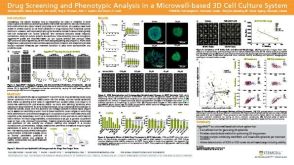 科学海报Drug Screening and Phenotypic Analysis in a Microwell-based 3D Cell Culture System


 沪公网安备31010102008431号