Essential role for Ptpn11 in survival of hematopoietic stem and progenitor cells.
Src homology 2 domain-containing phosphatase 2 (Shp2),encoded by Ptpn11,is a member of the nonreceptor protein-tyrosine phosphatase family,and functions in cell survival,proliferation,migration,and differentiation in many tissues. Here we report that loss of Ptpn11 in murine hematopoietic cells leads to bone marrow aplasia and lethality. Mutant mice show rapid loss of hematopoietic stem cells (HSCs) and immature progenitors of all hematopoietic lineages in a gene dosage-dependent and cell-autonomous manner. Ptpn11-deficient HSCs and progenitors undergo apoptosis concomitant with increased Noxa expression. Mutant HSCs/progenitors also show defective Erk and Akt activation in response to stem cell factor and diminished thrombopoietin-evoked Erk activation. Activated Kras alleviates the Ptpn11 requirement for colony formation by progenitors and cytokine/growth factor responsiveness of HSCs,indicating that Ras is functionally downstream of Shp2 in these cells. Thus,Shp2 plays a critical role in controlling the survival and maintenance of HSCs and immature progenitors in vivo.
View Publication
Tondelli B et al. (MAR 2009)
The American journal of pathology 174 3 727--35
Fetal liver cells transplanted in utero rescue the osteopetrotic phenotype in the oc/oc mouse.
Autosomal recessive osteopetrosis (ARO) is a group of genetic disorders that involve defects that preclude the normal function of osteoclasts,which differentiate from hematopoietic precursors. In half of human cases,ARO is the result of mutations in the TCIRG1 gene,which codes for a subunit of the vacuolar proton pump that plays a fundamental role in the acidification of the cell-bone interface. Functional mutations of this pump severely impair the resorption of bone mineral. Although postnatal hematopoietic stem cell transplantation can partially rescue the hematological phenotype of ARO,other stigmata of the disease,such as secondary neurological and growth defects,are not reversed. For this reason,ARO is a paradigm for genetic diseases that would benefit from effective prenatal treatment. Using the oc/oc mutant mouse,a murine model whose osteopetrotic phenotype closely recapitulates human TCIRG1-dependent ARO,we report that in utero transplantation of adult bone marrow hematopoietic stem cells can correct the ARO phenotype in a limited number of mice. Here we report that in utero injection of allogeneic fetal liver cells,which include hematopoietic stem cells,into oc/oc mouse fetuses at 13.5 days post coitum produces a high level of engraftment,and the oc/oc phenotype is completely rescued in a high percentage of these mice. Therefore,oc/oc pathology appears to be particularly sensitive to this form of early treatment of the ARO genetic disorder.
View Publication
Gene therapy of RAG-2-/- mice: sustained correction of the immunodeficiency.
Patients with mutations of either RAG-1 or RAG-2 genes suffer from severe combined immunodeficiency (SCID) characterized by the lack of T and B lymphocytes. The only curative treatment today consists of hematopoietic stem cell (HSC) transplantation,which is only partially successful in the absence of an HLA genoidentical donor,thus justifying research to find an alternative therapeutic approach. To this end,RAG-2-deficient mice were used to test whether retrovirally mediated ex vivo gene transfer into HSCs could provide long-term correction of the immunologic deficiency. Murine RAG-2-/-Sca-1(+) selected bone marrow cells were transduced with a modified Moloney leukemia virus (MLV)-based MND (myeloproliferative sarcoma virus enhancer,negative control region deleted,dl587rev primer-binding site substituted) retroviral vector containing the RAG-2 cDNA and transplanted into RAG-2-/- sublethally irradiated mice (3Gy). Two months later,T- and B-cell development was achieved in all mice. Diverse repertoire of T cells as well as proliferative capacity in the presence of mitogens,allogeneic cells,and keyhole limpet hemocyanin (KLH) were shown. B-cell function as shown by serum Ig levels and antibody response to a challenge by KLH also developed. Lymphoid subsets and function were shown to be stable over a one-year period without evidence of any detectable toxicity. Noteworthy,a selective advantage for transduced lymphoid cells was evidenced by comparative provirus quantification in lymphoid and myeloid lineages. Altogether,this study demonstrates the efficiency of ex vivo RAG-2 gene transfer in HSCs to correct the immune deficiency of RAG-2-/- mice,constituting a significant step toward clinical application.
View Publication
Jaatinen T et al. (MAR 2006)
Stem cells (Dayton,Ohio) 24 3 631--41
Global gene expression profile of human cord blood-derived CD133+ cells.
Human cord blood (CB)-derived CD133+ cells carry characteristics of primitive hematopoietic cells and proffer an alternative for CD34+ cells in hematopoietic stem cell (HSC) transplantation. To characterize the CD133+ cell population on a genetic level,a global expression analysis of CD133+ cells was performed using oligonucleotide microarrays. CD133+ cells were purified from four fresh CB units by immunomagnetic selection. All four CD133+ samples showed significant similarity in their gene expression pattern,whereas they differed clearly from the CD133- control samples. In all,690 transcripts were differentially expressed between CD133+ and CD133- cells. Of these,393 were increased and 297 were decreased in CD133+ cells. The highest overexpression was noted in genes associated with metabolism,cellular physiological processes,cell communication,and development. A set of 257 transcripts expressed solely in the CD133+ cell population was identified. Colony-forming unit (CFU) assay was used to detect the clonal progeny of precursors present in the studied cell populations. The results demonstrate that CD133+ cells express primitive markers and possess clonogenic progenitor capacity. This study provides a gene expression profile for human CD133+ cells. It presents a set of genes that may be used to unravel the properties of the CD133+ cell population,assumed to be highly enriched in HSCs.
View Publication
Smith MS et al. (SEP 2010)
Cell host & microbe 8 3 284--91
Granulocyte-colony stimulating factor reactivates human cytomegalovirus in a latently infected humanized mouse model.
Human cytomegalovirus (HCMV) is a significant cause of morbidity and mortality in organ transplant recipients. The use of granulocyte-colony stimulating factor (G-CSF)-mobilized stem cells from HCMV seropositive donors is suggested to double the risk of late-onset HCMV disease and chronic graft-versus-host disease in recipients when compared to conventional bone marrow transplantation with HCMV seropositive donors,although the etiology of the increased risk is unknown. To understand mechanisms of HCMV transmission in patients receiving G-CSF-mobilized blood products,we generated a NOD-scid IL2Rγ(c)(null)-humanized mouse model in which HCMV establishes latent infection in human hematopoietic cells. In this model,G-CSF induces the reactivation of latent HCMV in monocytes/macrophages that have migrated into organ tissues. In addition to establishing a humanized mouse model for systemic and latent HCMV infection,these results suggest that the use of G-CSF mobilized blood products from seropositive donors pose an elevated risk for HCMV transmission to recipients.
View Publication
Eckardt S et al. (FEB 2007)
Genes & development 21 4 409--19
Hematopoietic reconstitution with androgenetic and gynogenetic stem cells.
Parthenogenetic embryonic stem (ES) cells with two oocyte-derived genomes (uniparental) have been proposed as a source of autologous tissue for transplantation. The therapeutic applicability of any uniparental cell type is uncertain due to the consequences of genomic imprinting that in mammalian uniparental tissues causes unbalanced expression of imprinted genes. We transplanted uniparental fetal liver cells into lethally irradiated adult mice to test their capacity to replace adult hematopoietic tissue. Both maternal (gynogenetic) and paternal (androgenetic) derived cells conveyed long-term,multilineage reconstitution of hematopoiesis in recipients,with no associated pathologies. We also establish that uniparental ES cells can differentiate into transplantable hematopoietic progenitors in vitro that contribute to long-term hematopoiesis in recipients. Hematopoietic tissue in recipients maintained fidelity of parent-of-origin methylation marks at the Igf2/H19 locus; however,variability occurred in the maintenance of parental-specific methylation marks at other loci. In summary,despite genomic imprinting and its consequences on development that are particularly evident in the androgenetic phenotype,uniparental cells of both parental origins can form adult-transplantable stem cells and can repopulate an adult organ.
View Publication
Camargo FD et al. (JAN 2006)
Blood 107 2 501--7
Hematopoietic stem cells do not engraft with absolute efficiencies.
Hematopoietic stem cells (HSCs) can be isolated from murine bone marrow by their ability to efflux the Hoechst 33342 dye. This method defines an extremely small and hematopoietically potent subset of cells known as the side population (SP). Recent studies suggest that transplanted single SP cells are capable of lymphohematopoietic repopulation at near absolute efficiencies. Here,we carefully reevaluate the hematopoietic potential of individual SP cells and find substantially lower rates of reconstitution. Our strategy involved the cotransplantation of single SP cells along with different populations of competitor cells that varied in their self-renewal capacity. Even with minimized HSC competition,SP cells were only able to reconstitute up to 35% of recipient mice. Furthermore,through immunophenotyping and clonal in vitro assays we find that SP cells are virtually homogeneous. Isolation of HSCs on the basis of Hoechst exclusion and a single cell-surface marker allows enrichment levels similar to that obtained with complex multicolor strategies. Altogether,our results indicate that even an extremely homogeneous HSC population,based on phenotype and dye efflux,cannot reconstitute mice at absolute efficiencies.
View Publication
Donahue RE et al. (JAN 2000)
Blood 95 2 445--52
High levels of lymphoid expression of enhanced green fluorescent protein in nonhuman primates transplanted with cytokine-mobilized peripheral blood CD34(+) cells.
We have used a murine retrovirus vector containing an enhanced green fluorescent protein complimentary DNA (EGFP cDNA) to dynamically follow vector-expressing cells in the peripheral blood (PB) of transplanted rhesus macaques. Cytokine mobilized CD34(+) cells were transduced with an amphotropic vector that expressed EGFP and a dihydrofolate reductase cDNA under control of the murine stem cell virus promoter. The transduction protocol used the CH-296 recombinant human fibronectin fragment and relatively high concentrations of the flt-3 ligand and stem cell factor. Following transplantation of the transduced cells,up to 55% EGFP-expressing granulocytes were obtained in the peripheral circulation during the early posttransplant period. This level of myeloid marking,however,decreased to 0.1% or lower within 2 weeks. In contrast,EGFP expression in PB lymphocytes rose from 2%-5% shortly following transplantation to 10% or greater by week 5. After 10 weeks,the level of expression in PB lymphocytes continued to remain at 3%-5% as measured by both flow cytometry and Southern blot analysis,and EGFP expression was observed in CD4(+),CD8(+),CD20(+),and CD16/56(+) lymphocyte subsets. EGFP expression was only transiently detected in red blood cells and platelets soon after transplantation. Such sustained levels of lymphocyte marking may be therapeutic in a number of human gene therapy applications that require targeting of the lymphoid compartment. The transient appearance of EGFP(+) myeloid cells suggests that transduction of a lineage-restricted myeloid progenitor capable of short-term engraftment was obtained with this protocol. (Blood. 2000;95:445-452)
View Publication
Moreau-Gaudry F et al. (NOV 2001)
Blood 98 9 2664--72
High-level erythroid-specific gene expression in primary human and murine hematopoietic cells with self-inactivating lentiviral vectors.
Use of oncoretroviral vectors in gene therapy for hemoglobinopathies has been impeded by low titer vectors,genetic instability,and poor expression. Fifteen self- inactivating (SIN) lentiviral vectors using 4 erythroid promoters in combination with 4 erythroid enhancers with or without the woodchuck hepatitis virus postregulatory element (WPRE) were generated using the enhanced green fluorescent protein as a reporter gene. Vectors with high erythroid-specific expression in cell lines were tested in primary human CD34(+) cells and in vivo in the murine bone marrow (BM) transplantation model. Vectors containing the ankyrin-1 promoter showed high-level expression and stable proviral transmission. Two vectors containing the ankyrin-1 promoter and 2 erythroid enhancers (HS-40 plus GATA-1 or HS-40 plus 5-aminolevulinate synthase intron 8 [I8] enhancers) and WPRE expressed at levels higher than the HS2/beta-promoter vector in bulk unilineage erythroid cultures and individual erythroid blast-forming units derived from human BM CD34(+) cells. Sca1(+)/lineage(-) Ly5.1 mouse hematopoietic cells,transduced with these 2 ankyrin-1 promoter vectors,were injected into lethally irradiated Ly5.2 recipients. Eleven weeks after transplantation,high-level expression was seen from both vectors in blood (63%-89% of red blood cells) and erythroid cells in BM (70%-86% engraftment),compared with negligible expression in myeloid and lymphoid lineages in blood,BM,spleen,and thymus (0%-4%). The I8/HS-40-containing vector encoding a hybrid human beta/gamma-globin gene led to 43% to 113% human gamma-globin expression/copy of the mouse alpha-globin gene. Thus,modular use of erythroid-specific enhancers/promoters and WPRE in SIN-lentiviral vectors led to identification of high-titer,stably transmitted vectors with high-level erythroid-specific expression for gene therapy of red cell diseases.
View Publication
Suzuki T et al. (NOV 2006)
Stem cells (Dayton,Ohio) 24 11 2456--65
Highly efficient ex vivo expansion of human hematopoietic stem cells using Delta1-Fc chimeric protein.
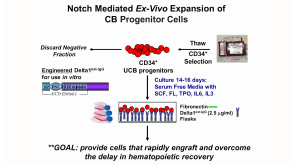
Ex vivo expansion of hematopoietic stem cells (HSCs) has been explored in the fields of stem cell biology,gene therapy,and clinical transplantation. Here,we demonstrate efficient ex vivo expansion of HSCs measured by long-term severe combined immunodeficient (SCID) repopulating cells (SRCs) from human cord blood CD133-sorted cells using a soluble form of Delta1. After a 3-week culture on immobilized Delta1 supplemented with stem cell factor,thrombopoietin,Flt-3 ligand,interleukin (IL)-3,and IL-6/soluble IL-6 receptor chimeric protein (FP6) in a serum- and stromal cell-free condition,we achieved approximately sixfold expansion of SRCs when evaluated by limiting dilution/transplantation assays. The maintenance of full multipotency and self-renewal capacity during culture was confirmed by transplantation to nonobese diabetic/SCID/gammac(null) mice,which showed myeloid,B,T,and natural killer cells as well as CD133(+)CD34(+) cells,and hematopoietic reconstitution in the secondary recipients. Interestingly,the CD133-sorted cells contained approximately 4.5 times more SRCs than the CD34-sorted cells. The present study provides a promising method to expand HSCs and encourages future trials on clinical transplantation.
View Publication