Progenitor cell dose determines the pace and completeness of engraftment in a xenograft model for cord blood transplantation.
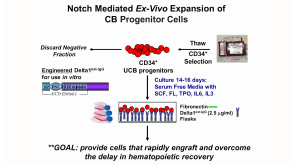
Two critical concerns in clinical cord blood transplantation are the initial time to engraftment and the subsequent restoration of immune function. These studies measured the impact of progenitor cell dose on both the pace and strength of hematopoietic reconstitution by transplanting nonobese diabetic/severe combined immunodeficiency/interleukin-2 receptor-gamma-null (NSγ) mice with lineage-depleted aldehyde dehydrogenase-bright CD34(+) human cord blood progenitors. The progress of each transplant was monitored over an extended time course by repeatedly analyzing the peripheral blood for human hematopoietic cells. In vivo human hematopoietic development was complete. After long-term transplantation assays (≥ 19 weeks),human T-cell development was documented within multiple tissues in 16 of 32 NSγ mice. Human T-cell differentiation was active within NSγ thymuses,as documented by the presence of CD4(+) CD8(+) T-cell progenitors as well as T-cell receptor excision circles. It is important to note that although myeloid and B-cell engraftment was detected as early as 4 weeks after transplantation,human T-cell development was exclusively late onset. High progenitor cell doses were associated with a robust human hematopoietic chimerism that accelerated both initial time to engraftment and subsequent T-cell development. At lower progenitor cell doses,the chimerism was weak and the human hematopoietic lineage development was frequently incomplete.
View Publication
Andreani M et al. (JAN 2011)
Haematologica 96 1 128--33
Quantitatively different red cell/nucleated cell chimerism in patients with long-term, persistent hematopoietic mixed chimerism after bone marrow transplantation for thalassemia major or sickle cell disease.
BACKGROUND: Persistent mixed chimerism represents a state in which recipient and donor cells stably co-exist after hematopoietic stem cell transplantation. However,since in most of the studies reported in literature the engraftment state was observed in the nucleated cells,in this study we determined the donor origin of the mature erythrocytes of patients with persistent mixed chimerism after transplantation for hemoglobinopathies. Results were compared with the engraftment state observed in singly picked out burst-forming unit - erythroid colonies and in the nucleated cells collected from the peripheral blood and from the bone marrow. DESIGN AND METHODS: The donor origin of the erythrocytes was determined analyzing differences on the surface antigens of the erythrocyte suspension after incubation with anti-ABO and/or anti-C,-c,-D,-E and -e monoclonal antibodies by a flow cytometer. Analysis of short tandem repeats was used to determine the donor origin of nucleated cells and burst-forming unit - erythroid colonies singly picked out after 14 days of incubation. RESULTS: The proportions of donor-derived nucleated cells in four transplanted patients affected by hemoglobinopathies were 71%,46%,15% and 25% at day 1364,1385,1314 and 932,respectively. Similar results were obtained for the erythroid precursors,analyzing the donor/recipient origin of the burst-forming unit - erythroid colonies. In contrast,on the same days of observation,the proportions of donor-derived erythrocytes in the four patients with persistent mixed chimerism were 100%,100%,73% and 90%. Conclusions Our results showed that most of the erythrocytes present in four long-term transplanted patients affected by hemoglobinopathies and characterized by the presence of few donor engrafted nucleated cells were of donor origin. The indication that small proportions of donor engrafted cells might be sufficient for clinical control of the disease in patients affected by hemoglobinopathies is relevant,although the biological mechanisms underlying these observations need further investigation.
View Publication
Muguruma Y et al. (MAR 2006)
Blood 107 5 1878--87
Reconstitution of the functional human hematopoietic microenvironment derived from human mesenchymal stem cells in the murine bone marrow compartment.
Hematopoiesis is maintained by specific interactions between both hematopoietic and nonhematopoietic cells. Whereas hematopoietic stem cells (HSCs) have been extensively studied both in vitro and in vivo,little is known about the in vivo characteristics of stem cells of the nonhematopoietic component,known as mesenchymal stem cells (MSCs). Here we have visualized and characterized human MSCs in vivo following intramedullary transplantation of enhanced green fluorescent protein-marked human MSCs (eGFP-MSCs) into the bone marrow (BM) of nonobese diabetic/severe combined immunodeficiency (NOD/SCID) mice. Between 4 to 10 weeks after transplantation,eGFP-MSCs that engrafted in murine BM integrated into the hematopoietic microenvironment (HME) of the host mouse. They differentiated into pericytes,myofibroblasts,BM stromal cells,osteocytes in bone,bone-lining osteoblasts,and endothelial cells,which constituted the functional components of the BM HME. The presence of human MSCs in murine BM resulted in an increase in functionally and phenotypically primitive human hematopoietic cells. Human MSC-derived cells that reconstituted the HME appeared to contribute to the maintenance of human hematopoiesis by actively interacting with primitive human hematopoietic cells.
View Publication
Thirukkumaran CM et al. (JUL 2003)
Blood 102 1 377--87
Reovirus oncolysis as a novel purging strategy for autologous stem cell transplantation.
Hematologic stem cell rescue after high-dose cytotoxic therapy is extensively used for the treatment of many hematopoietic and solid cancers. Gene marking studies suggest that occult tumor cells within the autograft may contribute to clinical relapse. To date purging of autografts contaminated with cancer cells has been unsuccessful. The selective oncolytic property of reovirus against myriad malignant histologies in in vitro,in vivo,and ex vivo systems has been previously demonstrated. In the present study we have shown that reovirus can successfully purge cancer cells within autografts. Human monocytic and myeloma cell lines as well as enriched ex vivo lymphoma,myeloma,and Waldenström macroglobulinemia patient tumor specimens were used in an experimental purging model. Viability of the cell lines or purified ex vivo tumor cells of diffuse large B-cell lymphoma,chronic lymphocytic leukemia,Waldenström macroglobulinemia,and small lymphocytic lymphoma was significantly reduced after reovirus treatment. Further,[35S]-methionine labeling and sodium dodecyl sulfate-polyacrylamide gel electrophoresis (SDS-PAGE) of cellular proteins demonstrated reovirus protein synthesis and disruption of host cell protein synthesis as early as 24 hours. Admixtures of apheresis product with the abovementioned tumor cells and cell lines treated with reovirus showed complete purging of disease. In contrast,reovirus purging of enriched ex vivo multiple myeloma,Burkitt lymphoma,and follicular lymphoma was incomplete. The oncolytic action of reovirus did not affect CD34+ stem cells or their long-term colony-forming assays even after granulocyte colony-stimulating factor (G-CSF) stimulation. Our results indicate the ex vivo use of an unattenuated oncolytic virus as an attractive purging strategy for autologous stem cell transplantations.
View Publication
Mä et al. (DEC 2010)
Cardiovascular research 88 3 530--8
Silencing of either SR-A or CD36 reduces atherosclerosis in hyperlipidaemic mice and reveals reciprocal upregulation of these receptors.
AIMS: Macrophage scavenger receptor A (SR-A) and class B scavenger receptor CD36 (CD36) contribute to foam cell formation and atherogenesis via uptake of modified lipoproteins. So far,the role of these scavenger receptors has been studied mainly using knockout models totally lacking these receptors. We studied the role of SR-A and CD36 in foam cell formation and atherogenesis by RNA interference (RNAi)-mediated silencing,which is a clinically feasible method to down-regulate the expression of these receptors. METHODS AND RESULTS: We constructed lentivirus vectors encoding short hairpin RNAs (shRNAs) against mouse SR-A and CD36. Decreased SR-A but not CD36 expression led to reduced foam cell formation caused by acetylated low-density lipoprotein (LDL) in mouse macrophages,whereas the uptake of oxidized LDL was not altered. More importantly,silencing of SR-A upregulates CD36 and vice versa. In LDL receptor-deficient apolipoprotein B100 (LDLR(-/-)ApoB(100/100)) mice kept on a western diet,silencing of either SR-A or CD36 in bone marrow cells led to a marked decrease (37.4 and 34.2%,respectively) in cross-sectional lesion area,whereas simultaneous silencing of both receptors was not effective. CONCLUSION: Our results suggest that silencing of either SR-A or CD36 alone reduces atherogenesis in mice. However,due to reciprocal upregulation,silencing of both SR-A and CD36 is not effective.
View Publication
Cottler-Fox MH et al. (JAN 2003)
Hematology / the Education Program of the American Society of Hematology. American Society of Hematology. Education Program 419--37
Stem cell mobilization.
Successful blood and marrow transplant (BMT),both autologous and allogeneic,requires the infusion of a sufficient number of hematopoietic progenitor/stem cells (HPCs) capable of homing to the marrow cavity and regenerating a full array of hematopoietic cell lineages in a timely fashion. At present,the most commonly used surrogate marker for HPCs is the cell surface marker CD34,identified in the clinical laboratory by flow cytometry. Clinical studies have shown that infusion of at least 2 x 10(6) CD34(+) cells/kg recipient body weight results in reliable engraftment as measured by recovery of adequate neutrophil and platelet counts approximately 14 days after transplant. Recruitment of HPCs from the marrow into the blood is termed mobilization,or,more commonly,stem cell mobilization. In Section I,Dr. Tsvee Lapidot and colleagues review the wide range of factors influencing stem cell mobilization. Our current understanding focuses on chemokines,proteolytic enzymes,adhesion molecules,cytokines and stromal cell-stem cell interactions. On the basis of this understanding,new approaches to mobilization have been designed and are now starting to undergo clinical testing. In Section II,Dr. Michele Cottler-Fox describes factors predicting the ability to mobilize the older patient with myeloma. In addition,clinical approaches to improving collection by individualizing the timing of apheresis and adjusting the volume of blood processed to achieve a desired product are discussed. Key to this process is the daily enumeration of blood CD34(+) cells. Newer methods of enumerating and mobilizing autologous blood HPCs are discussed. In Section III,Dr. John DiPersio and colleagues provide data on clinical results of mobilizing allogeneic donors with G-CSF,GM-CSF and the combination of both as relates to the number and type of cells collected by apheresis. Newer methods of stem cell mobilization as well as the relationship of graft composition on immune reconstitution and GVHD are discussed.
View Publication