High-Content Screening in hPSC-Neural Progenitors Identifies Drug Candidates that Inhibit Zika Virus Infection in Fetal-like Organoids and Adult Brain.
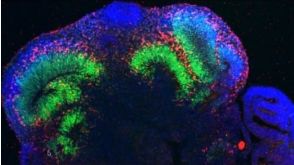
Zika virus (ZIKV) infects fetal and adult human brain and is associated with serious neurological complications. To date,no therapeutic treatment is available to treat ZIKV-infected patients. We performed a high-content chemical screen using human pluripotent stem cell-derived cortical neural progenitor cells (hNPCs) and found that hippeastrine hydrobromide (HH) and amodiaquine dihydrochloride dihydrate (AQ) can inhibit ZIKV infection in hNPCs. Further validation showed that HH also rescues ZIKV-induced growth and differentiation defects in hNPCs and human fetal-like forebrain organoids. Finally,HH and AQ inhibit ZIKV infection in adult mouse brain in vivo. Strikingly,HH suppresses viral propagation when administered to adult mice with active ZIKV infection,highlighting its therapeutic potential. Our approach highlights the power of stem cell-based screens and validation in human forebrain organoids and mouse models in identifying drug candidates for treating ZIKV infection and related neurological complications in fetal and adult patients.
View Publication
Visvader JE (NOV 2009)
Genes & development 23 22 2563--77
Keeping abreast of the mammary epithelial hierarchy and breast tumorigenesis.
The epithelium of the mammary gland exists in a highly dynamic state,undergoing dramatic morphogenetic changes during puberty,pregnancy,lactation,and regression. The recent identification of stem and progenitor populations in mouse and human mammary tissue has provided evidence that the mammary epithelium is organized in a hierarchical manner. Characterization of these normal epithelial subtypes is an important step toward understanding which cells are predisposed to oncogenesis. This review summarizes progress in the field toward defining constituent cells and key molecular regulators of the mammary epithelial hierarchy. Potential relationships between normal epithelial populations and breast tumor subtypes are discussed,with implications for understanding the cellular etiology underpinning breast tumor heterogeneity.
View Publication


 EasySep™小鼠TIL(CD45)正选试剂盒




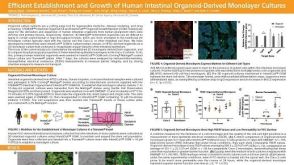 科学海报Efficient Establishment and Growth of Human Intestinal Organoid-Derived Monolayers






 沪公网安备31010102008431号