DNMT3A mutations promote anthracycline resistance in acute myeloid leukemia via impaired nucleosome remodeling.
Although the majority of patients with acute myeloid leukemia (AML) initially respond to chemotherapy,many of them subsequently relapse,and the mechanistic basis for AML persistence following chemotherapy has not been determined. Recurrent somatic mutations in DNA methyltransferase 3A (DNMT3A),most frequently at arginine 882 (DNMT3A(R882)),have been observed in AML and in individuals with clonal hematopoiesis in the absence of leukemic transformation. Patients with DNMT3A(R882) AML have an inferior outcome when treated with standard-dose daunorubicin-based induction chemotherapy,suggesting that DNMT3A(R882) cells persist and drive relapse. We found that Dnmt3a mutations induced hematopoietic stem cell expansion,cooperated with mutations in the FMS-like tyrosine kinase 3 gene (Flt3(ITD)) and the nucleophosmin gene (Npm1(c)) to induce AML in vivo,and promoted resistance to anthracycline chemotherapy. In patients with AML,the presence of DNMT3A(R882) mutations predicts minimal residual disease,underscoring their role in AML chemoresistance. DNMT3A(R882) cells showed impaired nucleosome eviction and chromatin remodeling in response to anthracycline treatment,which resulted from attenuated recruitment of histone chaperone SPT-16 following anthracycline exposure. This defect led to an inability to sense and repair DNA torsional stress,which resulted in increased mutagenesis. Our findings identify a crucial role for DNMT3A(R882) mutations in driving AML chemoresistance and highlight the importance of chromatin remodeling in response to cytotoxic chemotherapy.
View Publication
产品号#:
03814
产品名:
ClonaCell™-TCS培养基
Kanzaki H et al. ( 2016)
Scientific Reports 6 August 32259
A-Disintegrin and Metalloproteinase (ADAM) 17 enzymatically degrades interferon-gamma
Interferon-gamma (IFN-γ) is a pleiotropic cytokine that exerts anti-tumor and anti-osteoclastogenic effects. Although transcriptional and post-transcriptional regulation of IFN-γ is well understood,subsequent modifications of secreted IFN-γ are not fully elucidated. Previous research indicates that some cancer cells escape immune surveillance and metastasize into bone tissue by inducing osteoclastic bone resorption. Peptidases of the a-disintegrin and metalloproteinase (ADAM) family are implicated in cancer cell proliferation and tumor progression. We hypothesized that the ADAM enzymes expressed by cancer cells degrades IFN-γ and attenuates IFN-γ-mediated anti-tumorigenic and anti-osteoclastogenic effects. Recombinant ADAM17 degraded IFN-γ into small fragments. The addition of ADAM17 to the culture supernatant of stimulated mouse splenocytes decreased IFN-γ concentration. However,ADAM17 inhibition in the stimulated mouse T-cells prevented IFN-γ degradation. ADAM17-expressing human breast cancer cell lines MCF-7 and MDA-MB-453 also degraded recombinant IFN-γ,but this was attenuated by ADAM17 inhibition. Degraded IFN-γ lost the functionality including the inhibititory effect on osteoclastogenesis. This is the first study to demonstrate the extracellular proteolytic degradation of IFN-γ by ADAM17. These results suggest that ADAM17-mediated degradation of IFN-γ may block the anti-tumorigenic and anti-osteoclastogenic effects of IFN-γ. ADAM17 inhibition may be useful for the treatment of attenuated cancer immune surveillance and/or bone metastases.
View Publication
产品号#:
03800
产品名:
ClonaCell™-HY 杂交瘤试剂盒
Vanden Bempt M et al. (MAR 2016)
Leukemia March 8 Epub ahead of print
Generation of the Fip1l1–Pdgfra fusion gene using CRISPR/Cas genome editing
Shiozawa T et al. (FEB 2016)
Virchows Archiv 468 2 179--90
Dimethylarginine dimethylaminohydrolase 2 promotes tumor angiogenesis in lung adenocarcinoma
Although embryonal proteins have been used as tumor marker,most are not useful for detection of early malignancy. In the present study,we developed mouse monoclonal antibodies against fetal lung of miniature swine,and screened them to find an embryonal protein that is produced at the early stage of malignancy,focusing on lung adenocarcinoma. We found an antibody clone that specifically stained stroma of lung adenocarcinoma. LC-MS/MS identified the protein recognized by this clone as dimethylarginine dimethylaminohydrolase 2 (DDAH2),an enzyme known for antiatherosclerotic activity. DDAH2 was found to be expressed in fibroblasts of stroma of malignancies,with higher expression in minimally invasive adenocarcinoma (MIA) and invasive adenocarcinoma than in adenocarcinoma in situ (AIS). Moreover,tumors with high stromal expression of DDAH2 had a poorer prognosis than those without. In vitro analysis showed that DDAH2 increases expression of endothelial nitric oxide synthase (eNOS),inducing proliferation and capillary-like tube formation of vascular endothelial cells. In resected human tissues,eNOS also showed higher expression in invasive adenocarcinoma than in AIS and normal lung,similarly to DDAH2. Our data indicate that expression of DDAH2 is associated with invasiveness of lung adenocarcinoma via tumor angiogenesis. DDAH2 expression might be a prognostic factor in lung adenocarcinoma.
View Publication
产品号#:
03800
03801
03802
03803
03804
03805
03806
产品名:
ClonaCell™-HY 杂交瘤试剂盒
ClonaCell™-HY Medium
ClonaCell™-HY Medium
ClonaCell™-HY Medium
ClonaCell™-HY Medium
ClonaCell™-HY Medium
ClonaCell™-HY PEG (融合)
Johnston AJ et al. (SEP 2015)
Cell 162 6 1365--78
Targeting of Fn14 prevents cancer-induced cachexia and prolongs survival
Summary The cytokine TWEAK and its cognate receptor Fn14 are members of the TNF/TNFR superfamily and are upregulated in tumors. We found that Fn14,when expressed in tumors,causes cachexia and that antibodies against Fn14 dramatically extended lifespan by inhibiting tumor-induced weight loss although having only moderate inhibitory effects on tumor growth. Anti-Fn14 antibodies prevented tumor-induced inflammation and loss of fat and muscle mass. Fn14 signaling in the tumor,rather than host,is responsible for inducing this cachexia because tumors in Fn14- and TWEAK-deficient hosts developed cachexia that was comparable to that of wild-type mice. These results extend the role of Fn14 in wound repair and muscle development to involvement in the etiology of cachexia and indicate that Fn14 antibodies may be a promising approach to treat cachexia,thereby extending lifespan and improving quality of life for cancer patients.
View Publication
产品号#:
03800
03801
03802
03803
03804
03805
03806
产品名:
ClonaCell™-HY 杂交瘤试剂盒
ClonaCell™-HY Medium
ClonaCell™-HY Medium
ClonaCell™-HY Medium
ClonaCell™-HY Medium
ClonaCell™-HY Medium
ClonaCell™-HY PEG (融合)
Ben-David U et al. (SEP 2014)
Nature communications 5 4825
Aneuploidy induces profound changes in gene expression, proliferation and tumorigenicity of human pluripotent stem cells.
Human pluripotent stem cells (hPSCs) tend to acquire genomic aberrations in culture,the most common of which is trisomy of chromosome 12. Here we dissect the cellular and molecular implications of this trisomy in hPSCs. Global gene expression analyses reveal that trisomy 12 profoundly affects the gene expression profile of hPSCs,inducing a transcriptional programme similar to that of germ cell tumours. Comparison of proliferation,differentiation and apoptosis between diploid and aneuploid hPSCs shows that trisomy 12 significantly increases the proliferation rate of hPSCs,mainly as a consequence of increased replication. Furthermore,trisomy 12 increases the tumorigenicity of hPSCs in vivo,inducing transcriptionally distinct teratomas from which pluripotent cells can be recovered. Last,a chemical screen of 89 anticancer drugs discovers that trisomy 12 raises the sensitivity of hPSCs to several replication inhibitors. Together,these findings demonstrate the extensive effect of trisomy 12 and highlight its perils for successful hPSC applications.
View Publication
产品号#:
05850
05857
05870
05875
07909
85850
85857
85870
85875
产品名:
IV型胶原酶(1mg /mL)
mTeSR™1
mTeSR™1
Chen Y-W et al. (NOV 2010)
Molecular cancer therapeutics 9 11 2879--92
Cucurbitacin I suppressed stem-like property and enhanced radiation-induced apoptosis in head and neck squamous carcinoma--derived CD44(+)ALDH1(+) cells.
Head and neck squamous cell carcinoma (HNSCC) is a prevalent cancer worldwide. Signal transducers and activators of transcription 3 (STAT3) signaling is reported to promote tumor malignancy and recurrence in HNSCC. Cucurbitacins,triterpenoid derivatives,are strong STAT3 inhibitors with anticancer properties. Recent studies have shown aldehyde dehydrogenase 1 (ALDH1) to be a marker of cancer stem cells (CSC) in HNSCC. The aim of this study was to investigate the therapeutic effect of cucurbitacin I in HNSCC-derived CSCs. Using immunohistochemical analysis,we firstly showed that CD44,ALDH1,and phosphorylated STAT3 (p-STAT3) were higher in high-grade HNSCCs,and that triple positivity for CD44/ALDH1/p-STAT3 indicated a worse prognosis for HNSCC patients. Secondly,CD44(+)ALDH1(+) cells isolated from seven HNSCC patients showed greater tumorigenicity,radioresistance,and high expression of stemness (Bmi-1/Oct-4/Nanog) and epithelial-mesenchymal-transitional (Snail/Twist) genes as p-STAT3 level increased. Furthermore,we found that cucurbitacin I (JSI-124) can effectively inhibit the expression of p-STAT3 and capacities for tumorigenicity,sphere formation,and radioresistance in HNSCC-CD44(+)ALDH1(+). Notably,150 nmol/L cucurbitacin I effectively blocked STAT3 signaling and downstream survivin and Bcl-2 expression,and it induced apoptosis in HNSCC-CD44(+)ALDH1(+). Moreover,microarray data indicated that 100 nmol/L cucurbitacin I facilitated CD44(+)ALDH1(+) cells to differentiate into CD44�?�ALDH1�?� and enhanced the radiosensitivity of HNSCC-CD44(+)ALDH1(+). Xenotransplant experiments revealed that cucurbitacin I combined with radiotherapy significantly suppressed tumorigenesis and lung metastasis and further improved the survival rate in HNSCC-CD44(+)ALDH1(+)-transplanted immunocompromised mice. Taken together,our data show that cucurbitacin I,STAT3 inhibitor,reduces radioresistant,distant-metastatic,and CSC-like properties of HNSCC-CD44(+)ALDH1(+) cells. The potential of cucurbitacin I as a radiosensitizer should be verified in future anti-CSC therapy.
View Publication
产品号#:
01700
01705
01702
产品名:
ALDEFLUOR™ 试剂盒
ALDEFLUOR™ DEAB试剂
ALDEFLUOR™测定缓冲液
Calcagno AM et al. (NOV 2010)
Journal of the National Cancer Institute 102 21 1637--52
Prolonged drug selection of breast cancer cells and enrichment of cancer stem cell characteristics.
BACKGROUND: Cancer stem cells are presumed to have virtually unlimited proliferative and self-renewal abilities and to be highly resistant to chemotherapy,a feature that is associated with overexpression of ATP-binding cassette transporters. We investigated whether prolonged continuous selection of cells for drug resistance enriches cultures for cancer stem-like cells. METHODS: Cancer stem cells were defined as CD44+/CD24�?� cells that could self-renew (ie,generate cells with the tumorigenic CD44+/CD24�?� phenotype),differentiate,invade,and form tumors in vivo. We used doxorubicin-selected MCF-7/ADR cells,weakly tumorigenic parental MCF-7 cells,and MCF-7/MDR,an MCF-7 subline with forced expression of ABCB1 protein. Cells were examined for cell surface markers and side-population fractions by microarray and flow cytometry,with in vitro invasion assays,and for ability to form mammospheres. Xenograft tumors were generated in mice to examine tumorigenicity (n = 52). The mRNA expression of multidrug resistance genes was examined in putative cancer stem cells and pathway analysis of statistically significantly differentially expressed genes was performed. All statistical tests were two-sided. RESULTS: Pathway analysis showed that MCF-7/ADR cells express mRNAs from ABCB1 and other genes also found in breast cancer stem cells (eg,CD44,TGFB1,and SNAI1). MCF-7/ADR cells were highly invasive,formed mammospheres,and were tumorigenic in mice. In contrast to parental MCF-7 cells,more than 30% of MCF-7/ADR cells had a CD44+/CD24�?� phenotype,could self-renew,and differentiate (ie,produce CD44+/CD24�?� and CD44+/CD24+ cells) and overexpressed various multidrug resistance-linked genes (including ABCB1,CCNE1,and MMP9). MCF-7/ADR cells were statistically significantly more invasive in Matrigel than parental MCF-7 cells (MCF-7 cells = 0.82 cell per field and MCF-7/ADR = 7.51 cells per field,difference = 6.69 cells per field,95% confidence interval = 4.82 to 8.55 cells per field,P textless .001). No enrichment in the CD44+/CD24�?� or CD133+ population was detected in MCF-7/MDR. CONCLUSION: The cell population with cancer stem cell characteristics increased after prolonged continuous selection for doxorubicin resistance.
View Publication
产品号#:
01700
01705
01702
产品名:
ALDEFLUOR™ 试剂盒
ALDEFLUOR™ DEAB试剂
ALDEFLUOR™测定缓冲液
Bhattacharyya S and Khanduja KL (APR 2010)
Acta biochimica et biophysica Sinica 42 4 237--42
New hope in the horizon: cancer stem cells.
The major goal of researchers and oncologists is to develop promising ground for novel therapeutic strategies to prevent recurrence or relapse of cancer. Recent evidences suggest that a subset of cells called cancer stem cells (CSCs) are present within the tumor mass which possess tumorigenic capacity and may be responsible for propagation,relapse,and metastatic dissemination. These cells have certain stem cell-like properties,e.g. quiescence,selfrenewal,asymmetric division,and multidrug resistance which allow them to drive tumor growth and evade conventional therapies. A number of markers and assays have been designed to isolate and characterize the CSC population from the bulk tumor. The objective now is to selectively target the CSCs in order to eliminate the tumor from root,overcoming the emergence of clones capable of evading traditional therapy. This approach may help in increasing the overall disease-free survival in some cancers.
View Publication
产品号#:
01700
01705
01702
产品名:
ALDEFLUOR™ 试剂盒
ALDEFLUOR™ DEAB试剂
ALDEFLUOR™测定缓冲液
Kern J et al. (OCT 2009)
Blood 114 18 3960--7
GRP-78 secreted by tumor cells blocks the antiangiogenic activity of bortezomib.
Antiangiogenic effects of the proteasome inhibitor bortezomib were analyzed on tumor xenografts in vivo. Bortezomib strongly inhibited angiogenesis and vascularization in the chicken chorioallantoic membrane. Bortezomib's inhibitory effects on chorioallantoic membrane vascularization were abrogated in the presence of distinct tumor xenografts,thanks to a soluble factor secreted by tumor cells. Through size-exclusion and ion-exchange chromatography as well as mass spectroscopy,we identified GRP-78,a chaperone protein of the unfolded protein response,as being responsible for bortezomib resistance. Indeed,a variety of bortezomib-resistant solid tumor cell lines (PC-3,HRT-18),but not myeloma cell lines (U266,OPM-2),were able to secrete high amounts of GRP-78. Recombinant GRP-78 conferred bortezomib resistance to endothelial cells and OPM-2 myeloma cells. Knockdown of GRP78 gene expression in tumor cells and immunodepletion of GRP-78 protein from tumor cell supernatants restored bortezomib sensitivity. GRP-78 did not bind or complex bortezomib but induced prosurvival signals by phosphorylation of extracellular signal-related kinase and inhibited p53-mediated expression of proapoptotic Bok and Noxa proteins in endothelial cells. From our data,we conclude that distinct solid tumor cells are able to secrete GRP-78 into the tumor microenvironment,thus demonstrating a hitherto unknown mechanism of resistance to bortezomib.
View Publication


 EasySep™小鼠TIL(CD45)正选试剂盒




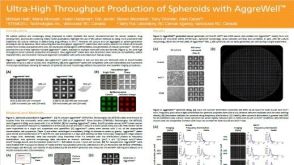 科学海报Ultra-High Throughput Production of Spheroids with AggreWell™

 沪公网安备31010102008431号