Booth L et al. (JUL 2015)
Journal of cellular physiology 230 7 1661--76
GRP78/BiP/HSPA5/Dna K is a universal therapeutic target for human disease.
The chaperone GRP78/Dna K is conserved throughout evolution down to prokaryotes. The GRP78 inhibitor OSU-03012 (AR-12) interacted with sildenafil (Viagra) or tadalafil (Cialis) to rapidly reduce GRP78 levels in eukaryotes and as a single agent reduce Dna K levels in prokaryotes. Similar data with the drug combination were obtained for: HSP70,HSP90,GRP94,GRP58,HSP27,HSP40 and HSP60. OSU-03012/sildenafil treatment killed brain cancer stem cells and decreased the expression of: NPC1 and TIM1; LAMP1; and NTCP1,receptors for Ebola/Marburg/Hepatitis A,Lassa fever,and Hepatitis B viruses,respectively. Pre-treatment with OSU-03012/sildenafil reduced expression of the coxsakie and adenovirus receptor in parallel with it also reducing the ability of a serotype 5 adenovirus or coxsakie virus B4 to infect and to reproduce. Similar data were obtained using Chikungunya,Mumps,Measles,Rubella,RSV,CMV,and Influenza viruses. OSU-03012 as a single agent at clinically relevant concentrations killed laboratory generated antibiotic resistant E. coli and clinical isolate multi-drug resistant N. gonorrhoeae and MRSE which was in bacteria associated with reduced Dna K and Rec A expression. The PDE5 inhibitors sildenafil or tadalafil enhanced OSU-03012 killing in N. gonorrhoeae and MRSE and low marginally toxic doses of OSU-03012 could restore bacterial sensitivity in N. gonorrhoeae to multiple antibiotics. Thus,Dna K and bacterial phosphodiesterases are novel antibiotic targets,and inhibition of GRP78 is of therapeutic utility for cancer and also for bacterial and viral infections.
View Publication
产品号#:
05750
05751
产品名:
NeuroCult™ NS-A 基础培养基(人)
NeuroCult™ NS-A 扩增试剂盒(人)
Booth L et al. (MAY 2015)
Journal of cellular physiology 230 5 1115--27
PDE5 inhibitors enhance celecoxib killing in multiple tumor types.
The present studies determined whether clinically relevant phosphodiesterase 5 (PDE5) inhibitors interacted with a clinically relevant NSAID,celecoxib,to kill tumor cells. Celecoxib and PDE5 inhibitors interacted in a greater than additive fashion to kill multiple tumor cell types. Celecoxib and sildenafil killed ex vivo primary human glioma cells as well as their associated activated microglia. Knock down of PDE5 recapitulated the effects of PDE5 inhibitor treatment; the nitric oxide synthase inhibitor L-NAME suppressed drug combination toxicity. The effects of celecoxib were COX2 independent. Over-expression of c-FLIP-s or knock down of CD95/FADD significantly reduced killing by the drug combination. CD95 activation was dependent on nitric oxide and ceramide signaling. CD95 signaling activated the JNK pathway and inhibition of JNK suppressed cell killing. The drug combination inactivated mTOR and increased the levels of autophagy and knock down of Beclin1 or ATG5 strongly suppressed killing by the drug combination. The drug combination caused an ER stress response; knock down of IRE1α/XBP1 enhanced killing whereas knock down of eIF2α/ATF4/CHOP suppressed killing. Sildenafil and celecoxib treatment suppressed the growth of mammary tumors in vivo. Collectively our data demonstrate that clinically achievable concentrations of celecoxib and sildenafil have the potential to be a new therapeutic approach for cancer.
View Publication
产品号#:
05750
05751
产品名:
NeuroCult™ NS-A 基础培养基(人)
NeuroCult™ NS-A 扩增试剂盒(人)
Bramble MS et al. (NOV 2016)
Scientific reports 6 36916
Sex-Specific Effects of Testosterone on the Sexually Dimorphic Transcriptome and Epigenome of Embryonic Neural Stem/Progenitor Cells.
The mechanisms by which sex differences in the mammalian brain arise are poorly understood,but are influenced by a combination of underlying genetic differences and gonadal hormone exposure. Using a mouse embryonic neural stem cell (eNSC) model to understand early events contributing to sexually dimorphic brain development,we identified novel interactions between chromosomal sex and hormonal exposure that are instrumental to early brain sex differences. RNA-sequencing identified 103 transcripts that were differentially expressed between XX and XY eNSCs at baseline (FDR%=%0.10). Treatment with testosterone-propionate (TP) reveals sex-specific gene expression changes,causing 2854 and 792 transcripts to become differentially expressed on XX and XY genetic backgrounds respectively. Within the TP responsive transcripts,there was enrichment for genes which function as epigenetic regulators that affect both histone modifications and DNA methylation patterning. We observed that TP caused a global decrease in 5-methylcytosine abundance in both sexes,a transmissible effect that was maintained in cellular progeny. Additionally,we determined that TP was associated with residue-specific alterations in acetylation of histone tails. These findings highlight an unknown component of androgen action on cells within the developmental CNS,and contribute to a novel mechanism of action by which early hormonal organization is initiated and maintained.
View Publication
产品号#:
05700
05701
05702
产品名:
NeuroCult™ 基础培养基(小鼠和大鼠)
NeuroCult™ 扩增添加物(小鼠和大鼠)
NeuroCult™扩增试剂盒(小鼠和大鼠)
Bravard A et al. (JAN 2015)
Nucleic acids research 43 2 904--16
The prion protein is critical for DNA repair and cell survival after genotoxic stress.
The prion protein (PrP) is highly conserved and ubiquitously expressed,suggesting that it plays an important physiological function. However,despite decades of investigation,this role remains elusive. Here,by using animal and cellular models,we unveil a key role of PrP in the DNA damage response. Exposure of neurons to a genotoxic stress activates PRNP transcription leading to an increased amount of PrP in the nucleus where it interacts with APE1,the major mammalian endonuclease essential for base excision repair,and stimulates its activity. Preventing the induction of PRNP results in accumulation of abasic sites in DNA and impairs cell survival after genotoxic treatment. Brains from Prnp(-/-) mice display a reduced APE1 activity and a defect in the repair of induced DNA damage in vivo. Thus,PrP is required to maintain genomic stability in response to genotoxic stresses.
View Publication
产品号#:
05700
05701
05702
产品名:
NeuroCult™ 基础培养基(小鼠和大鼠)
NeuroCult™ 扩增添加物(小鼠和大鼠)
NeuroCult™扩增试剂盒(小鼠和大鼠)
Chakrabarti L et al. (DEC 2013)
PLoS ONE 8 12 e83521
A Mechanism Linking Id2-TGFβ Crosstalk to Reversible Adaptive Plasticity in Neuroblastoma
The ability of high-risk neuroblastoma to survive unfavorable growth conditions and multimodal therapy has produced an elusive childhood cancer with remarkably poor prognosis. A novel phenomenon enabling neuroblastoma to survive selection pressure is its capacity for reversible adaptive plasticity. This plasticity allows cells to transition between highly proliferative anchorage dependent (AD) and slow growing,anoikis-resistant anchorage independent (AI) phenotypes. Both phenotypes are present in established mouse and human tumors. The differential gene expression profile of the two cellular phenotypes in the mouse Neuro2a cell line delineated pathways of proliferation in AD cells or tyrosine kinase activation/ apoptosis inhibition in AI cells. A 20 fold overexpression of inhibitor of differentiation 2 (Id2) was identified in AD cells while up-regulation of genes involved in anoikis resistance like PI3K/Akt,Erk,Bcl2 and integrins was observed in AI cells. Similarly,differential expression of Id2 and other genes of interest were also observed in the AD and AI phenotypes of human neuroblastoma cell lines,SK-N-SH and IMR-32; as well as in primary human tumor specimens. Forced down-regulation of Id2 in AD cells or overexpression in AI cells induced the cells to gain characteristics of the other phenotype. Id2 binds both TGFβ and Smad2/3 and appears critical for maintaining the proliferative phenotype at least partially through negative regulation of the TGFβ/Smad pathway. Simultaneously targeting the differential molecular pathways governing reversible adaptive plasticity resulted in 50% cure of microscopic disease and delayed tumor growth in established mouse neuroblastoma tumors. We present a mechanism that accounts for reversible adaptive plasticity and a molecular basis for combined targeted therapies in neuroblastoma.
View Publication
Walker TL et al. (APR 2007)
The Journal of neuroscience : the official journal of the Society for Neuroscience 27 14 3734--42
The doublecortin-expressing population in the developing and adult brain contains multipotential precursors in addition to neuronal-lineage cells.
Doublecortin (DCX) has recently been promulgated as a selective marker of cells committed to the neuronal lineage in both the developing and the adult brain. To explore the potential of DCX-positive (DCX+) cells more stringently,these cells were isolated by flow cytometry from the brains of transgenic mice expressing green fluorescent protein under the control of the DCX promoter in embryonic,early postnatal,and adult animals. It was found that virtually all of the cells (99.9%) expressing high levels of DCX (DCX(high)) in the embryonic brain coexpressed the neuronal marker betaIII-tubulin and that this population contained no stem-like cells as demonstrated by lack of neurosphere formation in vitro. However,the DCX+ population from the early postnatal brain and the adult subventricular zone and hippocampus,which expressed low levels of DCX (DCX(low)),was enriched for neurosphere-forming cells,with only a small subpopulation of these cells coexpressing the neuronal markers betaIII-tubulin or microtubule-associated protein 2. Similarly,the DCX(low) population from embryonic day 14 (E14) brain contained neurosphere-forming cells. Only the postnatal cerebellum and adult olfactory bulb contained some DCX(high) cells,which were shown to be similar to the E14 DCX(high) cells in that they had no stem cell activity. Electrophysiological studies confirmed the heterogeneous nature of DCX+ cells,with some cells displaying characteristics of immature or mature neurons,whereas others showed no neuronal characteristics whatsoever. These results indicate that DCX(high) cells,regardless of location,are restricted to the neuronal lineage or are bone fide neurons,whereas some DCX(low) cells retain their multipotentiality.
View Publication
产品号#:
05700
05701
05702
产品名:
NeuroCult™ 基础培养基(小鼠和大鼠)
NeuroCult™ 扩增添加物(小鼠和大鼠)
NeuroCult™扩增试剂盒(小鼠和大鼠)
Li J-M et al. (FEB 2007)
Molecular endocrinology (Baltimore,Md.) 21 2 499--511
Angiotensin II-induced neural differentiation via angiotensin II type 2 (AT2) receptor-MMS2 cascade involving interaction between AT2 receptor-interacting protein and Src homology 2 domain-containing protein-tyrosine phosphatase 1.
Angiotensin II (Ang II) type 2 (AT2) receptors are abundantly expressed not only in the fetal brain where they probably contribute to brain development,but also in pathological conditions to protect the brain against stroke; however,the detailed mechanisms are unclear. Here,we demonstrated that AT2 receptor signaling induced neural differentiation via an increase in MMS2,one of the ubiquitin-conjugating enzyme variants. The AT2 receptor,MMS2,Src homology 2 domain-containing protein-tyrosine phosphatase 1 (SHP-1),and newly cloned AT2 receptor-interacting protein (ATIP) were highly expressed in fetal rat neurons and declined after birth. Ang II induced MMS2 expression in a dose-dependent manner,reaching a peak after 4 h of stimulation,and this effect was enhanced with AT1 receptor blocker,valsartan,but inhibited by AT2 receptor blocker PD123319. Moreover,we observed that an AT2 receptor agonist,CGP42112A,alone enhanced MMS2 expression. Neurons treated with small interfering RNA of MMS2 failed to exhibit neurite outgrowth and synapse formation. Moreover,the increase in AT2 receptor-induced MMS2 mRNA expression was enhanced by overexpression of ATIP but inhibited by small interfering RNA of SHP-1 and overexpression of catalytically dominant-negative SHP-1 or a tyrosine phosphatase inhibitor,sodium orthovanadate. After AT2 receptor stimulation,ATIP and SHP-1 were translocated into the nucleus after formation of their complex. Furthermore,increased MMS2 expression mediates the inhibitor of DNA binding 1 proteolysis and promotes DNA repair. These results provide a new insight into the contribution of AT2 receptor stimulation to neural differentiation via transactivation of MMS2 expression involving the association of ATIP and SHP-1.
View Publication
产品号#:
05700
05703
05704
产品名:
NeuroCult™ 基础培养基(小鼠和大鼠)
NeuroCult™ 分化添加物(小鼠和大鼠)
NeuroCult™ 分化试剂盒(小鼠和大鼠)
Zhang Z et al. (JAN 2006)
Human molecular genetics 15 2 337--46
Palmitoyl-protein thioesterase-1 deficiency mediates the activation of the unfolded protein response and neuronal apoptosis in INCL.
Numerous proteins undergo modification by palmitic acid (S-acylation) for their biological functions including signal transduction,vesicular transport and maintenance of cellular architecture. Although palmitoylation is an essential modification,these proteins must also undergo depalmitoylation for their degradation by lysosomal proteases. Palmitoyl-protein thioesterase-1 (PPT1),a lysosomal enzyme,cleaves thioester linkages in S-acylated proteins and removes palmitate residues facilitating the degradation of these proteins. Thus,inactivating mutations in the PPT1 gene cause infantile neuronal ceroid lipofuscinosis (INCL),a devastating neurodegenerative storage disorder of childhood. Although rapidly progressing brain atrophy is the most dramatic pathological manifestation of INCL,the molecular mechanism(s) remains unclear. Using PPT1-knockout (PPT1-KO) mice that mimic human INCL,we report here that the endoplasmic reticulum (ER) in the brain cells of these mice is structurally abnormal. Further,we demonstrate that the level of growth-associated protein-43 (GAP-43),a palmitoylated neuronal protein,is elevated in the brains of PPT1-KO mice. Moreover,forced expression of GAP-43 in PPT1-deficient cells results in the abnormal accumulation of this protein in the ER. Consistent with these results,we found evidence for the activation of unfolded protein response (UPR) marked by elevated levels of phosphorylated translation initiation factor,eIF2alpha,increased expression of chaperone proteins such as glucose-regulated protein-78 and activation of caspase-12,a cysteine proteinase in the ER,mediating caspase-3 activation and apoptosis. Our results,for the first time,link PPT1 deficiency with the activation of UPR,apoptosis and neurodegeneration in INCL and identify potential targets for therapeutic intervention in this uniformly fatal disease.
View Publication
产品号#:
05700
05701
05702
产品名:
NeuroCult™ 基础培养基(小鼠和大鼠)
NeuroCult™ 扩增添加物(小鼠和大鼠)
NeuroCult™扩增试剂盒(小鼠和大鼠)
Kishigami S et al. (FEB 2006)
Biochemical and biophysical research communications 340 1 183--9
Significant improvement of mouse cloning technique by treatment with trichostatin A after somatic nuclear transfer.
The low success rate of animal cloning by somatic cell nuclear transfer (SCNT) is believed to be associated with epigenetic errors including abnormal DNA hypermethylation. Recently,we elucidated by using round spermatids that,after nuclear transfer,treatment of zygotes with trichostatin A (TSA),an inhibitor of histone deacetylase,can remarkably reduce abnormal DNA hypermethylation depending on the origins of transferred nuclei and their genomic regions [S. Kishigami,N. Van Thuan,T. Hikichi,H. Ohta,S. Wakayama. E. Mizutani,T. Wakayama,Epigenetic abnormalities of the mouse paternal zygotic genome associated with microinsemination of round spermatids,Dev. Biol. (2005) in press]. Here,we found that 5-50 nM TSA-treatment for 10 h following oocyte activation resulted in more efficient in vitro development of somatic cloned embryos to the blastocyst stage from 2- to 5-fold depending on the donor cells including tail tip cells,spleen cells,neural stem cells,and cumulus cells. This TSA-treatment also led to more than 5-fold increase in success rate of mouse cloning from cumulus cells without obvious abnormality but failed to improve ES cloning success. Further,we succeeded in establishment of nuclear transfer-embryonic stem (NT-ES) cells from TSA-treated cloned blastocyst at a rate three times higher than those from untreated cloned blastocysts. Thus,our data indicate that TSA-treatment after SCNT in mice can dramatically improve the practical application of current cloning techniques.
View Publication
产品号#:
05700
05701
05702
72282
72284
产品名:
NeuroCult™ 基础培养基(小鼠和大鼠)
NeuroCult™ 扩增添加物(小鼠和大鼠)
NeuroCult™扩增试剂盒(小鼠和大鼠)
曲古抑菌素 A(Trichostatin A)
曲古抑菌素 A(Trichostatin A)
K. B. Langer et al. (APR 2018)
Stem cell reports 10 4 1282--1293
Retinal Ganglion Cell Diversity and Subtype Specification from Human Pluripotent Stem Cells.
Retinal ganglion cells (RGCs) are the projection neurons of the retina and transmit visual information to postsynaptic targets in the brain. While this function is shared among nearly all RGCs,this class of cell is remarkably diverse,comprised of multiple subtypes. Previous efforts have identified numerous RGC subtypes in animal models,but less attention has been paid to human RGCs. Thus,efforts of this study examined the diversity of RGCs differentiated from human pluripotent stem cells (hPSCs) and characterized defined subtypes through the expression of subtype-specific markers. Further investigation of these subtypes was achieved using single-cell transcriptomics,confirming the combinatorial expression of molecular markers associated with these subtypes,and also provided insight into more subtype-specific markers. Thus,the results of this study describe the derivation of RGC subtypes from hPSCs and will support the future exploration of phenotypic and functional diversity within human RGCs.
View Publication


 EasySep™小鼠TIL(CD45)正选试剂盒




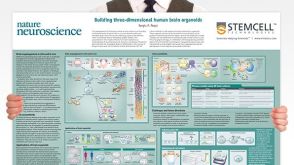 挂图Building Three-Dimensional Human Brain Organoids Overview of brain organogenesis and the applications of brain organoids in studying the development and maturation of the nervous system
 沪公网安备31010102008431号