E. Hangen et al. (JUL 2018)
Cell reports 24 4 1001--1012.e3
Neuronal Activity and Intracellular Calcium Levels Regulate Intracellular Transport of Newly Synthesized AMPAR.
Regulation of AMPA receptor (AMPAR) trafficking is a key modulator of excitatory synaptic transmission; however,intracellular vesicular transport of newly synthesized AMPARs has been little studied due to technical limitations. By combining molecular tools with imaging strategies in cultured rat hippocampal neurons,we found that vesicles containing newly synthesized,GluA1-subunit-containing AMPARs are transported antero- and retrogradely at a mean speed of 1.5 mu$m.s-1. Synaptic activity and variations in intracellular calcium levels bidirectionally modulate GluA1 transport. Chemical long-term potentiation (cLTP) initially induces a halt in GluA1 transport,followed by a sustained increase,while acute glutamate uncaging on synaptic spines arrests vesicular movements. GluA1 phosphomimetic mutants preferentially travel to the dendritic tip,probably to replenish extrasynaptic pools,distal to the soma. Our findings indicate that AMPAR intracellular transport is highly regulated during synaptic plasticity and likely controls AMPAR numbers at the plasma membrane.
View Publication
产品号#:
05711
05790
05792
05793
05794
05795
100-1281
产品名:
NeuroCult™ SM1 神经添加物
BrainPhys™神经元培养基
BrainPhys™神经元培养基和SM1试剂盒
BrainPhys™ 神经元培养基N2-A和SM1试剂盒
BrainPhys™原代神经元试剂盒
BrainPhys™ hPSC 神经元试剂盒
NeuroCult™ SM1 神经添加物
P. Gonzalez-Sanchez et al. ( 2017)
Frontiers in cellular neuroscience 11 363
Store-Operated Calcium Entry Is Required for mGluR-Dependent Long Term Depression in Cortical Neurons.
Store-operated calcium entry (SOCE) is a Calcium (Ca2+) influx pathway activated by depletion of intracellular stores that occurs in eukaryotic cells. In neurons,the presence and functions of SOCE are still in question. Here,we show evidences for the existence of SOCE in primary mouse cortical neurons. Endoplasmic reticulum (ER)-Ca2+ depletion using thapsigargin (Tg) triggered a maintained cytosolic Ca2+ increase,which rapidly returned to basal level in the presence of the SOCE blockers 2-Aminoethoxydiphenyl borate (2-APB) and YM-58483. Neural SOCE is also engaged by activation of metabotropic glutamate receptors (mGluRs) with (S)-3,5-dihydroxyphenylglycine (DHPG) (agonist of group I mGluRs),being an essential mechanism to maintain the mGluR-driven Ca2+ signal. Activation of group I of mGluRs triggers long-term depression (LTD) in many brain regions,but the underlying mechanism and,specifically,the necessity of Ca2+ increase in the postsynaptic neuron is controversial. In primary cortical neurons,we now show that the inhibition of Ca2+ influx through SOCE impaired DHPG-LTD,pointing out a key function of calcium and SOCE in synaptic plasticity.
View Publication
产品号#:
05790
05792
05793
05794
05795
产品名:
BrainPhys™神经元培养基
BrainPhys™神经元培养基和SM1试剂盒
BrainPhys™ 神经元培养基N2-A和SM1试剂盒
BrainPhys™原代神经元试剂盒
BrainPhys™ hPSC 神经元试剂盒
M. S. Fernandopulle et al. (JUN 2018)
Current protocols in cell biology 79 1 e51
Transcription Factor-Mediated Differentiation of Human iPSCs into Neurons.
Accurate modeling of human neuronal cell biology has been a long-standing challenge. However,methods to differentiate human induced pluripotent stem cells (iPSCs) to neurons have recently provided experimentally tractable cell models. Numerous methods that use small molecules to direct iPSCs into neuronal lineages have arisen in recent years. Unfortunately,these methods entail numerous challenges,including poor efficiency,variable cell type heterogeneity,and lengthy,expensive differentiation procedures. We recently developed a new method to generate stable transgenic lines of human iPSCs with doxycycline-inducible transcription factors at safe-harbor loci. Using a simple two-step protocol,these lines can be inducibly differentiated into either cortical (i3 Neurons) or lower motor neurons (i3 LMN) in a rapid,efficient,and scalable manner (Wang et al.,2017). In this manuscript,we describe a set of protocols to assist investigators in the culture and genetic engineering of iPSC lines to enable transcription factor-mediated differentiation of iPSCs into i3 Neurons or i3 LMNs,and we present neuronal culture conditions for various experimental applications. {\textcopyright} 2018 by John Wiley & Sons,Inc.
View Publication
产品号#:
07920
07922
05790
05792
05793
05794
05795
产品名:
ACCUTASE™
ACCUTASE™
BrainPhys™神经元培养基
BrainPhys™神经元培养基和SM1试剂盒
BrainPhys™ 神经元培养基N2-A和SM1试剂盒
BrainPhys™原代神经元试剂盒
BrainPhys™ hPSC 神经元试剂盒
P. H. Chia et al. (MAY 2018)
eLife 7
A homozygous loss-of-function CAMK2A mutation causes growth delay, frequent seizures and severe intellectual disability.
Calcium/calmodulin-dependent protein kinase II (CAMK2) plays fundamental roles in synaptic plasticity that underlies learning and memory. Here,we describe a new recessive neurodevelopmental syndrome with global developmental delay,seizures and intellectual disability. Using linkage analysis and exome sequencing,we found that this disease maps to chromosome 5q31.1-q34 and is caused by a biallelic germline mutation in CAMK2A. The missense mutation,p.His477Tyr is located in the CAMK2A association domain that is critical for its function and localization. Biochemically,the p.His477Tyr mutant is defective in self-oligomerization and unable to assemble into the multimeric holoenzyme.In vivo,CAMK2AH477Y failed to rescue neuronal defects in C. elegans lacking unc-43,the ortholog of human CAMK2A. In vitro,neurons derived from patient iPSCs displayed profound synaptic defects. Together,our data demonstrate that a recessive germline mutation in CAMK2A leads to neurodevelopmental defects in humans and suggest that dysfunctional CAMK2 paralogs may contribute to other neurological disorders.
View Publication
产品号#:
05790
05792
05793
05794
05795
85850
85857
85870
85875
产品名:
BrainPhys™神经元培养基
BrainPhys™神经元培养基和SM1试剂盒
BrainPhys™ 神经元培养基N2-A和SM1试剂盒
BrainPhys™原代神经元试剂盒
BrainPhys™ hPSC 神经元试剂盒
mTeSR™1
mTeSR™1
S. Bell et al. (JUL 2018)
Stem cell reports 11 1 183--196
Disruption of GRIN2B Impairs Differentiation in Human Neurons.
Heterozygous loss-of-function mutations in GRIN2B,a subunit of the NMDA receptor,cause intellectual disability and language impairment. We developed clonal models of GRIN2B deletion and loss-of-function mutations in a region coding for the glutamate binding domain in human cells and generated neurons from a patient harboring a missense mutation in the same domain. Transcriptome analysis revealed extensive increases in genes associated with cell proliferation and decreases in genes associated with neuron differentiation,a result supported by extensive protein analyses. Using electrophysiology and calcium imaging,we demonstrate that NMDA receptors are present on neural progenitor cells and that human mutations in GRIN2B can impair calcium influx and membrane depolarization even in a presumed undifferentiated cell state,highlighting an important role for non-synaptic NMDA receptors. It may be this function,in part,which underlies the neurological disease observed in patients with GRIN2B mutations.
View Publication
产品号#:
05833
05872
05873
05910
07174
05790
05792
05793
05794
05795
85850
85857
85870
85875
100-0483
100-0484
05914
100-0485
100-1077
产品名:
STEMdiff™神经前体细胞培养基
BrainPhys™神经元培养基
BrainPhys™神经元培养基和SM1试剂盒
BrainPhys™ 神经元培养基N2-A和SM1试剂盒
BrainPhys™原代神经元试剂盒
BrainPhys™ hPSC 神经元试剂盒
mTeSR™1
mTeSR™1
Hausser Scientificᵀᴹ 明线血球计数板
ReLeSR™
TeSR™-E7™重编程培养基(2组分)
温和细胞解离试剂
ReLeSR™
D. Alvarez-Carbonell et al. (JUL 2018)
Journal of neuroimmune pharmacology : the official journal of the Society on NeuroImmune Pharmacology
The Glucocorticoid Receptor Is a Critical Regulator of HIV Latency in Human Microglial Cells.
We have developed models of HIV latency using microglia derived from adult human patient brain cortex and transformed with the SV40 T large and hTERT antigens. Latent clones infected by HIV reporter viruses display high levels of spontaneous HIV reactivation in culture. BrainPhys,a medium highly representative of the CNS extracellular environment,containing low glucose and 1{\%} FBS,reduced,but did not prevent,HIV reactivation. We hypothesized that spontaneous HIV reactivation in culture was due to the expression of pro-inflammatory genes,such as TNF-alpha$,taking place in the absence of the natural inhibitory signals from astrocytes and neurons. Indeed,expression and secretion of TNF-alpha$ is strongly reduced in HIV-latently infected microglia compared to the subset of cells that have undergone spontaneous HIV reactivation. Whereas inhibitors of NF-kappa$B or of macrophage activation only had a short-term silencing effect,addition of dexamethasone (DEXA),a glucocorticoid receptor (GR) agonist and mediator of anti-inflammation,silenced the HIV provirus in a long-term,and shRNA-mediated knock-down of GR activated HIV. DEXA also decreased secretion of a number of cytokines,including TNF-alpha$. Chromatin immunoprecipitation analysis revealed that DEXA strongly increased GR occupancy at the HIV promoter,and reduced histone 3 acetylated levels. Moreover,TNF-alpha$ expression inhibitors in combination with DEXA induced further HIV silencing and increased the histone 3 lysine 27 tri-methylated epigenetic mark of repression at the HIV promoter region. We conclude that GR is a critical repressor of HIV transcription in microglia,and a novel potential pharmacological target to restrict HIV expression in the CNS.
View Publication
产品号#:
05790
05792
05793
05794
05795
产品名:
BrainPhys™神经元培养基
BrainPhys™神经元培养基和SM1试剂盒
BrainPhys™ 神经元培养基N2-A和SM1试剂盒
BrainPhys™原代神经元试剂盒
BrainPhys™ hPSC 神经元试剂盒
W. Afshar Saber et al. ( 2018)
Frontiers in neuroscience 12 451
All-Optical Assay to Study Biological Neural Networks.
We introduce a novel all-optical assay for functional studies of biological neural networks in vitro. We created a novel optogenetic construct named OptoCaMP which is a combination of a channelrhodopsin variant (CheRiff) and a red genetically encoded calcium indicator (GECI) (jRCaMP1b). It enables simultaneous optical stimulation and recording from large population of neurons with single-cell readout. Additionally,we have developed a spatio-temporal all-optical assay to simultaneously stimulate a sub-section of a neural network and record evoked calcium activity,in both stimulated and non-stimulated neurons,thus allowing the investigation of the spread of excitation through an interconnected network. Finally,we demonstrate the sensitivity of this assay to the change of neural network connectivity.
View Publication
Hou Y et al. (MAY 2014)
Neurobiology of Aging 35 5 975--989
Permeability transition pore-mediated mitochondrial superoxide flashes mediate an early inhibitory effect of amyloid beta1 42 on neural progenitor cell proliferation
Cellular damage by reactive oxygen species and altered neurogenesis are implicated in the etiology of AD and the pathogenic actions of amyloid β-peptide (Aβ); the underlying mechanisms and the early oxidative intracellular events triggered by Aβ are not established. In the present study,we found that mouse embryonic cortical neural progenitor cells exhibit intermittent spontaneous mitochondrial superoxide (SO) flashes that require transient opening of mitochondrial permeability transition pores (mPTPs). The incidence of mitochondria SO flash activity in neural progenitor cells (NPCs) increased during the first 6-24 hours of exposure to aggregating amyloid β-peptide (Aβ1-42),indicating an increase in transient mPTP opening. Subsequently,the SO flash frequency progressively decreased and ceased between 48 and 72 hours of exposure to Aβ1-42,during which time global cellular reactive oxygen species increased,mitochondrial membrane potential decreased,cytochrome C was released from mitochondria and the cells degenerated. Inhibition of mPTPs and selective reduction in mitochondrial SO flashes significantly ameliorated the negative effects of Aβ1-42 on NPC proliferation and survival. Our findings suggest that mPTP-mediated bursts of mitochondrial SO production is a relatively early and pivotal event in the adverse effects of Aβ1-42 on NPCs. If Aβ inhibits NPC proliferation in the brains of AD patients by a similar mechanism,then interventions that inhibit mPTP-mediated superoxide flashes would be expected to protect NPCs against the adverse effects of Aβ.
View Publication
产品号#:
05707
产品名:
NeuroCult™化学解离试剂盒(小鼠)
Hotta R et al. (APR 2016)
Neurogastroenterology and motility : the official journal of the European Gastrointestinal Motility Society 28 4 498--512
Isogenic enteric neural progenitor cells can replace missing neurons and glia in mice with Hirschsprung disease.
BACKGROUND Transplanting autologous patient-derived enteric neuronal stem/progenitor cells (ENSCs) is an innovative approach to replacing missing enteric neurons in patients with Hirschsprung disease (HSCR). Using autologous cells eliminates immunologic and ethical concerns raised by other cell sources. However,whether postnatal aganglionic bowel is permissive for transplanted ENSCs and whether ENSCs from HSCR patients can be successfully isolated,cultured,and transplanted in vivo remains unknown. METHODS ENSCs isolated from the ganglionic intestine of Ednrb(-/-) mice (HSCR-ENSCs) were characterized immunohistochemically and evaluated for their capacity to proliferate and differentiate in vitro. Fluorescently labeled ENSCs were co-cultured ex vivo with aganglionic Ednrb(-/-) colon. For in vivo transplantation,HSCR-ENSCs were labeled with lentivirus expressing green fluorescent protein (GFP) and implanted into aganglionic embryonic chick gut in ovo and postnatal aganglionic Ednrb(-/-) rectum in vivo. KEY RESULTS HSCR-ENSCs maintain normal capacity self-renewal and neuronal differentiation. Moreover,the Ednrb(-/-) aganglionic environment is permissive to engraftment by wild-type ENSCs ex vivo and supports migratrion and neuroglial differentiation of these cells following transplantation in vivo. Lentiviral GFP-labeled HSCR-ENSCs populated embryonic chick hindgut and postnatal colon of Ednrb(-/-) HSCR,with cells populating the intermuscular layer and forming enteric neurons and glia. CONCLUSIONS & INFERENCES ENSCs can be isolated and cultured from mice with HSCR,and transplanted into the aganglionic bowel of HSCR littermates to generate enteric neuronal networks. These results in an isogenic model establish the potential of using autologous-derived stem cells to treat HSCR and other intestinal neuropathies.
View Publication


 EasySep™小鼠TIL(CD45)正选试剂盒




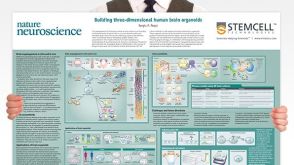 挂图Building Three-Dimensional Human Brain Organoids Overview of brain organogenesis and the applications of brain organoids in studying the development and maturation of the nervous system发布日期: 05/11/2018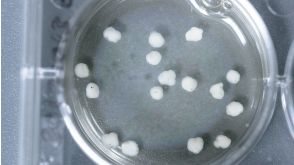

 沪公网安备31010102008431号