Hou Y et al. (MAY 2014)
Neurobiology of Aging 35 5 975--989
Permeability transition pore-mediated mitochondrial superoxide flashes mediate an early inhibitory effect of amyloid beta1 42 on neural progenitor cell proliferation
Cellular damage by reactive oxygen species and altered neurogenesis are implicated in the etiology of AD and the pathogenic actions of amyloid β-peptide (Aβ); the underlying mechanisms and the early oxidative intracellular events triggered by Aβ are not established. In the present study,we found that mouse embryonic cortical neural progenitor cells exhibit intermittent spontaneous mitochondrial superoxide (SO) flashes that require transient opening of mitochondrial permeability transition pores (mPTPs). The incidence of mitochondria SO flash activity in neural progenitor cells (NPCs) increased during the first 6-24 hours of exposure to aggregating amyloid β-peptide (Aβ1-42),indicating an increase in transient mPTP opening. Subsequently,the SO flash frequency progressively decreased and ceased between 48 and 72 hours of exposure to Aβ1-42,during which time global cellular reactive oxygen species increased,mitochondrial membrane potential decreased,cytochrome C was released from mitochondria and the cells degenerated. Inhibition of mPTPs and selective reduction in mitochondrial SO flashes significantly ameliorated the negative effects of Aβ1-42 on NPC proliferation and survival. Our findings suggest that mPTP-mediated bursts of mitochondrial SO production is a relatively early and pivotal event in the adverse effects of Aβ1-42 on NPCs. If Aβ inhibits NPC proliferation in the brains of AD patients by a similar mechanism,then interventions that inhibit mPTP-mediated superoxide flashes would be expected to protect NPCs against the adverse effects of Aβ.
View Publication
产品号#:
05707
产品名:
NeuroCult™化学解离试剂盒(小鼠)
专家访谈
Scott Allen, PhD
Seeking Metabolic Therapies for an Incurable Neurodegenerative Disease
研究方向:
干细胞生物学,神经科学
D. Alvarez-Carbonell et al. (JUL 2018)
Journal of neuroimmune pharmacology : the official journal of the Society on NeuroImmune Pharmacology
The Glucocorticoid Receptor Is a Critical Regulator of HIV Latency in Human Microglial Cells.
We have developed models of HIV latency using microglia derived from adult human patient brain cortex and transformed with the SV40 T large and hTERT antigens. Latent clones infected by HIV reporter viruses display high levels of spontaneous HIV reactivation in culture. BrainPhys,a medium highly representative of the CNS extracellular environment,containing low glucose and 1{\%} FBS,reduced,but did not prevent,HIV reactivation. We hypothesized that spontaneous HIV reactivation in culture was due to the expression of pro-inflammatory genes,such as TNF-alpha$,taking place in the absence of the natural inhibitory signals from astrocytes and neurons. Indeed,expression and secretion of TNF-alpha$ is strongly reduced in HIV-latently infected microglia compared to the subset of cells that have undergone spontaneous HIV reactivation. Whereas inhibitors of NF-kappa$B or of macrophage activation only had a short-term silencing effect,addition of dexamethasone (DEXA),a glucocorticoid receptor (GR) agonist and mediator of anti-inflammation,silenced the HIV provirus in a long-term,and shRNA-mediated knock-down of GR activated HIV. DEXA also decreased secretion of a number of cytokines,including TNF-alpha$. Chromatin immunoprecipitation analysis revealed that DEXA strongly increased GR occupancy at the HIV promoter,and reduced histone 3 acetylated levels. Moreover,TNF-alpha$ expression inhibitors in combination with DEXA induced further HIV silencing and increased the histone 3 lysine 27 tri-methylated epigenetic mark of repression at the HIV promoter region. We conclude that GR is a critical repressor of HIV transcription in microglia,and a novel potential pharmacological target to restrict HIV expression in the CNS.
View Publication
产品号#:
05790
05792
05793
05794
05795
产品名:
BrainPhys™神经元培养基
BrainPhys™神经元培养基和SM1试剂盒
BrainPhys™ 神经元培养基N2-A和SM1试剂盒
BrainPhys™原代神经元试剂盒
BrainPhys™ hPSC 神经元试剂盒
E. Hangen et al. (JUL 2018)
Cell reports 24 4 1001--1012.e3
Neuronal Activity and Intracellular Calcium Levels Regulate Intracellular Transport of Newly Synthesized AMPAR.
Regulation of AMPA receptor (AMPAR) trafficking is a key modulator of excitatory synaptic transmission; however,intracellular vesicular transport of newly synthesized AMPARs has been little studied due to technical limitations. By combining molecular tools with imaging strategies in cultured rat hippocampal neurons,we found that vesicles containing newly synthesized,GluA1-subunit-containing AMPARs are transported antero- and retrogradely at a mean speed of 1.5 mu$m.s-1. Synaptic activity and variations in intracellular calcium levels bidirectionally modulate GluA1 transport. Chemical long-term potentiation (cLTP) initially induces a halt in GluA1 transport,followed by a sustained increase,while acute glutamate uncaging on synaptic spines arrests vesicular movements. GluA1 phosphomimetic mutants preferentially travel to the dendritic tip,probably to replenish extrasynaptic pools,distal to the soma. Our findings indicate that AMPAR intracellular transport is highly regulated during synaptic plasticity and likely controls AMPAR numbers at the plasma membrane.
View Publication


 EasySep™小鼠TIL(CD45)正选试剂盒




 专家访谈Scott Allen, PhD Seeking Metabolic Therapies for an Incurable Neurodegenerative Disease
 科学海报Efficient Differentiation of Human Pluripotent Stem Cells to Sensory Neurons
 科学海报Using Human Pluripotent Stem Cell-Derived Microglia As Models For Neurological Disease Research
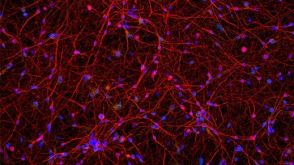 实验方案How to Culture Human Pluripotent Stem Cell (hPSC)-Derived Forebrain Neurons for MEA Analysis Using the Maestro MEA™ System
 科学海报Frozen Neural Progenitors, Neuron Precursors, and Astrocytes Derived from the Highly Characterized Reference iPSC Line, SCTi003-A
 科学海报Optimized Workflows for Modelling Human Pluripotent Stem Cell-Derived Neuron and Glial Interactions

 沪公网安备31010102008431号