Bai R-Y et al. (SEP 2011)
Neuro-oncology 13 9 974--82
Antiparasitic mebendazole shows survival benefit in 2 preclinical models of glioblastoma multiforme.
Glioblastoma multiforme (GBM) is the most common and aggressive brain cancer,and despite treatment advances,patient prognosis remains poor. During routine animal studies,we serendipitously observed that fenbendazole,a benzimidazole antihelminthic used to treat pinworm infection,inhibited brain tumor engraftment. Subsequent in vitro and in vivo experiments with benzimidazoles identified mebendazole as the more promising drug for GBM therapy. In GBM cell lines,mebendazole displayed cytotoxicity,with half-maximal inhibitory concentrations ranging from 0.1 to 0.3 µM. Mebendazole disrupted microtubule formation in GBM cells,and in vitro activity was correlated with reduced tubulin polymerization. Subsequently,we showed that mebendazole significantly extended mean survival up to 63% in syngeneic and xenograft orthotopic mouse glioma models. Mebendazole has been approved by the US Food and Drug Administration for parasitic infections,has a long track-record of safe human use,and was effective in our animal models with doses documented as safe in humans. Our findings indicate that mebendazole is a possible novel anti-brain tumor therapeutic that could be further tested in clinical trials.
View Publication
产品号#:
05751
07980
产品名:
NeuroCult™ NS-A 扩增试剂盒(人)
肝素溶液
Ma I and Allan AL (JUN 2011)
Stem cell reviews 7 2 292--306
The role of human aldehyde dehydrogenase in normal and cancer stem cells.
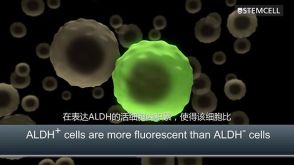
Normal stem cells and cancer stem cells (CSCs) share similar properties,in that both have the capacity to self-renew and differentiate into multiple cell types. In both the normal stem cell and cancer stem cell fields,there has been a great need for a universal marker that can effectively identify and isolate these rare populations of cells in order to characterize them and use this information for research and therapeutic purposes. Currently,it would appear that certain isoenzymes of the aldehyde dehydrogenase (ALDH) superfamily may be able to fulfill this role as a marker for both normal and cancer stem cells. ALDH has been identified as an important enzyme in the protection of normal hematopoietic stem cells,and is now also widely used as a marker to identify and isolate various types of normal stem cells and CSCs. In addition,emerging evidence suggests that ALDH1 is not only a marker for stem cells,but may also play important functional roles related to self-protection,differentiation,and expansion. This comprehensive review discusses the role that ALDH plays in normal stem cells and CSCs,with focus on ALDH1 and ALDH3A1. Discrepancies in the functional themes between cell types and future perspectives for therapeutic applications will also be discussed.
View Publication
Kanai R et al. (JUN 2011)
Clinical cancer research : an official journal of the American Association for Cancer Research 17 11 3686--96
A novel oncolytic herpes simplex virus that synergizes with phosphoinositide 3-kinase/Akt pathway inhibitors to target glioblastoma stem cells.
PURPOSE: To develop a new oncolytic herpes simplex virus (oHSV) for glioblastoma (GBM) therapy that will be effective in glioblastoma stem cells (GSC),an important and untargeted component of GBM. One approach to enhance oHSV efficacy is by combination with other therapeutic modalities. EXPERIMENTAL DESIGN: MG18L,containing a U(S)3 deletion and an inactivating LacZ insertion in U(L)39,was constructed for the treatment of brain tumors. Safety was evaluated after intracerebral injection in HSV-susceptible mice. The efficacy of MG18L in human GSCs and glioma cell lines in vitro was compared with other oHSVs,alone or in combination with phosphoinositide-3-kinase (PI3K)/Akt inhibitors (LY294002,triciribine,GDC-0941,and BEZ235). Cytotoxic interactions between MG18L and PI3K/Akt inhibitors were determined using Chou-Talalay analysis. In vivo efficacy studies were conducted using a clinically relevant mouse model of GSC-derived GBM. RESULTS: MG18L was severely neuroattenuated in mice,replicated well in GSCs,and had anti-GBM activity in vivo. PI3K/Akt inhibitors displayed significant but variable antiproliferative activities in GSCs,whereas their combination with MG18L synergized in killing GSCs and glioma cell lines,but not human astrocytes,through enhanced induction of apoptosis. Importantly,synergy was independent of inhibitor sensitivity. In vivo,the combination of MG18L and LY294002 significantly prolonged survival of mice,as compared with either agent alone,achieving 50% long-term survival in GBM-bearing mice. CONCLUSIONS: This study establishes a novel therapeutic strategy: oHSV manipulation of critical oncogenic pathways to sensitize cancer cells to molecularly targeted drugs. MG18L is a promising agent for the treatment of GBM,being especially effective when combined with PI3K/Akt pathway-targeted agents.
View Publication
产品号#:
05707
产品名:
NeuroCult™化学解离试剂盒(小鼠)
Dai L et al. (DEC 2011)
Proteomics 11 23 4529--40
Dose-dependent proteomic analysis of glioblastoma cancer stem cells upon treatment with γ-secretase inhibitor.
Notch signaling has been demonstrated to have a central role in glioblastoma (GBM) cancer stem cells (CSCs) and we have demonstrated recently that Notch pathway blockade by γ-secretase inhibitor (GSI) depletes GBM CSCs and prevents tumor propagation both in vitro and in vivo. In order to understand the proteome alterations involved in this transformation,a dose-dependent quantitative mass spectrometry (MS)-based proteomic study has been performed based on the global proteome profiling and a target verification phase where both Immunoassay and a multiple reaction monitoring (MRM) assay are employed. The selection of putative protein candidates for confirmation poses a challenge due to the large number of identifications from the discovery phase. A multilevel filtering strategy together with literature mining is adopted to transmit the most confident candidates along the pipeline. Our results indicate that treating GBM CSCs with GSI induces a phenotype transformation towards non-tumorigenic cells with decreased proliferation and increased differentiation,as well as elevated apoptosis. Suppressed glucose metabolism and attenuated NFR2-mediated oxidative stress response are also suggested from our data,possibly due to their crosstalk with Notch Signaling. Overall,this quantitative proteomic-based dose-dependent work complements our current understanding of the altered signaling events occurring upon the treatment of GSI in GBM CSCs.
View Publication
产品号#:
05751
产品名:
NeuroCult™ NS-A 扩增试剂盒(人)
Kanai R et al. (JAN 2012)
Journal of the National Cancer Institute 104 1 42--55
Oncolytic virus-mediated manipulation of DNA damage responses: synergy with chemotherapy in killing glioblastoma stem cells.
BACKGROUND: Although both the alkylating agent temozolomide (TMZ) and oncolytic viruses hold promise for treating glioblastoma,which remains uniformly lethal,the effectiveness of combining the two treatments and the mechanism of their interaction on cancer stem cells are unknown. METHODS: We investigated the efficacy of combining TMZ and the oncolytic herpes simplex virus (oHSV) G47Δ in killing glioblastoma stem cells (GSCs),using Chou-Talalay combination index analysis,immunocytochemistry and fluorescence microscopy,and neutral comet assay. The role of treatment-induced DNA double-strand breaks,activation of DNA damage responses,and virus replication in the cytotoxic interaction between G47Δ and TMZ was examined with a panel of pharmacological inhibitors and short-hairpin RNA (shRNA)-mediated knockdown of DNA repair pathways. Comparisons of cell survival and virus replication were performed using a two-sided t test (unpaired). The survival of athymic mice (n = 6-8 mice per group) bearing GSC-derived glioblastoma tumors treated with the combination of G47Δ and TMZ was analyzed by the Kaplan-Meier method and evaluated with a two-sided log-rank test. RESULTS: The combination of G47Δ and TMZ acted synergistically in killing GSCs but not neurons,with associated robust induction of DNA damage. Pharmacological and shRNA-mediated knockdown studies suggested that activated ataxia telangiectasia mutated (ATM) is a crucial mediator of synergy. Activated ATM relocalized to HSV DNA replication compartments where it likely enhanced oHSV replication and could not participate in repairing TMZ-induced DNA damage. Sensitivity to TMZ and synergy with G47Δ decreased with O(6)-methylguanine-DNA-methyltransferase (MGMT) expression and MSH6 knockdown. Combined G47Δ and TMZ treatment extended survival of mice bearing GSC-derived intracranial tumors,achieving long-term remission in four of eight mice (median survival = 228 days; G47Δ alone vs G47Δ + TMZ,hazard ratio of survival = 7.1,95% confidence interval = 1.9 to 26.1,P = .003) at TMZ doses attainable in patients. CONCLUSIONS: The combination of G47Δ and TMZ acts synergistically in killing GSCs through oHSV-mediated manipulation of DNA damage responses. This strategy is highly efficacious in representative preclinical models and warrants clinical translation.
View Publication


 EasySep™小鼠TIL(CD45)正选试剂盒




 技术公告Identification of Viable Stem and Progenitor Cells with ALDEFLUOR™
 技术公告The Basic FACS on ALDEFLUOR™: The Quick Guide to Flow Cytometry

 沪公网安备31010102008431号