Szewczyk K et al. (JUN 2016)
Human immunology 77 6 449--55
Flow cytometry crossmatch reactivity with pronase-treated T cells induced by non-HLA autoantibodies in human immunodeficiency virus-infected patients.
Pronase treatment is used in the flow cytometry crossmatch (FCXM) to prevent nonspecific antibody binding on B cells. However,we have observed unexpected positive results with pronase-treated T cells in human immunodeficiency virus (HIV)-infected patients. In this study,25 HIV-infected patients without HLA antibodies were tested with pronase-treated and nontreated cells. HIV-positive sera were pretreated with reducing agents and preabsorbed with pronase-treated and nontreated T or B cells before crossmatching. All patients displayed FCXM reactivity with pronase-treated T cells but not with nontreated T cells. None of the patients exhibited FCXM reactivity with pronase-treated and nontreated B cells. These patients displayed FCXM reactivity with pronase-treated CD4+ and CD8+ T cells but not with their nontreated counterparts. Preabsorption with pronase-treated T cells reduced the T cell FCXM reactivity. Preabsorption with pronase-treated B cells or nontreated T and B cells did not have any effect on the T cell FCXM reactivity. Pretreatment with reducing agents did not affect the T cell FCXM reactivity. 15 of 21 HIV-infected kidney allograft recipients with pronase-treated T cell FCXM reactivity display long-term graft survival (1193±631days). These data indicate that HIV-infected patients have nondeleterious autoantibodies recognizing cryptic epitopes exposed by pronase on T cells.
View Publication
产品号#:
17952
17952RF
17953
17953RF
21000
20119
20155
100-0696
100-0710
产品名:
EasySep™人CD4+ T细胞分选试剂盒
RoboSep™ 人CD4+ T细胞分选试剂盒
EasySep™人CD8+ T细胞分选试剂盒
RoboSep™ 人CD8+ T细胞分选试剂盒
RoboSep™- S
RoboSep™ 吸头组件抛光剂
RoboSep™分选管套装(9个塑料管)
EasySep™人CD4+ T细胞分离试剂盒
EasySep™人CD8+ T细胞分选试剂盒
Zieliʼn et al. ( 2013)
Transplantation proceedings 45 1 88--94
Modified flow cytometry crossmatch detecting alloantibody-related cytotoxicity as a way to distinguish lytic antibodies from harmless in allosensitised kidney recipients.
The serological complement-dependent cytotoxicity crossmatch (CDC-XM) permits routine identification of anti-donor alloantibodies in the sera of allotransplant recipients. However,in a small group of recipients,antibodies below the threshold of detection may still be responsible for hyperacute rejection. For the same reason,approximately 20% of recipients develop acute rejection episodes. The flow cytometry crossmatch (FCXM) was designed to address these problems,but because of the presence of clinically insignificant antibodies (linked,non-lytic),the FCXM appears to be too sensitive yielding false-positive results. We compared FCXM with its modified version assessing cell viability (cytolytic flow cytometry crossmatch; cFCXM) using sera from previously sensitised kidney recipients. The presence of alloantibodies was detected using the Luminex platform. The cFCXM proved to be of greater sensitivity than CDC-XM,which was additionally confirmed with bead-based Luminex techniques. The cFCXM was also superior to FCXM because it distinguished lytic from non-lytic antibodies. The cFCXM was superior to assess donor specificity,sensitivity,and detection of clinically relevant lytic antibodies.
View Publication
产品号#:
19054HLA
19054HLARF
19051HLA
19051HLARF
产品名:
EasySep™ HLA B细胞富集试剂盒
RoboSep™ HLA B细胞富集试剂盒含滤芯吸头
EasySep™ HLA T细胞富集试剂盒
RoboSep™ HLA T细胞富集试剂盒含滤芯吸头
Specht A et al. (JUL 2010)
Journal of virology 84 14 7300--11
Counteraction of HLA-C-mediated immune control of HIV-1 by Nef.
A host genetic variant (-35C/T) correlates with increased human leukocyte antigen C (HLA-C) expression and improved control of HIV-1. HLA-C-mediated immunity may be particularly protective because HIV-1 is unable to remove HLA-C from the cell surface,whereas it can avoid HLA-A- and HLA-B-mediated immunity by Nef-mediated down-modulation. However,some individuals with the protective -35CC genotype exhibit high viral loads. Here,we investigated whether the ability of HIV-1 to replicate efficiently in the protective" high-HLA-C-expression host environment correlates with specific functional properties of Nef. We found that high set point viral loads (sVLs) were not associated with the emergence of Nef variants that had acquired the ability to down-modulate HLA-C or were more effective in removing HLA-A and HLA-B from the cell surface. However�
View Publication
产品号#:
15022
15062
产品名:
RosetteSep™人CD4+ T细胞富集抗体混合物
RosetteSep™人CD4+ T细胞富集抗体混合物
Weidanz Ja et al. (OCT 2006)
Journal of Immunology (Baltimore,Md. : 1950) 177 8 5088--97
Levels of specific peptide-HLA class I complex predicts tumor cell susceptibility to CTL killing.
Recognition of tumor-associated Ags (TAAs) on tumor cells by CTLs and the subsequent tumor cell death are assumed to be dependent on TAA protein expression and to correlate directly with the level of peptide displayed in the binding site of the HLA class I molecule. In this study we evaluated whether the levels of Her-2/neu protein expression on human tumor cell lines directly correlate with HLA-A*0201/Her2/neu peptide presentation and CTL recognition. We developed a TCR mimic (TCRm) mAb designated 1B8 that specifically recognizes the HLA-A2.1/Her2/neu peptide (369-377) (Her2(369)-A2) complex. TCRm mAb staining intensity varied for the five human tumor cell lines analyzed,suggesting quantitative differences in levels of the Her2(369)-A2 complex on these cells. Analysis of tumor cell lines pretreated with IFN-gamma and TNF-alpha for Her2/neu protein and HLA-A2 molecule expression did not reveal a direct correlation between the levels of Her2/neu Ag,HLA-A2 molecule,and Her2(369)-A2 complex expression. However,compared with untreated cells,cytokine-treated cell lines showed an increase in Her2(369)-A2 epitope density that directly correlated with enhanced tumor cell death (p = 0.05). Although a trend was observed between tumor cell lysis and the level of the Her2(369)-A2 complex for untreated cells,the association was not significant. These findings suggest that tumor cell susceptibility to CTL-mediated lysis may be predicted based on the level of specific peptide-MHC class I expression rather than on the total level of TAA expression. Further,these studies demonstrate the potential of the TCRm mAb for validation of endogenous HLA-peptide epitopes on tumor cells.
View Publication
产品号#:
03800
03801
03802
03803
03804
03805
03806
03831
产品名:
ClonaCell™-HY 杂交瘤试剂盒
ClonaCell™-HY Medium
ClonaCell™-HY Medium
ClonaCell™-HY Medium
ClonaCell™-HY Medium
ClonaCell™-HY Medium
ClonaCell™-HY PEG (融合)
ClonaCell™-HY液体帽子选择培养基
Wittman VP et al. (SEP 2006)
The Journal of Immunology 177 6 4187--95
Antibody targeting to acClass I MHC-peptide epitope promotes tumor cell death
Therapeutic mAbs that target tumor-associated Ags on the surface of malignant cells have proven to be an effective and specific option for the treatment of certain cancers. However,many of these protein markers of carcinogenesis are not expressed on the cells' surface. Instead these tumor-associated Ags are processed into peptides that are presented at the cell surface,in the context of MHC class I molecules,where they become targets for T cells. To tap this vast source of tumor Ags,we generated a murine IgG2a mAb,3.2G1,endowed with TCR-like binding specificity for peptide-HLA-A*0201 (HLA-A2) complex and designated this class of Ab as TCR mimics (TCRm). The 3.2G1 TCRm recognizes the GVL peptide (GVLPALPQV) from human chorionic gonadotropin beta presented by the peptide-HLA-A*0201 complex. When used in immunofluorescent staining reactions using GVL peptide-loaded T2 cells,the 3.2G1 TCRm specifically stained the cells in a peptide and Ab concentration-dependent manner. Staining intensity correlated with the extent of cell lysis by complement-dependent cytotoxicity (CDC),and a peptide concentration-dependent threshold level existed for the CDC reaction. Staining of human tumor lines demonstrated that 3.2G1 TCRm was able to recognize endogenously processed peptide and that the breast cancer cell line MDA-MB-231 highly expressed the target epitope. The 3.2G1 TCRm-mediated CDC and Ab-dependent cellular cytotoxicity of a human breast carcinoma line in vitro and inhibited in vivo tumor implantation and growth in nude mice. These results provide validation for the development of novel TCRm therapeutic reagents that specifically target and kill tumors via recognition and binding to MHC-peptide epitopes.
View Publication


 EasySep™小鼠TIL(CD45)正选试剂盒




 技术窍门组织解离方法指南
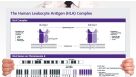 挂图The Human Leukocyte Antigen (HLA) Complex Provides an overview of the human leukocyte antigen (HLA) complex and nomenclature of HLA alleles


 沪公网安备31010102008431号