Chevalier MF et al. ( 2015)
The Journal of Infectious Diseases 211 5 769--779
Phenotype Alterations in Regulatory T-Cell Subsets in Primary HIV Infection and Identification of Tr1-like Cells as the Main Interleukin 10-Producing CD4+ T Cells
BACKGROUND: Conventional regulatory T cells (Tregs) can suppress human immunodeficiency virus type 1 (HIV-1)-specific immune responses but cannot control immune activation in primary HIV infection. Here,we characterized Treg subsets,using recently defined phenotypic delineation,and analyzed the relative contribution of cell subsets to the production of immunosuppressive cytokines in primary HIV infection. METHODS: In a longitudinal prospective study,ex vivo phenotyping of fresh peripheral blood mononuclear cells from patients with primary HIV infection was performed at baseline and month 6 of follow-up to characterize Treg subsets,immune activation,and cytokine production in isolated CD4(+) T cells. RESULTS: The frequency of CD4(+)CD25(+)CD127(low) Tregs and the distribution between the naive,memory,and activated/memory Treg subsets was similar in patients and healthy donors. However,Tregs from patients with primary HIV infection showed peculiar phenotypic profiles,such as elevated FoxP3,ICOS,and CTLA-4 expression,with CTLA-4 expression strikingly increased in all Treg subsets both at baseline and month 6 of follow-up. The great majority of interleukin 10 (IL-10)-producing CD4(+) T cells were FoxP3(neg) (ie,Tr1-like cells). In contrast to conventional Tregs,Tr1-like cells were inversely correlated with immune activation and not associated with lower effector T-cell responses. CONCLUSION: FoxP3(neg) Tr1-like cells-major contributors to IL-10 production-may have a beneficial role by controlling immune activation in early HIV infection.
View Publication
Wang X et al. ( 2012)
Journal of immunotherapy (Hagerstown,Md. : 1997) 35 9 689--701
Phenotypic and functional attributes of lentivirus-modified CD19-specific human CD8+ central memory T cells manufactured at clinical scale.
A key determinant of the therapeutic potency of adoptive T-cell transfer is the extent to which infused cells can persist and expand in vivo. Ex vivo propagated virus-specific and chimeric antigen receptor (CAR)-redirected antitumor CD8 effector T cells derived from CD45RA(-) CD62L(+) central memory (TCM) precursors engraft long-term and reconstitute functional memory after adoptive transfer. Here,we describe a clinical scale,closed system,immunomagnetic selection method to isolate CD8(+) T(CM) from peripheral blood mononuclear cells (PBMC). This method uses the CliniMACS device to first deplete CD14(+),CD45RA(+),and CD4(+) cells from PBMC,and then to positively select CD62L(+) cells. The average purity and yield of CD8(+) CD45RA(-) CD62L TCM obtained in full-scale qualification runs were 70% and 0.4% (of input PBMC),respectively. These CD8(+) T(CM) are responsive to anti-CD3/CD28 bead stimulation,and can be efficiently transduced with CAR encoding lentiviral vectors,and undergo sustained expansion in interleukin (IL)-2/IL-15 over 3-6 weeks. The resulting CD8(+) T(CM)-derived effectors are polyclonal,retain expression of CD62L and CD28,exhibit CAR-redirected antitumor effector function,and are capable of huIL-15-dependent in vivo homeostatic engraftment after transfer to immunodeficient NOD/Scid IL-2RgCnull mice. Adoptive therapy using purified T(CM) cells is now the subject of a Food and Drug Administration-authorized clinical trial for the treatment of CD19(+) B-cell malignancies,and 3 clinical cell products expressing a CD19-specific CAR for IND 14645 have already been successfully generated from lymphoma patients using this manufacturing platform.
View Publication
Yang W et al. (MAR 2016)
Nature 531 7596 651--5
Potentiating the antitumour response of CD8(+) T cells by modulating cholesterol metabolism.
CD8(+) T cells have a central role in antitumour immunity,but their activity is suppressed in the tumour microenvironment. Reactivating the cytotoxicity of CD8(+) T cells is of great clinical interest in cancer immunotherapy. Here we report a new mechanism by which the antitumour response of mouse CD8(+) T cells can be potentiated by modulating cholesterol metabolism. Inhibiting cholesterol esterification in T cells by genetic ablation or pharmacological inhibition of ACAT1,a key cholesterol esterification enzyme,led to potentiated effector function and enhanced proliferation of CD8(+) but not CD4(+) T cells. This is due to the increase in the plasma membrane cholesterol level of CD8(+) T cells,which causes enhanced T-cell receptor clustering and signalling as well as more efficient formation of the immunological synapse. ACAT1-deficient CD8(+) T cells were better than wild-type CD8(+) T cells at controlling melanoma growth and metastasis in mice. We used the ACAT inhibitor avasimibe,which was previously tested in clinical trials for treating atherosclerosis and showed a good human safety profile,to treat melanoma in mice and observed a good antitumour effect. A combined therapy of avasimibe plus an anti-PD-1 antibody showed better efficacy than monotherapies in controlling tumour progression. ACAT1,an established target for atherosclerosis,is therefore also a potential target for cancer immunotherapy.
View Publication
Tinoco R et al. (MAY 2016)
Immunity 44 5 1190--203
PSGL-1 Is an Immune Checkpoint Regulator that Promotes T Cell Exhaustion.
Chronic viruses and cancers thwart immune responses in humans by inducing T cell dysfunction. Using a murine chronic virus that models human infections,we investigated the function of the adhesion molecule,P-selectin glycoprotein ligand-1 (PSGL-1),that is upregulated on responding T cells. PSGL-1-deficient mice cleared the virus due to increased intrinsic survival of multifunctional effector T cells that had downregulated PD-1 as well as other inhibitory receptors. Notably,this response resulted in CD4(+)-T-cell-dependent immunopathology. Mechanistically,PSGL-1 ligation on exhausted CD8(+) T cells inhibited T cell receptor (TCR) and interleukin-2 (IL-2) signaling and upregulated PD-1,leading to diminished survival with TCR stimulation. In models of melanoma cancer in which T cell dysfunction occurs,PSGL-1 deficiency led to PD-1 downregulation,improved T cell responses,and tumor control. Thus,PSGL-1 plays a fundamental role in balancing viral control and immunopathology and also functions to regulate T cell responses in the tumor microenvironment.
View Publication
Friesen TJ et al. (MAY 2016)
The Journal of Experimental Medicine 213 6 913--920
Recent thymic emigrants are tolerized in the absence of inflammation.
T cell development requires a period of postthymic maturation. Why this is the case has remained a mystery,particularly given the rigors of intrathymic developmental checkpoints,successfully traversed by only ∼5% of thymocytes. We now show that the first few weeks of T cell residence in the lymphoid periphery define a period of heightened susceptibility to tolerance induction to tissue-restricted antigens (TRAs),the outcome of which depends on the context in which recent thymic emigrants (RTEs) encounter antigen. After encounter with TRAs in the absence of inflammation,RTEs exhibited defects in proliferation,diminished cytokine production,elevated expression of anergy-associated genes,and diminished diabetogenicity. These properties were mirrored in vitro by enhanced RTE susceptibility to regulatory T cell-mediated suppression. In the presence of inflammation,RTEs and mature T cells were,in contrast,equally capable of inducing diabetes,proliferating,and producing cytokines. Thus,recirculating RTEs encounter TRAs during a transitional developmental stage that facilitates tolerance induction,but inflammation converts antigen-exposed,tolerance-prone RTEs into competent effector cells.
View Publication
Restriction of HIV-1 replication in macrophages and CD4+ T cells from HIV controllers.
How HIV controllers (HICs) maintain undetectable viremia without therapy is unknown. The strong CD8(+) T-cell HIV suppressive capacity found in many,but not all,HICs may contribute to long-lasting viral control. However,other earlier defense mechanisms may be involved. Here,we examined intrinsic HIC cell resistance to HIV-1 infection. After in vitro challenge,monocyte-derived macrophages and anti-CD3-activated CD4(+) T cells from HICs showed low HIV-1 susceptibility. CD4 T-cell resistance was independent of HIV-1 coreceptors and affected also SIVmac infection. CD4(+) T cells from HICs expressed ex vivo higher levels of p21(Waf1/Cip1),which has been involved in the control of HIV-1 replication,than cells from control subjects. However,HIV restriction in anti-CD3-activated CD4(+) T cells and macrophages was not associated with p21 expression. Restriction inhibited accumulation of reverse transcripts,leading to reduction of HIV-1 integrated proviruses. The block could be overcome by high viral inocula,suggesting the action of a saturable mechanism. Importantly,cell-associated HIV-1 DNA load was extremely low in HICs and correlated with CD4(+) T-cell permissiveness to infection. These results point to a contribution of intrinsic cell resistance to the control of infection and the containment of viral reservoir in HICs.
View Publication
Thompson EA et al. (APR 2016)
Journal of Immunology 196 7 3054--63
Shortened Intervals during Heterologous Boosting Preserve Memory CD8 T Cell Function but Compromise Longevity.
Developing vaccine strategies to generate high numbers of Ag-specific CD8 T cells may be necessary for protection against recalcitrant pathogens. Heterologous prime-boost-boost immunization has been shown to result in large quantities of functional memory CD8 T cells with protective capacities and long-term stability. Completing the serial immunization steps for heterologous prime-boost-boost can be lengthy,leaving the host vulnerable for an extensive period of time during the vaccination process. We show in this study that shortening the intervals between boosting events to 2 wk results in high numbers of functional and protective Ag-specific CD8 T cells. This protection is comparable to that achieved with long-term boosting intervals. Short-boosted Ag-specific CD8 T cells display a canonical memory T cell signature associated with long-lived memory and have identical proliferative potential to long-boosted T cells Both populations robustly respond to antigenic re-exposure. Despite this,short-boosted Ag-specific CD8 T cells continue to contract gradually over time,which correlates to metabolic differences between short- and long-boosted CD8 T cells at early memory time points. Our studies indicate that shortening the interval between boosts can yield abundant,functional Ag-specific CD8 T cells that are poised for immediate protection; however,this is at the expense of forming stable long-term memory.
View Publication


 EasySep™小鼠TIL(CD45)正选试剂盒




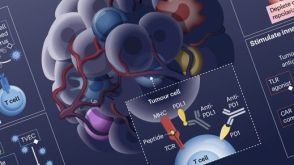 挂图Rational Combination of Cancer Therapies with PD1 Axis Blockade Lists the ways to combine new immunotherapeutic targets and modalities for your translational research.
 技术公告StemSpan™ Medium and Supplements for the Generation of T Cells from Cord Blood-Derived CD34+ Cells


 沪公网安备31010102008431号