Staphylococcus aureus-derived factors induce IL-10, IFN-γ and IL-17A-expressing FOXP3(+)CD161(+) T-helper cells in a partly monocyte-dependent manner.
Staphylococcus aureus (S. aureus) is a human pathogen as well as a frequent colonizer of skin and mucosa. This bacterium potently activates conventional T-cells through superantigens and it is suggested to induce T-cell cytokine-production as well as to promote a regulatory phenotype in T-cells in order to avoid clearance. This study aimed to investigate how S. aureus impacts the production of regulatory and pro-inflammatory cytokines and the expression of CD161 and HELIOS by peripheral CD4(+)FOXP3(+) T-cells. Stimulation of PBMC with S. aureus 161:2-cell free supernatant (CFS) induced expression of IL-10,IFN-γ and IL-17A in FOXP3(+) cells. Further,CD161 and HELIOS separated the FOXP3(+) cells into four distinct populations regarding cytokine-expression. Monocyte-depletion decreased S. aureus 161:2-induced activation of FOXP3(+) cells while pre-stimulation of purified monocytes with S. aureus 161:2-CFS and subsequent co-culture with autologous monocyte-depleted PBMC was sufficient to mediate activation of FOXP3(+) cells. Together,these data show that S. aureus potently induces FOXP3(+) cells and promotes a diverse phenotype with expression of regulatory and pro-inflammatory cytokines connected to increased CD161-expression. This could indicate potent regulation or a contribution of FOXP3(+) cells to inflammation and repression of immune-suppression upon encounter with S. aureus.
View Publication
The Macrophage Galactose-Type C-Type Lectin (MGL) Modulates Regulatory T Cell Functions
Regulatory T cells (Tregs) are physiologically designed to prevent autoimmune disease and maintain self-tolerance. In tumour microenvironments,their presence is related to a poor prognosis,and they influence the therapeutic outcome due to their capacity to suppress the immune response by cell-cell contact and to release immunosuppressive cytokines. In this study,we demonstrate that Treg immunosuppressive activity can be modulated by the cross-linking between the CD45RA expressed by Tregs and the C-type lectin MGL. This specific interaction strongly decreases the immunosuppressive activity of Tregs,restoring the proliferative capacity of co-cultured T lymphocytes. This effect can be attributed to changes in CD45RA and TCR signalling through the inhibition of Lck and inactivation of Zap-70,an increase in the Foxp3 methylation status and,ultimately,the reduced production of suppressive cytokines. These results indicate a role of MGL as an immunomodulator within the tumour microenvironment interfering with Treg functions,suggesting its possible use in the design of anticancer vaccines.
View Publication
Kieback E et al. (MAY 2016)
Immunity 44 5 1114--26
Thymus-Derived Regulatory T Cells Are Positively Selected on Natural Self-Antigen through Cognate Interactions of High Functional Avidity.
Regulatory T (Treg) cells expressing Foxp3 transcripton factor are essential for immune homeostasis. They arise in the thymus as a separate lineage from conventional CD4(+)Foxp3(-) T (Tconv) cells. Here,we show that the thymic development of Treg cells depends on the expression of their endogenous cognate self-antigen. The formation of these cells was impaired in mice lacking this self-antigen,while Tconv cell development was not negatively affected. Thymus-derived Treg cells were selected by self-antigens in a specific manner,while autoreactive Tconv cells were produced through degenerate recognition of distinct antigens. These distinct modes of development were associated with the expression of T cell receptor of higher functional avidity for self-antigen by Treg cells than Tconv cells,a difference subsequently essential for the control of autoimmunity. Our study documents how self-antigens define the repertoire of thymus-derived Treg cells to subsequently endow this cell type with the capacity to undermine autoimmune attack.
View Publication


 EasySep™小鼠TIL(CD45)正选试剂盒




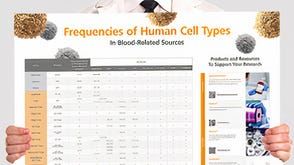 挂图血液相关来源中人细胞类型的比例 List of the frequencies of over 35 cell types in normal human blood-related sources.


 沪公网安备31010102008431号