Physiological β-catenin signaling controls self-renewal networks and generation of stem-like cells from nasopharyngeal carcinoma.
BACKGROUND: A few reports suggested that low levels of Wnt signaling might drive cell reprogramming,but these studies could not establish a clear relationship between Wnt signaling and self-renewal networks. There are ongoing debates as to whether and how the Wnt/β-catenin signaling is involved in the control of pluripotency gene networks. Additionally,whether physiological β-catenin signaling generates stem-like cells through interactions with other pathways is as yet unclear. The nasopharyngeal carcinoma HONE1 cells have low expression of β-catenin and wild-type expression of p53,which provided a possibility to study regulatory mechanism of stemness networks induced by physiological levels of Wnt signaling in these cells.backslashnbackslashnRESULTS: Introduction of increased β-catenin signaling,haploid expression of β-catenin under control by its natural regulators in transferred chromosome 3,resulted in activation of Wnt/β-catenin networks and dedifferentiation in HONE1 hybrid cell lines,but not in esophageal carcinoma SLMT1 hybrid cells that had high levels of endogenous β-catenin expression. HONE1 hybrid cells displayed stem cell-like properties,including enhancement of CD24(+) and CD44(+) populations and generation of spheres that were not observed in parental HONE1 cells. Signaling cascades were detected in HONE1 hybrid cells,including activation of p53- and RB1-mediated tumor suppressor pathways,up-regulation of Nanog-,Oct4-,Sox2-,and Klf4-mediated pluripotency networks,and altered E-cadherin expression in both in vitro and in vivo assays. qPCR array analyses further revealed interactions of physiological Wnt/β-catenin signaling with other pathways such as epithelial-mesenchymal transition,TGF-β,Activin,BMPR,FGFR2,and LIFR- and IL6ST-mediated cell self-renewal networks. Using β-catenin shRNA inhibitory assays,a dominant role for β-catenin in these cellular network activities was observed. The expression of cell surface markers such as CD9,CD24,CD44,CD90,and CD133 in generated spheres was progressively up-regulated compared to HONE1 hybrid cells. Thirty-four up-regulated components of the Wnt pathway were identified in these spheres.backslashnbackslashnCONCLUSIONS: Wnt/β-catenin signaling regulates self-renewal networks and plays a central role in the control of pluripotency genes,tumor suppressive pathways and expression of cancer stem cell markers. This current study provides a novel platform to investigate the interaction of physiological Wnt/β-catenin signaling with stemness transition networks.
View Publication
产品号#:
05850
05857
05870
05875
85850
85857
85870
85875
产品名:
mTeSR™1
mTeSR™1
Chatzouli M et al. ( 2014)
The Journal of Immunology 192 10 4518--4524
Heterogeneous Functional Effects of Concomitant B Cell Receptor and TLR Stimulation in Chronic Lymphocytic Leukemia with Mutated versus Unmutated Ig Genes
We recently reported that chronic lymphocytic leukemia (CLL) subgroups with distinct clonotypic BCRs present discrete patterns of TLR expression,function,and/or tolerance. In this study,to explore whether specific types of BCR/TLR collaboration exist in CLL,we studied the effect of single versus concomitant BCR and/or TLR stimulation on CLL cells from mutated (M-CLL) and unmutated CLL (U-CLL) cases. We stimulated negatively isolated CLL cells by using anti-IgM,imiquimod,and CpG oligodeoxynucleotide for BCR,TLR7,and TLR9,respectively,alone or in combination for different time points. After in vitro culture in the absence of stimulation,differences in p-ERK were identified at any time point,with higher p-ERK levels in U-CLL versus M-CLL. Pronounced p-ERK induction was seen by single stimulation in U-CLL,whereas BCR/TLR synergism was required in
View Publication
产品号#:
15024
15064
产品名:
RosetteSep™人B细胞富集抗体混合物
RosetteSep™人B细胞富集抗体混合物
Zhao L et al. ( 2014)
International journal of clinical and experimental medicine 7 2 337--347
mTOR inhibitor AZD8055 inhibits proliferation and induces apoptosis in laryngeal carcinoma.
The mammalian target of rapamycin (mTOR) kinase forms two multiprotein complexes,mTORC1 and mTORC2,which regulate cell growth,survival,and autophagy. Allosteric inhibitors of mTORC1,such as rapamycin,have been extensively used to study tumor cell growth,proliferation,and autophagy but have shown only limited clinical utility. Here,we describe AZD8055,a novel ATP-competitive inhibitor of mTOR kinase activity,against all class I phosphatidylinositol3-kinase (PI3K) and other members of the PI3K-like kinase family. The study was to determine the effect of AZD8055 on proliferation and apoptosis on Hep-2,a human laryngeal cancer cell line and to investigate the underlying mechanism(s) of action. Hep-2 cells were treated with AZD8055 for 24,48 or 72 h. MTT was used to determine cell proliferation. Rhodamine 123 and TUNEL staining were used to determine mitochondrial membrane potential and cell apoptosis analyzed by fluorescence-activated cell sorting (FACS). Protein expressions were examined by western blotting. Treatment with AZD8055 inhibited proliferation and induced apoptosis in Hep-2 cells in a dose- and time-dependent manner. During the prolonged treatment with AZD8055,AZD8055 inhibits the mammalian target of rapamycin mTOR. Further experiments showed which signaling cascade p-4EBP1 and substrate EIF4E as well as downstream proteins were down regulated. Furthermore,our study showed that the expression profiles of various BH3-only proteins including Bid,Bad,and Bim,apoptosis regulatory protein cleaved caspase3 was up regulated in a time-dependent manner in Hep-2 cells treated with AZD8055. Thus,in vitro,AZD8055 potently inhibits proliferation and induces apoptosis in head and neck squamous cell carcinoma.
View Publication
产品号#:
73002
73004
产品名:
AZD8055
AZD8055
Callahan KP et al. (OCT 2014)
Leukemia 28 10 1960--8
Flavaglines target primitive leukemia cells and enhance anti-leukemia drug activity.
Identification of agents that target human leukemia stem cells is an important consideration for the development of new therapies. The present study demonstrates that rocaglamide and silvestrol,closely related natural products from the flavagline class of compounds,are able to preferentially kill functionally defined leukemia stem cells,while sparing normal stem and progenitor cells. In addition to efficacy as single agents,flavaglines sensitize leukemia cells to several anticancer compounds,including front-line chemotherapeutic drugs used to treat leukemia patients. Mechanistic studies indicate that flavaglines strongly inhibit protein synthesis,leading to the reduction of short-lived antiapoptotic proteins. Notably though,treatment with flavaglines,alone or in combination with other drugs,yields a much stronger cytotoxic activity toward leukemia cells than the translational inhibitor temsirolimus. These results indicate that the underlying cell death mechanism of flavaglines is more complex than simply inhibiting general protein translation. Global gene expression profiling and cell biological assays identified Myc inhibition and the disruption of mitochondrial integrity to be features of flavaglines,which we propose contribute to their efficacy in targeting leukemia cells. Taken together,these findings indicate that rocaglamide and silvestrol are distinct from clinically available translational inhibitors and represent promising candidates for the treatment of leukemia.
View Publication
产品号#:
07930
07931
07940
07955
07956
07959
07954
100-1061
07952
产品名:
CryoStor® CS10
CryoStor® CS10
CryoStor® CS10
CryoStor® CS10
CryoStor® CS10
CryoStor® CS10
CryoStor® CS10
Pereira WdO et al. (OCT 2013)
BMC research notes 6 433
Development of plasma cell myeloma in a B-cell chronic lymphocytic leukemia patient with chromosome 12 trisomy.
BACKGROUND Cancer development results from the progressive accumulation of genomic abnormalities that culminate in the neoplastic phenotype. Cytogenetic alterations,mutations and rearrangements may be considered as molecular legacy which trace the clonal history of the disease. Concomitant tumors are reported and they may derive from a common or divergent founder clone. B-cell chronic lymphocytic leukemia (B-CLL) and plasma cell myeloma (PCM) are both mature B-cell neoplasms,and their concomitancy,albeit rare,is documented. CASE PRESENTATION Here,we described a patient with prior B-CLL with secondary development of PCM. Cytogenetic and multi parametric flow cytometry analyses were performed. The B-CLL population presented chromosome 12 trisomy,unlikely the arisen PCM population. CONCLUSION The close follow up of B-CLL patients is important for early intervention in case of development of other malignancy,such as myeloma. Our observation suggests these two diseases may have arisen from different clones. We understand that the investigation of clonal origin may provide important information regarding therapeutic decisions,and should be considered in concomitant neoplasm.
View Publication


 EasySep™小鼠TIL(CD45)正选试剂盒





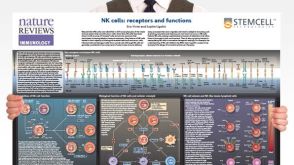 挂图Natural Killer Cells Overview of NK cell receptors, subsets, activation and function
 挂图Small Molecules, Big Impact in Pluripotent Stem Cell Research Overview of signaling pathways and small molecules in pluripotent stem cell research
 挂图Small Molecules, Big Impact in Cancer Research Overview of signaling pathways and small molecules in cancer research

 沪公网安备31010102008431号