Baatz JE et al. (JUL 2014)
In vivo (Athens,Greece) 28 4 411--423
Cryopreservation of viable human lung tissue for versatile post-thaw analyses and culture.
Clinical trials are currently used to test therapeutic efficacies for lung cancer,infections and diseases. Animal models are also used as surrogates for human disease. Both approaches are expensive and time-consuming. The utility of human biospecimens as models is limited by specialized tissue processing methods that preserve subclasses of analytes (e.g. RNA,protein,morphology) at the expense of others. We present a rapid and reproducible method for the cryopreservation of viable lung tissue from patients undergoing lobectomy or transplant. This method involves the pseudo-diaphragmatic expansion of pieces of fresh lung tissue with cryoprotectant formulation (pseudo-diaphragmatic expansion-cryoprotectant perfusion or PDX-CP) followed by controlled-rate freezing in cryovials. Expansion-perfusion rates,volumes and cryoprotectant formulation were optimized to maintain tissue architecture,decrease crystal formation and increase long-term cell viability. Rates of expansion of 4 cc/min or less and volumes ranging from 0.8-1.2 × tissue volume were well-tolerated by lung tissue obtained from patients with chronic obstructive pulmonary disease or idiopathic pulmonary fibrosis,showing minimal differences compared to standard histopathology. Morphology was greatly improved by the PDX-CP procedure compared to simple fixation. Fresh versus post-thawed lung tissue showed minimal differences in histology,RNA integrity numbers and post-translational modified protein integrity (2-dimensional differential gel electrophoresis). It was possible to derive numerous cell types,including alveolar epithelial cells,fibroblasts and stem cells,from the tissue for at least three months after cryopreservation. This new method should provide a uniform,cost-effective approach to the banking of biospecimens,with versatility to be amenable to any post-acquisition process applicable to fresh tissue samples.
View Publication
产品号#:
05850
05857
05870
05875
85850
85857
85870
85875
产品名:
mTeSR™1
mTeSR™1
Chatzouli M et al. ( 2014)
The Journal of Immunology 192 10 4518--4524
Heterogeneous Functional Effects of Concomitant B Cell Receptor and TLR Stimulation in Chronic Lymphocytic Leukemia with Mutated versus Unmutated Ig Genes
We recently reported that chronic lymphocytic leukemia (CLL) subgroups with distinct clonotypic BCRs present discrete patterns of TLR expression,function,and/or tolerance. In this study,to explore whether specific types of BCR/TLR collaboration exist in CLL,we studied the effect of single versus concomitant BCR and/or TLR stimulation on CLL cells from mutated (M-CLL) and unmutated CLL (U-CLL) cases. We stimulated negatively isolated CLL cells by using anti-IgM,imiquimod,and CpG oligodeoxynucleotide for BCR,TLR7,and TLR9,respectively,alone or in combination for different time points. After in vitro culture in the absence of stimulation,differences in p-ERK were identified at any time point,with higher p-ERK levels in U-CLL versus M-CLL. Pronounced p-ERK induction was seen by single stimulation in U-CLL,whereas BCR/TLR synergism was required in
View Publication
Pereira WdO et al. (OCT 2013)
BMC research notes 6 433
Development of plasma cell myeloma in a B-cell chronic lymphocytic leukemia patient with chromosome 12 trisomy.
BACKGROUND Cancer development results from the progressive accumulation of genomic abnormalities that culminate in the neoplastic phenotype. Cytogenetic alterations,mutations and rearrangements may be considered as molecular legacy which trace the clonal history of the disease. Concomitant tumors are reported and they may derive from a common or divergent founder clone. B-cell chronic lymphocytic leukemia (B-CLL) and plasma cell myeloma (PCM) are both mature B-cell neoplasms,and their concomitancy,albeit rare,is documented. CASE PRESENTATION Here,we described a patient with prior B-CLL with secondary development of PCM. Cytogenetic and multi parametric flow cytometry analyses were performed. The B-CLL population presented chromosome 12 trisomy,unlikely the arisen PCM population. CONCLUSION The close follow up of B-CLL patients is important for early intervention in case of development of other malignancy,such as myeloma. Our observation suggests these two diseases may have arisen from different clones. We understand that the investigation of clonal origin may provide important information regarding therapeutic decisions,and should be considered in concomitant neoplasm.
View Publication


 EasySep™小鼠TIL(CD45)正选试剂盒




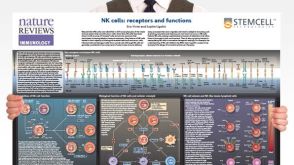 挂图Natural Killer Cells Overview of NK cell receptors, subsets, activation and function
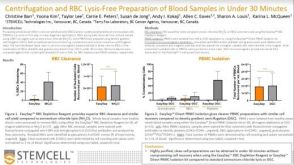 科学海报Centrifugation and RBC Lysis-Free Preparation of Blood Samples in Under 30 Minutes
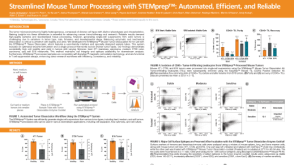 科学海报Streamlined Mouse Tumor Processing with STEMprep™: Automated, Efficient, and Reliable


 挂图Small Molecules, Big Impact in Pluripotent Stem Cell Research Overview of signaling pathways and small molecules in pluripotent stem cell research
 挂图Small Molecules, Big Impact in Cancer Research Overview of signaling pathways and small molecules in cancer research
 沪公网安备31010102008431号