Miyake K et al. (JAN 1999)
Cancer research 59 1 8--13
Molecular cloning of cDNAs which are highly overexpressed in mitoxantrone-resistant cells: demonstration of homology to ABC transport genes.
Reports of multiple distinct mitoxantrone-resistant sublines without overexpression of P-glycoprotein or the multidrug-resistance associated protein have raised the possibility of the existence of another major transporter conferring drug resistance. In the present study,a cDNA library from mitoxantrone-resistant S1-M1-80 human colon carcinoma cells was screened by differential hybridization. Two cDNAs of different lengths were isolated and designated MXR1 and MXR2. Sequencing revealed a high degree of homology for the cDNAs with Expressed Sequence Tag sequences previously identified as belonging to an ATP binding cassette transporter. Homology to the Drosophila white gene and its homologues was found for the predicted amino acid sequence. Using either cDNA as a probe in a Northern analysis demonstrated high levels of expression in the S1-M1-80 cells and in the human breast cancer subline,MCF-7 AdVp3000. Levels were lower in earlier steps of selection,and in partial revertants. The gene is amplified 10-12-fold in the MCF-7 AdVp3000 cells,but not in the S1-M1-80 cells These studies are consistent with the identification of a new ATP binding cassette transporter,which is overexpressed in mitoxantrone-resistant cells.
View Publication
产品号#:
产品名:
Doyle LA et al. (DEC 1998)
Proceedings of the National Academy of Sciences of the United States of America 95 26 15665--70
A multidrug resistance transporter from human MCF-7 breast cancer cells.
MCF-7/AdrVp is a multidrug-resistant human breast cancer subline that displays an ATP-dependent reduction in the intracellular accumulation of anthracycline anticancer drugs in the absence of overexpression of known multidrug resistance transporters such as P glycoprotein or the multidrug resistance protein. RNA fingerprinting led to the identification of a 2.4-kb mRNA that is overexpressed in MCF-7/AdrVp cells relative to parental MCF-7 cells. The mRNA encodes a 655-aa [corrected] member of the ATP-binding cassette superfamily of transporters that we term breast cancer resistance protein (BCRP). Enforced expression of the full-length BCRP cDNA in MCF-7 breast cancer cells confers resistance to mitoxantrone,doxorubicin,and daunorubicin,reduces daunorubicin accumulation and retention,and causes an ATP-dependent enhancement of the efflux of rhodamine 123 in the cloned transfected cells. BCRP is a xenobiotic transporter that appears to play a major role in the multidrug resistance phenotype of MCF-7/AdrVp human breast cancer cells.
View Publication
产品号#:
产品名:
Takei F et al. (FEB 1997)
Immunological reviews 155 67--77
The Ly-49 family: genes, proteins and recognition of class I MHC.
The Ly-49 family consists of at least nine members,of which Ly-49A and C have been found to be NK-cell inhibitory receptors specific for class I MHC. The functions of other Ly-49 molecules are still unclear. Further analysis of Ly-49 is complicated by the cross-reactivities of some anti-Ly-49 antibodies initially thought to be specific for individual Ly-49 molecules. Studies on the role of Ly-49 in hybrid resistance as well as on allelic exclusion are also complicated by our recent finding that a novel Ly-49CB6 gene is the likely allelic form of Ly-49CBALB as opposed to a previously reported highly related but distinct gene in B6 mice. In cell-cell binding assays,only Ly-49A and C show significant binding to class I MHC. Ly-49A and C also bind some polysaccharides,and carbohydrates on class I MHC seem to be important for its binding to Ly-49. However,this interaction involves not only the carbohydrate recognition domain of Ly-49 but also a part of the stalk region,suggesting that both carbohydrates and peptide backbone of class I MHC may be recognized by Ly-49. It is likely that additional Ly-49 molecules yet to be identified function as NK-inhibitory receptors specific for class I MHC.
View Publication
产品号#:
产品名:
Zandecki M et al. (AUG 1996)
British journal of haematology 94 2 217--27
Multiple myeloma: almost all patients are cytogenetically abnormal.


 EasySep™小鼠TIL(CD45)正选试剂盒




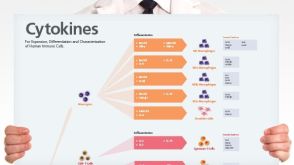 挂图Human Immune Cytokines Infographic of key cytokines for expansion, differentiation and characterization of major immune cell types
 专家访谈Joo-Hyeon Lee, PhD Using Lung Organoids and ALI to Understand Complex Cellular Interactions in the Lung发布日期: 10/13/2017
 专家访谈Janet Rossant Pioneering Regenerative Medicine From Stem Cell Development to Pediatrics发布日期: 11/21/2017
 专家访谈Qi Tan, PhD An Engineering-Approach and Lung Organoids and Understanding Lung Regeneration发布日期: 11/22/2016


 沪公网安备31010102008431号