Pease JC et al. (JUL 2012)
Biology open 1 7 622--8
Spontaneous spheroid budding from monolayers: a potential contribution to ovarian cancer dissemination.
Ovarian cancer is the most lethal gynaecologic cancer,in large part because of its early dissemination and rapid development of chemotherapy resistance. Spheroids are clusters of tumor cells found in the peritoneal fluid of patients that are thought to promote this dissemination. Current models suggest that spheroids form by aggregation of single tumor cells shed from the primary tumor. Here,we demonstrate that spheroids can also form by budding directly as adherent clusters from a monolayer. Formation of budded spheroids correlated with expression of vimentin and lack of cortical E-cadherin. We also found that compared to cells grown in monolayers,cells grown as spheroids acquired progressive resistance to the chemotherapy drugs Paclitaxel and Cisplatin. This resistance could be completely reversed by dissociating the spheroids. Our observations highlight a previously unappreciated mode of spheroid formation that might have implications for tumor dissemination and chemotherapy resistance in patients,and suggest that this resistance might be reversed by spheroid dissociation.
View Publication
产品号#:
05620
产品名:
MammoCult™ 人源培养基套装
Li S et al. ( 2013)
Oncology letters 5 2 717--721
The mTOR inhibitor AZD8055 inhibits proliferation and glycolysis in cervical cancer cells.
The aim of the present study was to determine the effect of AZD8055 on proliferation,apoptosis and glycolysis in the human cervical cancer cell line HeLa and to investigate the underlying mechanism(s) of action. HeLa human cervical cancer cells were treated with 10 nM AZD8055 for 24,48 or 72 h. MTT was used to determine cell proliferation. Annexin V/propidium iodide staining was used to determine cell apoptosis analyzed by fluorescence-activated cell sorting (FACS). Glycolytic activity was determined by measuring the activity of the key enzyme lactate dehydrogenase (LDH) and lactate production. RNA and protein expression were examined by qRT-PCR and western blotting,respectively. Treatment with AZD8055 inhibited proliferation and glycolysis,and induced apoptosis in HeLa cells in a time-dependent manner. During the prolonged treatment with AZD8055,the phosphorylation of mammalian target of rapamycin (mTOR) C1 substrates p70S6K and phosphorylation of the mTORC2 substrate Akt were deregulated,suggesting that the activity of mTOR was downregulated. Furthermore,our study showed that the expression of miR-143 was upregulated in a time-dependent manner in HeLa cells treated with AZD8055. In summary,the present study reveals a novel antitumor mechanism of AZD8055 in HeLa human cervical cancer cells.
View Publication
产品号#:
73002
73004
产品名:
AZD8055
AZD8055
Liu Z et al. (FEB 2012)
Journal of stem cell research & therapy 2 1 1--8
Blockade of Autocrine TGF-$$ Signaling Inhibits Stem Cell Phenotype, Survival, and Metastasis of Murine Breast Cancer Cells.
Transforming growth factor beta (TGF-$$) signaling has been implicated in driving tumor progression and metastasis by inducing stem cell-like features in some human cancer cell lines. In this study,we have utilized a novel murine cell line NMuMG-ST,which acquired cancer stem cell (CSC) phenotypes during spontaneous transformation of the untransformed murine mammary cell line NMuMG,to investigate the role of autocrine TGF-$$ signaling in regulating their survival,metastatic ability,and the maintenance of cancer stem cell characteristics. We have retrovirally transduced a dominant-negative TGF-$$ type II receptor (DNRII) into the NMuMG-ST cell to abrogate autocrine TGF-$$ signaling. The expression of DNRII reduced TGF-$$ sensitivity of the NMuMG-ST cells in various cell-based assays. The blockade of autocrine TGF-$$ signaling reduced the ability of the cell to grow anchorage-independently and to resist serum deprivation-induced apoptosis. These phenotypes were associated with reduced levels of active and phosphorylated AKT and ERK,and Gli1 expression suggesting that these pathways contribute to the growth and survival of this model system. More interestingly,the abrogation of autocrine TGF-$$ signaling also led to the attenuation of several features associated with mammary stem cells including epithelial-mesenchymal transition,mammosphere formation,and expression of stem cell markers. When xenografted in athymic nude mice,the DNRII cells were also found to undergo apoptosis and induced significantly lower lung metastasis burden than the control cells even though they formed similar size of xenograft tumors. Thus,our results indicate that autocrine TGF-$$ signaling is involved in the maintenance and survival of stem-like cell population resulting in the enhanced metastatic ability of the murine breast cancer cells.
View Publication
产品号#:
05620
产品名:
MammoCult™ 人源培养基套装
He K et al. (JAN 2014)
International journal of cancer 134 1 43--54
Cancer cells acquire a drug resistant, highly tumorigenic, cancer stem-like phenotype through modulation of the PI3K/Akt/β-catenin/CBP pathway.
Cancer initiation and progression have been attributed to newly discovered subpopulations of self-renewing,highly tumorigenic,drug-resistant tumor cells termed cancer stem cells. Recently,we and others reported a new phenotypic plasticity wherein highly tumorigenic,drug-resistant cell populations could arise not only from pre-existing cancer stem-like populations but also from cancer cells lacking these properties. In the current study,we hypothesized that this newfound phenotypic plasticity may be mediated by PI3K/Akt and Wnt/β-catenin signaling,pathways previously implicated in carcinogenesis,pluripotency and drug resistance. Using GFP expression,Hoechst dye exclusion and fluorescence activated cell sorting (FACS) of cancer cell lines,we identified and tracked cancer stem-like side populations (SP) of cancer cells characterized by high tumorigenicity and drug resistance. We found that pharmacological inhibition or genetic depletion of PI3K and AKT markedly reduced the spontaneous conversion of nonside population (NSP) cells into cancer stem-like SP cells,whereas PI3K/Akt activation conversely enhanced NSP to SP conversion. PI3K/AKT signaling was mediated through downstream phosphorylation of GSK3β,which led to activation and accumulation of β-catenin. Accordingly,pharmacological or genetic perturbation of GSK3β or β-catenin dramatically impacted conversion of NSP to SP. Further downstream,β-catenin's effects on NSP-SP equilibrium were dependent upon its interaction with CBP,a KAT3 family coactivator. These studies provide a mechanistic model wherein PI3K/Akt/β-catenin/CBP signaling mediates phenotypic plasticity in and out of a drug-resistant,highly tumorigenic state. Therefore,targeting this pathway has unique potential for overcoming the therapy resistance and disease progression attributed to the cancer stem-like phenotype.
View Publication
产品号#:
72772
72774
产品名:
IQ-1
Lim S et al. ( 2013)
PloS one 8 6 e66558
SNAI1-mediated epithelial-mesenchymal transition confers chemoresistance and cellular plasticity by regulating genes involved in cell death and stem cell maintenance.
Tumor cells at the tumor margin lose epithelial properties and acquire features of mesenchymal cells,a process called epithelial-to-mesenchymal transition (EMT). Recently,features of EMT were shown to be linked to cells with tumor-founding capability,so-called cancer stem cells (CSCs). Inducers of the EMT include several transcription factors,such as Snail (SNAI1) and Slug (SNAI2),as well as the secreted transforming growth factor (TGFß). In the present study,we found that EMT induction in MCF10A cells by stably expressing SNAI1 contributed to drug resistance and acquisition of stem/progenitor-like character as shown by increased cell population for surface marker CD44(+)/CD24(-) and mammosphere forming capacity. Using a microarray approach,we demonstrate that SNAI1 overexpression results in a dramatic change in signaling pathways involved in the regulation of cell death and stem cell maintenance. We showed that NF-$$B/MAPK signaling pathways are highly activated in MCF10A-SNAI1 cells by IL1ß stimulation,leading to the robust induction in IL6 and IL8. Furthermore,MCF10A-SNAI1 cells showed enhanced TCF/ß-catenin activity responding to the exogenous Wnt3a treatment. However,EMT-induced stem/progenitor cell activation process is tightly regulated in non-transformed MCF10A cells,as WNT5A and TGFB2 are strongly upregulated in MCF10A-SNAI1 cells antagonizing canonical Wnt pathway. In summary,our data provide new molecular findings how EMT contributes to the enhanced chemoresistance and the acquisition of stem/progenitor-like character by regulating signaling pathways.
View Publication


 EasySep™小鼠TIL(CD45)正选试剂盒





 实验方案How to Collect Plasma from Whole Blood Before Cell Isolation
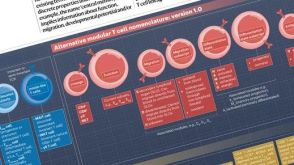 挂图T Cell Nomenclature: From Subsets to Modules A modular framework for classifying T cells by lineage, function, migration, differentiation, and antigen context.


 沪公网安备31010102008431号