Guzman ML et al. (AUG 2014)
Molecular cancer therapeutics 13 8 1979--90
Selective activity of the histone deacetylase inhibitor AR-42 against leukemia stem cells: a novel potential strategy in acute myelogenous leukemia.
Most patients with acute myelogenous leukemia (AML) relapse and die of their disease. Increasing evidence indicates that AML relapse is driven by the inability to eradicate leukemia stem cells (LSC). Thus,it is imperative to identify novel therapies that can ablate LSCs. Using an in silico gene expression-based screen for compounds evoking transcriptional effects similar to the previously described anti-LSC agent parthenolide,we identified AR-42 (OSU-HDAC42),a novel histone deacetylase inhibitor that is structurally similar to phenylbutyrate,but with improved activity at submicromolar concentrations. Here,we report that AR-42 induces NF-κB inhibition,disrupts the ability of Hsp90 to stabilize its oncogenic clients,and causes potent and specific cell death of LSCs but not normal hematopoietic stem and progenitor cells. Unlike parthenolide,the caspase-dependent apoptosis caused by AR-42 occurs without activation of Nrf-2-driven cytoprotective pathways. As AR-42 is already being tested in early clinical trials,we expect that our results can be extended to the clinic.
View Publication
产品号#:
07930
07931
07940
07955
07956
07959
07954
100-1061
07952
产品名:
CryoStor® CS10
CryoStor® CS10
CryoStor® CS10
CryoStor® CS10
CryoStor® CS10
CryoStor® CS10
CryoStor® CS10
Callahan KP et al. (OCT 2014)
Leukemia 28 10 1960--8
Flavaglines target primitive leukemia cells and enhance anti-leukemia drug activity.
Identification of agents that target human leukemia stem cells is an important consideration for the development of new therapies. The present study demonstrates that rocaglamide and silvestrol,closely related natural products from the flavagline class of compounds,are able to preferentially kill functionally defined leukemia stem cells,while sparing normal stem and progenitor cells. In addition to efficacy as single agents,flavaglines sensitize leukemia cells to several anticancer compounds,including front-line chemotherapeutic drugs used to treat leukemia patients. Mechanistic studies indicate that flavaglines strongly inhibit protein synthesis,leading to the reduction of short-lived antiapoptotic proteins. Notably though,treatment with flavaglines,alone or in combination with other drugs,yields a much stronger cytotoxic activity toward leukemia cells than the translational inhibitor temsirolimus. These results indicate that the underlying cell death mechanism of flavaglines is more complex than simply inhibiting general protein translation. Global gene expression profiling and cell biological assays identified Myc inhibition and the disruption of mitochondrial integrity to be features of flavaglines,which we propose contribute to their efficacy in targeting leukemia cells. Taken together,these findings indicate that rocaglamide and silvestrol are distinct from clinically available translational inhibitors and represent promising candidates for the treatment of leukemia.
View Publication


 EasySep™小鼠TIL(CD45)正选试剂盒




 实验方案How to Collect Plasma from Whole Blood Before Cell Isolation
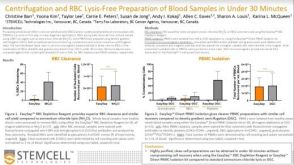 科学海报Centrifugation and RBC Lysis-Free Preparation of Blood Samples in Under 30 Minutes
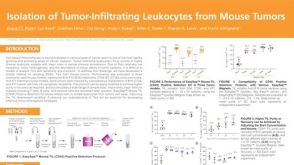 科学海报Isolation of Tumor-Infiltrating Leukocytes from Mouse Tumors
 技术公告Achieve Scalable, High-Quality Nucleic Acid Extractions with the EasySep™ Total Nucleic Acid Extraction Kit
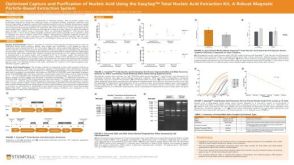




 沪公网安备31010102008431号