Platet N et al. (DEC 2007)
Cancer letters 258 2 286--90
Influence of oxygen tension on CD133 phenotype in human glioma cell cultures.
Under standard culture conditions,tumor cells are exposed to 20% O(2),whereas the mean tumor oxygen levels within the tumor are much lower. We demonstrate,using low-passaged human tumor cell cultures established from glioma,that a reduction in the oxygen level in these cell cultures dramatically increases the percentage of CD133 expressing cells.
View Publication
产品号#:
05715
产品名:
NeuroCult™成年中枢神经系统(CNS)组织酶解试剂盒(小鼠和大鼠)
Piccirillo SGM et al. (DEC 2006)
Nature 444 7120 761--5
Bone morphogenetic proteins inhibit the tumorigenic potential of human brain tumour-initiating cells.
Transformed,oncogenic precursors,possessing both defining neural-stem-cell properties and the ability to initiate intracerebral tumours,have been identified in human brain cancers. Here we report that bone morphogenetic proteins (BMPs),amongst which BMP4 elicits the strongest effect,trigger a significant reduction in the stem-like,tumour-initiating precursors of human glioblastomas (GBMs). Transient in vitro exposure to BMP4 abolishes the capacity of transplanted GBM cells to establish intracerebral GBMs. Most importantly,in vivo delivery of BMP4 effectively blocks the tumour growth and associated mortality that occur in 100% of mice after intracerebral grafting of human GBM cells. We demonstrate that BMPs activate their cognate receptors (BMPRs) and trigger the Smad signalling cascade in cells isolated from human glioblastomas (GBMs). This is followed by a reduction in proliferation,and increased expression of markers of neural differentiation,with no effect on cell viability. The concomitant reduction in clonogenic ability,in the size of the CD133+ population and in the growth kinetics of GBM cells indicates that BMP4 reduces the tumour-initiating cell pool of GBMs. These findings show that the BMP-BMPR signalling system--which controls the activity of normal brain stem cells--may also act as a key inhibitory regulator of tumour-initiating,stem-like cells from GBMs and the results also identify BMP4 as a novel,non-cytotoxic therapeutic effector,which may be used to prevent growth and recurrence of GBMs in humans.
View Publication
产品号#:
05751
产品名:
NeuroCult™ NS-A 扩增试剂盒(人)
Jenkins RB et al. (OCT 2006)
Cancer research 66 20 9852--61
A t(1;19)(q10;p10) mediates the combined deletions of 1p and 19q and predicts a better prognosis of patients with oligodendroglioma.
Combined deletion of chromosomes 1p and 19q is associated with improved prognosis and responsiveness to therapy in patients with anaplastic oligodendroglioma. The deletions usually involve whole chromosome arms,suggesting a t(1;19)(q10;p10). Using stem cell medium,we cultured a few tumors. Paraffin-embedded tissue was obtained from 21 Mayo Clinic patients and 98 patients enrolled in 2 North Central Cancer Treatment Group (NCCTG) low-grade glioma trials. Interphase fusion of CEP1 and 19p12 probes detected the t(1;19). 1p/19q deletions were evaluated by fluorescence in situ hybridization. Upon culture,one oligodendroglioma contained an unbalanced 45,XX,t(1;19)(q10;p10). CEP1/19p12 fusion was observed in all metaphases and 74% of interphase nuclei. Among Mayo Clinic oligodendrogliomas,the prevalence of fusion was 81%. Among NCCTG patients,CEP1/19p12 fusion prevalence was 55%,47%,and 0% among the oligodendrogliomas,mixed oligoastrocytomas,and astrocytomas,respectively. Ninety-one percent of NCCTG gliomas with 1p/19q deletion and 12% without 1p/19q deletion had CEP1/19p12 fusion (P textless 0.001,chi(2) test). The median overall survival (OS) for all patients was 8.1 years without fusion and 11.9 years with fusion (P = 0.003). The median OS for patients with low-grade oligodendroglioma was 9.1 years without fusion and 13.0 years with fusion (P = 0.01). Similar significant median OS differences were observed for patients with combined 1p/19q deletions. The absence of alterations was associated with a significantly shorter OS for patients who received higher doses of radiotherapy. Our results strongly suggest that a t(1;19)(q10;p10) mediates the combined 1p/19q deletion in human gliomas. Like combined 1p/19q deletion,the 1;19 translocation is associated with superior OS and progression-free survival in low-grade glioma patients.
View Publication


 EasySep™小鼠TIL(CD45)正选试剂盒




 技术窍门组织解离方法指南
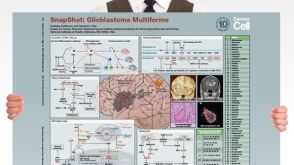 挂图SnapShot: Glioblastoma Multiforme Overview of the key concepts and mechanisms in glioblastoma multiforme biology


 沪公网安备31010102008431号