Chen C et al. (JUL 2014)
Nature communications 5 4430
Role of astroglia in Down's syndrome revealed by patient-derived human-induced pluripotent stem cells.
Down's syndrome (DS),caused by trisomy of human chromosome 21,is the most common genetic cause of intellectual disability. Here we use induced pluripotent stem cells (iPSCs) derived from DS patients to identify a role for astrocytes in DS pathogenesis. DS astroglia exhibit higher levels of reactive oxygen species and lower levels of synaptogenic molecules. Astrocyte-conditioned medium collected from DS astroglia causes toxicity to neurons,and fails to promote neuronal ion channel maturation and synapse formation. Transplantation studies show that DS astroglia do not promote neurogenesis of endogenous neural stem cells in vivo. We also observed abnormal gene expression profiles from DS astroglia. Finally,we show that the FDA-approved antibiotic drug,minocycline,partially corrects the pathological phenotypes of DS astroglia by specifically modulating the expression of S100B,GFAP,inducible nitric oxide synthase,and thrombospondins 1 and 2 in DS astroglia. Our studies shed light on the pathogenesis and possible treatment of DS by targeting astrocytes with a clinically available drug.
View Publication
产品号#:
05850
05857
05870
05875
85850
85857
85870
85875
产品名:
mTeSR™1
mTeSR™1
Baatz JE et al. (JUL 2014)
In vivo (Athens,Greece) 28 4 411--423
Cryopreservation of viable human lung tissue for versatile post-thaw analyses and culture.
Clinical trials are currently used to test therapeutic efficacies for lung cancer,infections and diseases. Animal models are also used as surrogates for human disease. Both approaches are expensive and time-consuming. The utility of human biospecimens as models is limited by specialized tissue processing methods that preserve subclasses of analytes (e.g. RNA,protein,morphology) at the expense of others. We present a rapid and reproducible method for the cryopreservation of viable lung tissue from patients undergoing lobectomy or transplant. This method involves the pseudo-diaphragmatic expansion of pieces of fresh lung tissue with cryoprotectant formulation (pseudo-diaphragmatic expansion-cryoprotectant perfusion or PDX-CP) followed by controlled-rate freezing in cryovials. Expansion-perfusion rates,volumes and cryoprotectant formulation were optimized to maintain tissue architecture,decrease crystal formation and increase long-term cell viability. Rates of expansion of 4 cc/min or less and volumes ranging from 0.8-1.2 × tissue volume were well-tolerated by lung tissue obtained from patients with chronic obstructive pulmonary disease or idiopathic pulmonary fibrosis,showing minimal differences compared to standard histopathology. Morphology was greatly improved by the PDX-CP procedure compared to simple fixation. Fresh versus post-thawed lung tissue showed minimal differences in histology,RNA integrity numbers and post-translational modified protein integrity (2-dimensional differential gel electrophoresis). It was possible to derive numerous cell types,including alveolar epithelial cells,fibroblasts and stem cells,from the tissue for at least three months after cryopreservation. This new method should provide a uniform,cost-effective approach to the banking of biospecimens,with versatility to be amenable to any post-acquisition process applicable to fresh tissue samples.
View Publication
产品号#:
05850
05857
05870
05875
85850
85857
85870
85875
产品名:
mTeSR™1
mTeSR™1
Aflaki E et al. (JUN 2014)
Science translational medicine 6 240 240ra73
Macrophage models of Gaucher disease for evaluating disease pathogenesis and candidate drugs.
Gaucher disease is caused by an inherited deficiency of glucocerebrosidase that manifests with storage of glycolipids in lysosomes,particularly in macrophages. Available cell lines modeling Gaucher disease do not demonstrate lysosomal storage of glycolipids; therefore,we set out to develop two macrophage models of Gaucher disease that exhibit appropriate substrate accumulation. We used these cellular models both to investigate altered macrophage biology in Gaucher disease and to evaluate candidate drugs for its treatment. We generated and characterized monocyte-derived macrophages from 20 patients carrying different Gaucher disease mutations. In addition,we created induced pluripotent stem cell (iPSC)-derived macrophages from five fibroblast lines taken from patients with type 1 or type 2 Gaucher disease. Macrophages derived from patient monocytes or iPSCs showed reduced glucocerebrosidase activity and increased storage of glucocerebroside and glucosylsphingosine in lysosomes. These macrophages showed efficient phagocytosis of bacteria but reduced production of intracellular reactive oxygen species and impaired chemotaxis. The disease phenotype was reversed with a noninhibitory small-molecule chaperone drug that enhanced glucocerebrosidase activity in the macrophages,reduced glycolipid storage,and normalized chemotaxis and production of reactive oxygen species. Macrophages differentiated from patient monocytes or patient-derived iPSCs provide cellular models that can be used to investigate disease pathogenesis and facilitate drug development.
View Publication
产品号#:
05850
05857
05870
05875
19059
19059RF
85850
85857
85870
85875
27845
27945
27840
27865
27940
27965
产品名:
EasySep™人单核细胞富集试剂盒
RoboSep™ 人单核细胞富集试剂盒含滤芯吸头
mTeSR™1
mTeSR™1
Khalid O et al. (MAY 2014)
Stem Cell Research 12 3 791--806
Gene expression signatures affected by alcohol-induced DNA methylomic deregulation in human embryonic stem cells
Stem cells,especially human embryonic stem cells (hESCs),are useful models to study molecular mechanisms of human disorders that originate during gestation. Alcohol (ethanol,EtOH) consumption during pregnancy causes a variety of prenatal and postnatal disorders collectively referred to as fetal alcohol spectrum disorders (FASDs). To better understand the molecular events leading to FASDs,we performed a genome-wide analysis of EtOH's effects on the maintenance and differentiation of hESCs in culture. Gene Co-expression Network Analysis showed significant alterations in gene profiles of EtOH-treated differentiated or undifferentiated hESCs,particularly those associated with molecular pathways for metabolic processes,oxidative stress,and neuronal properties of stem cells. A genome-wide DNA methylome analysis revealed widespread EtOH-induced alterations with significant hypermethylation of many regions of chromosomes. Undifferentiated hESCs were more vulnerable to EtOH's effect than their differentiated counterparts,with methylation on the promoter regions of chromosomes 2,16 and 18 in undifferentiated hESCs most affected by EtOH exposure. Combined transcriptomic and DNA methylomic analysis produced a list of differentiation-related genes dysregulated by EtOH-induced DNA methylation changes,which likely play a role in EtOH-induced decreases in hESC pluripotency. DNA sequence motif analysis of genes epigenetically altered by EtOH identified major motifs representing potential binding sites for transcription factors. These findings should help in deciphering the precise mechanisms of alcohol-induced teratogenesis. ?? 2014 Published by Elsevier B.V.
View Publication
产品号#:
05850
05857
05870
05875
07920
85850
85857
85870
85875
07922
产品名:
ACCUTASE™
mTeSR™1
mTeSR™1
ACCUTASE™
Koga C et al. (DEC 2014)
Annals of surgical oncology 21 Suppl 4 4 591--600
Reprogramming Using microRNA-302 Improves Drug Sensitivity in Hepatocellular Carcinoma Cells.
BACKGROUND Although studies have shown that Oct4,Sox2,Klf4,and c-Myc (OKSM)-mediated induced pluripotent stem cell (iPSC) technology sensitizes cancer cells to drugs,the potential risk of inserting c-Myc and random insertions of exogenous sequences into the genome persists. Several authors,including us,have presented microRNA (miRNA)-mediated reprogramming as an alternative approach. Herein,we evaluated the efficacy of miRNA-mediated reprogramming on hepatocellular carcinoma (HCC) cells. METHODS Among three miRNAs (miR-200c,miR-302s,and miR-369s) that were previously presented for miRNA-mediated reprogramming,miR-302 was expressed at low levels in HCC cells. After transfecting three times with miR-302,the cells were incubated in ES medium for 3 weeks and then characterized. RESULTS iPSC-like spheres were obtained after the 3-week incubation. Spheres presented high NANOG and OCT4 expression,low proliferation,high apoptosis,low epithelial-mesenchymal transition marker expression (N-cadherin,TGFBR2),and sensitization to drugs. Several miRNAs were changed (e.g.,low oncomiR miR-21,high miR-29b). cMyc was decreased,and methylation was elevated on histone 3 at lysine 4 (H3K4). Differentiated cells expressed markers of each germ layer (GFAP,FABP4,and ALB). AOF2 (also known as LSD1 or KDM1),one of the targets for miR-302,was repressed in iPSC-like-spheres. Silencing of AOF2 resulted in similar features of iPSC-like-spheres,including cMyc down-regulation and H3K4 methylation. In drug-resistant cells,sensitization was achieved through miR-302-mediated reprogramming. CONCLUSIONS miR-302-mediated iPSC technology reprogrammed HCC cells and improved drug sensitivity through AOF2 down-regulation,which caused H3K4 methylation and c-Myc repression.
View Publication
产品号#:
05850
05857
05870
05875
85850
85857
85870
85875
产品名:
mTeSR™1
mTeSR™1
Ting S et al. (MAY 2014)
Biotechnology journal 9 5 675--683
Time-resolved video analysis and management system for monitoring cardiomyocyte differentiation processes and toxicology assays.
Cardiomyocytes (CM) derived from human embryonic stem cells (hESC) are used for cardio-toxicity evaluation and tested in many preclinical trials for their potential use in regenerative therapeutics. As more efficient CM differentiation protocols are developed,reliable automated platforms for characterization and detection are needed. An automated time-resolved video analysis and management system (TVAMS) has been developed for the evaluation of hESC differentiation to CM. The system was used for monitoring the kinetics of embryoid bodies (EB) generation (numbers and size) and differentiation into beating EBs (percentage beating area and beating EB count) in two differentiation protocols. We show that the percentage beating areas of EBs (from total area of the EBs) is a more sensitive and better predictor of CM differentiation efficiency than percentage of beating EBs (from total EBs) as the percentage beating areas of EBs correlates with cardiac troponin-T and myosin heavy chain expression levels. TVAMS can also be used to evaluate the effect of drugs and inhibitors (e.g. isoproterenol and ZD7288) on CM beating frequency. TVAMS can reliably replace the commonly practiced,time consuming,manual counting of total and beating EBs during CM differentiation. TVAMS is a high-throughput non-invasive video imaging platform that can be applied for the development of new CM differentiation protocols,as well as a tool to conduct CM toxicology assays.
View Publication
产品号#:
05850
05857
05870
05875
85850
85857
85870
85875
产品名:
mTeSR™1
mTeSR™1
Alisson-Silva F et al. (MAY 2014)
Glycobiology 24 5 458--468
Evidences for the involvement of cell surface glycans in stem cell pluripotency and differentiation
Induced pluripotent stem (iPS) cells are somatic cells that have been reprogrammed to a pluripotent state via the introduction of defined transcription factors. Although iPS is a potentially valuable resource for regenerative medicine and drug development,several issues regarding their pluripotency,differentiation propensity and potential for tumorigenesis remain to be elucidated. Analysis of cell surface glycans has arisen as an interesting tool for the characterization of iPS. An appropriate characterization of glycan surface molecules of human embryonic stem (hES) cells and iPS cells might generate crucial data to highlight their role in the acquisition and maintenance of pluripotency. In this study,we characterized the surface glycans of iPS generated from menstrual blood-derived mesenchymal cells (iPS-MBMC). We demonstrated that,upon spontaneous differentiation,iPS-MBMC present high amounts of terminal $\$-galactopyranoside residues,pointing to an important role of terminal-linked sialic acids in pluripotency maintenance. The removal of sialic acids by neuraminidase induces iPS-MBMC and hES cells differentiation,prompting an ectoderm commitment. Exposed $\$-galactopyranose residues might be recognized by carbohydrate-binding molecules found on the cell surface,which could modulate intercellular or intracellular interactions. Together,our results point for the first time to the involvement of the presence of terminal sialic acid in the maintenance of embryonic stem cell pluripotency and,therefore,the modulation of sialic acid biosynthesis emerges as a mechanism that may govern stem cell differentiation.
View Publication
产品号#:
05850
05857
05870
05875
07923
60093
60093.1
60093AD
60093AD.1
60093PE
60093PE.1
85850
85857
85870
85875
产品名:
Dispase (1 U/mL)
抗人OCT4(OCT3)抗体,克隆3A2A20
抗人OCT4(OCT3)抗体,clone 3A2A20
抗人OCT4(OCT3)抗体,克隆3A2A20,Alexa Fluor® 488
抗人OCT4(OCT3)抗体,克隆3A2A20,Alexa Fluor® 488
抗人OCT4(OCT3)抗体,克隆3A2A20,PE
抗人OCT4(OCT3)抗体,克隆3A2A20,PE
mTeSR™1
mTeSR™1
Raya A et al. (JAN 2008)
Cold Spring Harbor Symposia on Quantitative Biology 73 127--135
Generation of cardiomyocytes from new human embryonic stem cell lines derived from poor-quality blastocysts
Human embryonic stem (hES) cells represent a potential source for cell replacement therapy of many degenerative diseases. Most frequently,hES cell lines are derived from surplus embryos from assisted reproduction cycles,independent of their quality or morphology. Here,we show that hES cell lines can be obtained from poor-quality blastocysts with the same efficiency as that obtained from good- or intermediate-quality blastocysts. Furthermore,we show that the self-renewal,pluripotency,and differentiation ability of hES cell lines derived from either source are comparable. Finally,we present a simple and reproducible embryoid body-based protocol for the differentiation of hES cells into functional cardiomyocytes. The five new hES cell lines derived here should widen the spectrum of available resources for investigating the biology of hES cells and advancing toward efficient strategies of regenerative medicine.
View Publication


 EasySep™小鼠TIL(CD45)正选试剂盒




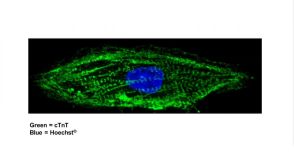 43:45
线上讲座Modeling Arrhythmias Using hPSC-Derived Cardiomyocytes and Tracking Their Excitability发布日期: 08/14/2017
43:45
线上讲座Modeling Arrhythmias Using hPSC-Derived Cardiomyocytes and Tracking Their Excitability发布日期: 08/14/2017

 沪公网安备31010102008431号