Smith KS et al. (NOV 2002)
Molecular and cellular biology 22 21 7678--87
Transformation of bone marrow B-cell progenitors by E2a-Hlf requires coexpression of Bcl-2.
The chimeric transcription factor E2a-Hlf is an oncoprotein associated with a subset of acute lymphoblastic leukemias of early B-lineage derivation. We employed a retroviral transduction-transplantation approach to evaluate the oncogenic effects of E2a-Hlf on murine B-cell progenitors harvested from adult bone marrow. Expression of E2a-Hlf induced short-lived clusters of primary hematopoietic cells but no long-term growth on preformed bone marrow stromal cell layers comprised of the AC6.21 cell line. Coexpression with Bcl-2,however,resulted in the sustained self-renewal of early preB-I cells that required stromal and interleukin-7 (IL-7) support for growth in vitro. Immortalized cells were unable to induce leukemias after transplantation into nonirradiated syngeneic hosts,unlike the leukemic properties and cytokine independence of preB-I cells transformed by p190(Bcr-Abl) under identical in vitro conditions. However,bone marrow cells expressing E2a-Hlf in combination with Bcl-2,but not E2a-Hlf alone,induced leukemias in irradiated recipients with long latencies,demonstrating both a requirement for suppression of apoptosis and the need for further secondary mutations in leukemia pathogenesis. Coexpression of IL-7 substituted for Bcl-2 to induce the in vitro growth of pre-B cells expressing E2a-Hlf,but leukemic conversion required additional abrogation of undefined stromal requirements and was associated with alterations in the Arf/Mdm2/p53 pathway. Thus,E2a-Hlf enhances the self-renewal of bone marrow B-cell progenitors without inciting a p53 tumor surveillance response or abrogating stromal and cytokine requirements for growth,which are nevertheless abrogated during progression to a leukemogenic phenotype.
View Publication
产品号#:
03134
产品名:
MethoCult™ M3134
Montecino-Rodriguez E et al. (JAN 2001)
Nature immunology 2 1 83--8
Bipotential B-macrophage progenitors are present in adult bone marrow.
According to the current model of adult hematopoiesis,differentiation of pluripotential hematopoietic stem cells into common myeloid- and lymphoid-committed progenitors establishes an early separation between the myeloid and lymphoid lineages. This report describes a rare and previously unidentified CD45R-CD19+ B cell progenitor population in postnatal bone marrow that can also generate macrophages. In addition to the definition of this B-lineage intermediate,the data indicate that a developmental relationship between the B and macrophage lineages is retained during postnatal hematopoiesis.
View Publication


 EasySep™小鼠TIL(CD45)正选试剂盒




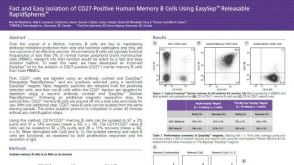 科学海报Fast and Easy Isolation of CD27-Positive Human Memory B Cells Using EasySep™ Releasable RapidSpheres™
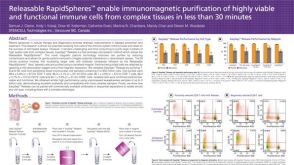 科学海报Releasable RapidSpheres Enable Immunomagnetic Purification of Highly Viable and Functional Immune Cells from Complex Tissues in Less Than 30 Minutes



 沪公网安备31010102008431号