Ludigs K et al. (FEB 2016)
Nature Communications 7 10554
NLRC5 shields T lymphocytes from NK-cell-mediated elimination under inflammatory conditions.
NLRC5 is a transcriptional regulator of MHC class I (MHCI),which maintains high MHCI expression particularly in T cells. Recent evidence highlights an important NK-T-cell crosstalk,raising the question on whether NLRC5 specifically modulates this interaction. Here we show that NK cells from Nlrc5-deficient mice exhibit moderate alterations in inhibitory receptor expression and responsiveness. Interestingly,NLRC5 expression in T cells is required to protect them from NK-cell-mediated elimination upon inflammation. Using T-cell-specific Nlrc5-deficient mice,we show that NK cells surprisingly break tolerance even towards 'self' Nlrc5-deficient T cells under inflammatory conditions. Furthermore,during chronic LCMV infection,the total CD8(+) T-cell population is severely decreased in these mice,a phenotype reverted by NK-cell depletion. These findings strongly suggest that endogenous T cells with low MHCI expression become NK-cell targets,having thus important implications for T-cell responses in naturally or therapeutically induced inflammatory conditions.
View Publication
NAP-2 Secreted by Human NK Cells Can Stimulate Mesenchymal Stem/Stromal Cell Recruitment.
Strategies for improved homing of mesenchymal stem cells (MSCs) to a place of injury are being sought and it has been shown that natural killer (NK) cells can stimulate MSC recruitment. Here,we studied the chemokines behind this recruitment. Assays were performed with bone marrow human MSCs and NK cells freshly isolated from healthy donor buffy coats. Supernatants from MSC-NK cell co-cultures can induce MSC recruitment but not to the same extent as when NK cells are present. Antibody arrays and ELISA assays confirmed that NK cells secrete RANTES (CCL5) and revealed that human NK cells secrete NAP-2 (CXCL7),a chemokine that can induce MSC migration. Inhibition with specific antagonists of CXCR2,a receptor that recognizes NAP-2,abolished NK cell-mediated MSC recruitment. This capacity of NK cells to produce chemokines that stimulate MSC recruitment points toward a role for this immune cell population in regulating tissue repair/regeneration.
View Publication


 EasySep™小鼠TIL(CD45)正选试剂盒




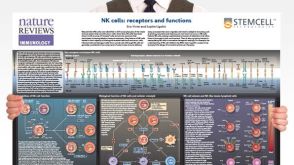 挂图Natural Killer Cells Overview of NK cell receptors, subsets, activation and function




 沪公网安备31010102008431号