Nijhof IS et al. (OCT 2015)
Leukemia 29 10 2039--49
Upregulation of CD38 expression on multiple myeloma cells by all-trans retinoic acid improves the efficacy of daratumumab.
Daratumumab is an anti-CD38 monoclonal antibody with lytic activity against multiple myeloma (MM) cells,including ADCC (antibody-dependent cellular cytotoxicity) and CDC (complement-dependent cytotoxicity). Owing to a marked heterogeneity of response to daratumumab therapy in MM,we investigated determinants of the sensitivity of MM cells toward daratumumab-mediated ADCC and CDC. In bone marrow samples from 144 MM patients,we observed no difference in daratumumab-mediated lysis between newly diagnosed or relapsed/refractory patients. However,we discovered,next to an expected effect of effector (natural killer cells/monocytes) to target (MM cells) ratio on ADCC,a significant association between CD38 expression and daratumumab-mediated ADCC (127 patients),as well as CDC (56 patients). Similarly,experiments with isogenic MM cell lines expressing different levels of CD38 revealed that the level of CD38 expression is an important determinant of daratumumab-mediated ADCC and CDC. Importantly,all-trans retinoic acid (ATRA) increased CD38 expression levels but also reduced expression of the complement-inhibitory proteins CD55 and CD59 in both cell lines and primary MM samples. This resulted in a significant enhancement of the activity of daratumumab in vitro and in a humanized MM mouse model as well. Our results provide the preclinical rationale for further evaluation of daratumumab combined with ATRA in MM patients.
View Publication
产品号#:
15621
15661
产品名:
RosetteSep™人CD3去除抗体混合物
RosetteSep™人CD3去除抗体混合物
Haase D et al. ( )
Journal of immunotherapy (Hagerstown,Md. : 1997) 38 6 250--8
Large-scale Isolation of Highly Pure Untouched" Regulatory T Cells in a GMP Environment for Adoptive Cell Therapy."
Adoptive cell therapy is an emerging treatment strategy for a number of serious diseases. Regulatory T (Treg) cells represent 1 cell type of particular interest for therapy of inflammatory conditions,as they are responsible for controlling unwanted immune responses. Initial clinical trials of adoptive transfer of Treg cells in patients with graft-versus-host disease were shown to be safe. However,obtaining sufficient numbers of highly pure and functional Treg cells with minimal contamination remains a challenge. We developed a novel approach to isolate untouched" human Treg cells from healthy donors on the basis of negative selection using the surface markers CD49d and CD127. This procedure�
View Publication
产品号#:
18062
18062RF
21000
20119
20155
产品名:
RoboSep™- S
RoboSep™ 吸头组件抛光剂
RoboSep™分选管套装(9个塑料管)
Brooks SE et al. ( 2015)
PloS one 10 10 e0140483
Application of the pMHC Array to Characterise Tumour Antigen Specific T Cell Populations in Leukaemia Patients at Disease Diagnosis.
Immunotherapy treatments for cancer are becoming increasingly successful,however to further improve our understanding of the T-cell recognition involved in effective responses and to encourage moves towards the development of personalised treatments for leukaemia immunotherapy,precise antigenic targets in individual patients have been identified. Cellular arrays using peptide-MHC (pMHC) tetramers allow the simultaneous detection of different antigen specific T-cell populations naturally circulating in patients and normal donors. We have developed the pMHC array to detect CD8+ T-cell populations in leukaemia patients that recognise epitopes within viral antigens (cytomegalovirus (CMV) and influenza (Flu)) and leukaemia antigens (including Per Arnt Sim domain 1 (PASD1),MelanA,Wilms' Tumour (WT1) and tyrosinase). We show that the pMHC array is at least as sensitive as flow cytometry and has the potential to rapidly identify more than 40 specific T-cell populations in a small sample of T-cells (0.8-1.4 x 10(6)). Fourteen of the twenty-six acute myeloid leukaemia (AML) patients analysed had T cells that recognised tumour antigen epitopes,and eight of these recognised PASD1 epitopes. Other tumour epitopes recognised were MelanA (n = 3),tyrosinase (n = 3) and WT1(126-134) (n = 1). One of the seven acute lymphocytic leukaemia (ALL) patients analysed had T cells that recognised the MUC1(950-958) epitope. In the future the pMHC array may be used provide point of care T-cell analyses,predict patient response to conventional therapy and direct personalised immunotherapy for patients.
View Publication


 EasySep™小鼠TIL(CD45)正选试剂盒




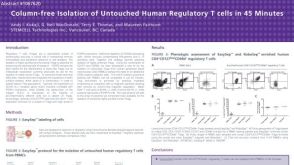 科学海报Immunomagnetic Cell Isolation of Untouched Human Regulatory T Cells
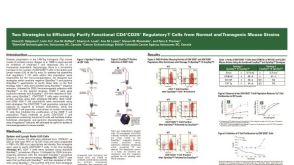 科学海报Cell Isolation of Functional CD4+CD25+ Regulatory T Cells from Mouse Strains
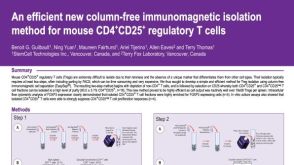 科学海报Immunomagnetic Isolation Method for Mouse CD4+CD25+ Regulatory T Cells
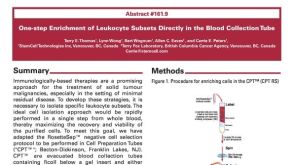 科学海报One-Step Enrichment of Leukocyte Subsets Directly in the Blood Collection Tube
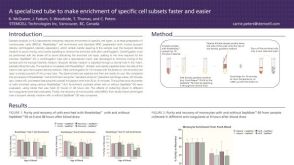 科学海报A Specialized Tube to Make Enrichment of Specific Cell Subsets Faster and Easier


 沪公网安备31010102008431号