Ichikawa S et al. (MAY 2011)
Journal of immunology (Baltimore,Md. : 1950) 186 10 5549--55
Hepatic stellate cells function as regulatory bystanders.
Regulatory T cells (Tregs) contribute significantly to the tolerogenic nature of the liver. The mechanisms,however,underlying liver-associated Treg induction are still elusive. We recently identified the vitamin A metabolite,retinoic acid (RA),as a key controller that promotes TGF-β-dependent Foxp3(+) Treg induction but inhibits TGF-β-driven Th17 differentiation. To investigate whether the RA producing hepatic stellate cells (HSC) are part of the liver tolerance mechanism,we investigated the ability of HSC to function as regulatory APC. Different from previous reports,we found that highly purified HSC did not express costimulatory molecules and only upregulated MHC class II after in vitro culture in the presence of exogenous IFN-γ. Consistent with an insufficient APC function,HSC failed to stimulate naive OT-II TCR transgenic CD4(+) T cells and only moderately stimulated α-galactosylceramide-primed invariant NKT cells. In contrast,HSC functioned as regulatory bystanders and promoted enhanced Foxp3 induction by OT-II TCR transgenic T cells primed by spleen dendritic cells,whereas they greatly inhibited the Th17 differentiation. Furthermore,the regulatory bystander capacity of the HSC was completely dependent on their ability to produce RA. Our data thus suggest that HSC can function as regulatory bystanders,and therefore,by promoting Tregs and suppressing Th17 differentiation,they might represent key players in the mechanism that drives liver-induced tolerance.
View Publication
产品号#:
01700
01705
01701
01702
19755
产品名:
ALDEFLUOR™ 试剂盒
ALDEFLUOR™ DEAB试剂, 1.5 mM, 1 mL
ALDEFLUOR™检测缓冲液
Mkhikian H et al. (JAN 2011)
Nature communications 2 334
Genetics and the environment converge to dysregulate N-glycosylation in multiple sclerosis.
How environmental factors combine with genetic risk at the molecular level to promote complex trait diseases such as multiple sclerosis (MS) is largely unknown. In mice,N-glycan branching by the Golgi enzymes Mgat1 and/or Mgat5 prevents T cell hyperactivity,cytotoxic T-lymphocyte antigen 4 (CTLA-4) endocytosis,spontaneous inflammatory demyelination and neurodegeneration,the latter pathologies characteristic of MS. Here we show that MS risk modulators converge to alter N-glycosylation and/or CTLA-4 surface retention conditional on metabolism and vitamin D(3),including genetic variants in interleukin-7 receptor-α (IL7RA*C),interleukin-2 receptor-α (IL2RA*T),MGAT1 (IV(A)V(T-T)) and CTLA-4 (Thr17Ala). Downregulation of Mgat1 by IL7RA*C and IL2RA*T is opposed by MGAT1 (IV(A)V(T-T)) and vitamin D(3),optimizing branching and mitigating MS risk when combined with enhanced CTLA-4 N-glycosylation by CTLA-4 Thr17. Our data suggest a molecular mechanism in MS whereby multiple environmental and genetic inputs lead to dysregulation of a final common pathway,namely N-glycosylation.
View Publication


 EasySep™小鼠TIL(CD45)正选试剂盒




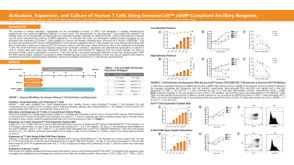 科学海报Activation, Expansion, and Culture of Human T Cells Using ImmunoCult™ cGMP-Compliant Ancillary Reagents
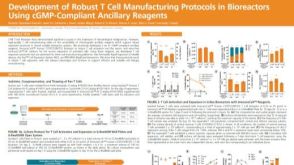 科学海报Development of Robust T Cell Manufacturing Protocols in Bioreactors Using cGMP-Compliant Ancillary Reagents





 沪公网安备31010102008431号