Targeting placental growth factor/neuropilin 1 pathway inhibits growth and spread of medulloblastoma.
Medulloblastoma is the most common pediatric malignant brain tumor. Although current therapies improve survival,these regimens are highly toxic and are associated with significant morbidity. Here,we report that placental growth factor (PlGF) is expressed in the majority of medulloblastomas,independent of their subtype. Moreover,high expression of PlGF receptor neuropilin 1 (Nrp1) correlates with poor overall survival in patients. We demonstrate that PlGF and Nrp1 are required for the growth and spread of medulloblastoma: PlGF/Nrp1 blockade results in direct antitumor effects in vivo,resulting in medulloblastoma regression,decreased metastasis,and increased mouse survival. We reveal that PlGF is produced in the cerebellar stroma via tumor-derived Sonic hedgehog (Shh) and show that PlGF acts through Nrp1-and not vascular endothelial growth factor receptor 1-to promote tumor cell survival. This critical tumor-stroma interaction-mediated by Shh,PlGF,and Nrp1 across medulloblastoma subtypes-supports the development of therapies targeting PlGF/Nrp1 pathway.
View Publication
产品号#:
05700
05701
05702
产品名:
NeuroCult™ 基础培养基(小鼠和大鼠)
NeuroCult™ 扩增添加物(小鼠和大鼠)
NeuroCult™扩增试剂盒(小鼠和大鼠)
Xu G et al. (MAY 2013)
Neuroscience 238 195--208
Functional analysis of platelet-derived growth factor receptor-β in neural stem/progenitor cells
Activation of neural stem/progenitor cells (NSPCs) is a potential therapeutic strategy of neurological disorders. In this study,NSPCs of subventricular zone were isolated and cultured from platelet-derived growth factor-β-receptor-knockout (PDGFR-β(-/-)) mice of postnatal day 1 (P1) and P28,and the roles of PDGFR-β were examined in these cells. In PDGFR-β-preserving control NSPCs,stem cell activities,such as numbers and diameters of secondary neurospheres,cell proliferation and survival rates,were significantly higher in P1 NSPCs than those in P28 NSPCs. In PDGFR-β(-/-) NSPCs,most of these parameters were decreased as compared with age-matched controls. Among them,the decrease of secondary neurosphere formation was most striking in P1 and P28 PDGFR-β(-/-) NSPCs and in P28 control NSPCs as compared with P1 control NSPCs. PCR-array and following quantitative real-time PCR (qRT-PCR) analyses demonstrated that expressions of fibroblast growth factor-2 (FGF2) and exons IV-IX of brain-derived neurotrophic factor (BDNF) were decreased,and noggin was increased in P1 PDGFR-β(-/-) as compared with P1 controls. Addition of BDNF rescued the number and diameter of secondary neurospheres in P1 PDGFR-β(-/-) NSPCs to similar levels as controls. The expressions of PDGFs and PDGFRs in control NSPCs were increased along with the differentiation-induction,where phosphorylated PDGFR-β was co-localized with neuronal and astrocyte differentiation markers. In controls,the neuronal differentiation was decreased,and the glial differentiation was increased from P1 to P28 NSPCs. Compared with P1 controls,neuronal differentiation was reduced in P1 PDGFR-β(-/-) NSPCs,whereas glial differentiation was comparable between the two genotypes. These results suggest that PDGFR-β signaling is important for the self-renewal and multipotency of NSPCs,particularly in neonatal NSPCs. BDNF,FGF2,and noggin may be involved in the effects of PDGFR-β signaling in these cells. Accordingly,the activation of PDGFR-β in NSPCs may be a novel therapeutic strategy of neurological diseases.
View Publication
产品号#:
05700
05701
05702
产品名:
NeuroCult™ 基础培养基(小鼠和大鼠)
NeuroCult™ 扩增添加物(小鼠和大鼠)
NeuroCult™扩增试剂盒(小鼠和大鼠)
Ma I and Allan AL (JUN 2011)
Stem cell reviews 7 2 292--306
The role of human aldehyde dehydrogenase in normal and cancer stem cells.
Normal stem cells and cancer stem cells (CSCs) share similar properties,in that both have the capacity to self-renew and differentiate into multiple cell types. In both the normal stem cell and cancer stem cell fields,there has been a great need for a universal marker that can effectively identify and isolate these rare populations of cells in order to characterize them and use this information for research and therapeutic purposes. Currently,it would appear that certain isoenzymes of the aldehyde dehydrogenase (ALDH) superfamily may be able to fulfill this role as a marker for both normal and cancer stem cells. ALDH has been identified as an important enzyme in the protection of normal hematopoietic stem cells,and is now also widely used as a marker to identify and isolate various types of normal stem cells and CSCs. In addition,emerging evidence suggests that ALDH1 is not only a marker for stem cells,but may also play important functional roles related to self-protection,differentiation,and expansion. This comprehensive review discusses the role that ALDH plays in normal stem cells and CSCs,with focus on ALDH1 and ALDH3A1. Discrepancies in the functional themes between cell types and future perspectives for therapeutic applications will also be discussed.
View Publication
产品号#:
01700
01705
01702
产品名:
ALDEFLUOR™ 试剂盒
ALDEFLUOR™ DEAB试剂, 1.5 mM, 1 mL
ALDEFLUOR™检测缓冲液
Arscott WT et al. (SEP 2011)
Brain research 1413 1--8
Interferon β-1b directly modulates human neural stem/progenitor cell fate.
Interferon beta (IFN-β) is a mainline treatment for multiple sclerosis (MS); however its exact mechanism of action is not completely understood. IFN-β is known as an immunomodulator; although recent evidence suggests that IFN-β may also act directly on neural stem/progenitor cells (NPCs) in the central nervous system (CNS). NPCs can differentiate into all neural lineage cells,which could contribute to the remyelination and repair of MS lesions. Understanding how IFN-β influences NPC physiology is critical to develop more specific therapies that can better assist this repair process. In this study,we investigated the effects of IFN β-1b (Betaseron®) on human NPCs in vitro (hNPCs). Our data demonstrate a dose-dependent response of hNPCs to IFN β-1b treatment via sustained proliferation and differentiation. Furthermore,we offer insight into the signaling pathways involved in these mechanisms. Overall,this study shows a direct effect of IFN β-1b on hNPCs and highlights the need to further understand how current MS treatments can modulate endogenous NPC populations within the CNS.
View Publication
Ishii Y et al. (MAR 2008)
Molecular and cellular neurosciences 37 3 507--18
Characterization of neuroprogenitor cells expressing the PDGF beta-receptor within the subventricular zone of postnatal mice.
We report a considerable number of cells in the ventricular and the subventricular zones (SVZ) of newborn mice to stain positive for the PDGF beta-receptor (PDGFRB). Many of them also stained for nestin and/or GFAP but less frequently for the neuroblast marker doublecortin and for the mitotic marker Ki-67. The SVZ of mice with nestin-Cre conditional deletion of PDGFRB expressed the receptor only on blood vessels and was devoid of any morphological abnormality. PDGFRB(-/-) neurospheres showed a higher rate of apoptosis without any significant decrease in proliferation. They demonstrated reduced capacities of migration and neuronal differentiation in response to not only PDGF-BB but also bFGF. Furthermore,the PDGFR kinase inhibitor STI571 blocked the effects of bFGF in control neurosphere cultures. bFGF increased the activity of the PDGFRB promoter as well as the expression and phosphorylation of PDGFRB. These results suggest the presence of the signaling convergence between PDGF and FGF. PDGFRB is needed for survival,and the effects of bFGF in migration and neural differentiation of the cells may be potentiated by induction of PDGFRB.
View Publication
产品号#:
05700
05701
05702
产品名:
NeuroCult™ 基础培养基(小鼠和大鼠)
NeuroCult™ 扩增添加物(小鼠和大鼠)
NeuroCult™扩增试剂盒(小鼠和大鼠)
Chua SJ et al. (FEB 2009)
Biochemical and biophysical research communications 379 2 217--21
Neural progenitors, neurons and oligodendrocytes from human umbilical cord blood cells in a serum-free, feeder-free cell culture.
We have previously demonstrated that lineage negative cells (Lin(neg)) from umbilical cord blood (UCB) develop into multipotent cells capable of differentiation into bone,muscle,endothelial and neural cells. The objective of this study was to determine the optimal conditions required for Lin(neg) UCB cells to differentiate into neuronal cells and oligodendrocytes. We demonstrate that early neural stage markers (nestin,neurofilament,A2B5 and Sox2) are expressed in Lin(neg) cells cultured in FGF4,SCF,Flt3-ligand reprogramming culture media followed by the early macroglial cell marker O4. Early stage oligodendrocyte markers CNPase,GalC,Olig2 and the late-stage marker MOSP are observed,as is the Schwann cell marker PMP22. In summary,Lin(neg) UCB cells,when appropriately cultured,are able to exhibit characteristics of neuronal and macroglial cells that can specifically differentiate into oligodendrocytes and Schwann cells and express proteins associated with myelin production after in vitro differentiation.
View Publication


 EasySep™小鼠TIL(CD45)正选试剂盒




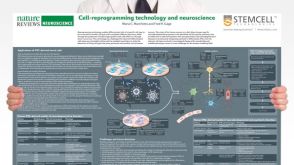 挂图Cell-Reprogramming Technology and Neuroscience Details on human iPSC-derived models of neuropsychiatric and neurodegenerative disorders


 沪公网安备31010102008431号