Heterotopically transplanted CVO neural stem cells generate neurons and migrate with SVZ cells in the adult mouse brain.
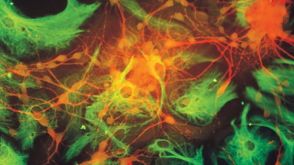
Production of new neurons throughout adulthood has been well characterized in two brain regions,the subventricular zone (SVZ) of the anterolateral ventricle and the subgranular zone (SGZ) of the hippocampus. The neurons produced from these regions arise from neural stem cells (NSCs) found in highly regulated stem cell niches. We recently showed that midline structures called circumventricular organs (CVOs) also contain NSCs capable of neurogenesis and/or astrogliogenesis in vitro and in situ (Bennett et al.). The present study demonstrates that NSCs derived from two astrogliogenic CVOs,the median eminence and organum vasculosum of the lamina terminalis of the nestin-GFP mouse,possess the potential to integrate into the SVZ and differentiate into cells with a neuronal phenotype. These NSCs,following expansion and BrdU-labeling in culture and heterotopic transplantation into a region proximal to the SVZ in adult mice,migrate caudally to the SVZ and express early neuronal markers (TUC-4,PSA-NCAM) as they migrate along the rostral migratory stream. CVO-derived BrdU(+) cells ultimately reach the olfactory bulb where they express early (PSA-NCAM) and mature (NeuN) neuronal markers. Collectively,these data suggest that although NSCs derived from the ME and OVLT CVOs are astrogliogenic in situ,they produce cells phenotypic of neurons in vivo when placed in a neurogenic environment. These findings may have implications for neural repair in the adult brain.
View Publication
产品号#:
05700
05701
05702
产品名:
NeuroCult™ 基础培养基(小鼠和大鼠)
NeuroCult™ 扩增添加物(小鼠和大鼠)
NeuroCult™扩增试剂盒(小鼠和大鼠)
Wang Y et al. (MAY 2010)
Neuroscience 167 3 750--7
Erythropoietin (EPO) regulates the proliferation and differentiation of erythroid cells by binding to its specific transmembrane receptor (EPOR). The presence of EPO and its receptor in the CNS suggests a different function for EPO other than erythropoiesis. The purpose of the present study was to examine EPOR expression and the role of EPO in the proliferation of neonatal spinal cord-derived neural progenitor cells. The effect of EPO on cell cycle progression was also examined,as well as the signaling cascades involved in this process. Our results showed that EPOR was present in the neural progenitor cells and EPO significantly enhanced their proliferation. Cell cycle analysis of EPO-treated neural progenitor cells indicated a reduced percentage of cells in G0/G1 phase,whereas the cell proliferation index (S phase plus G2/M phase) was increased. EPO also increased the proportion of 5-bromo-2-deoxyuridine (BrdU)-positive cells. With respect to the cell cycle signaling,we examined the cyclin-dependent kinases D1,D2 and E,and cyclin-dependent kinase inhibitors,p21cip1,p27kip1 and p57kip2. No significant differences were observed in the expression of these transcripts after EPO administration. Interestingly,the anti-apoptotic factors,mcl-1 and bcl-2 were significantly increased twofold. Moreover,these specific effects of EPO were eliminated by incubation of the progenitor cells with anti-EPO neutralizing antibody. Those observations suggested that EPO may play a role in normal spinal cord development by regulating cell proliferation and apoptosis.
View Publication
产品号#:
05771
产品名:
Guerra M et al. (JUL 2015)
Journal of neuropathology and experimental neurology 74 7 653--71
Cell Junction Pathology of Neural Stem Cells Is Associated With Ventricular Zone Disruption, Hydrocephalus, and Abnormal Neurogenesis.
Fetal-onset hydrocephalus affects 1 to 3 per 1,000 live births. It is not only a disorder of cerebrospinal fluid dynamics but also a brain disorder that corrective surgery does not ameliorate. We hypothesized that cell junction abnormalities of neural stem cells (NSCs) lead to the inseparable phenomena of fetal-onset hydrocephalus and abnormal neurogenesis. We used bromodeoxyuridine labeling,immunocytochemistry,electron microscopy,and cell culture to study the telencephalon of hydrocephalic HTx rats and correlated our findings with those in human hydrocephalic and nonhydrocephalic human fetal brains (n = 12 each). Our results suggest that abnormal expression of the intercellular junction proteins N-cadherin and connexin-43 in NSC leads to 1) disruption of the ventricular and subventricular zones,loss of NSCs and neural progenitor cells; and 2) abnormalities in neurogenesis such as periventricular heterotopias and abnormal neuroblast migration. In HTx rats,the disrupted NSC and progenitor cells are shed into the cerebrospinal fluid and can be grown into neurospheres that display intercellular junction abnormalities similar to those of NSC of the disrupted ventricular zone; nevertheless,they maintain their potential for differentiating into neurons and glia. These NSCs can be used to investigate cellular and molecular mechanisms underlying this condition,thereby opening the avenue for stem cell therapy.
View Publication
Keller GM (DEC 1995)
Current opinion in cell biology 7 6 862--9
In vitro differentiation of embryonic stem cells.
Under appropriate conditions in culture,embryonic stem cells will differentiate and form embryoid bodies that have been shown to contain cells of the hematopoietic,endothelial,muscle and neuronal lineages. Many aspects of the lineage-specific differentiation programs observed within the embryoid bodies reflect those found in the embryo,indicating that this model system provides access to early cell populations that develop in a normal fashion. Recent studies involving the differentiation of genetically altered embryonic stem cells highlight the potential of this in vitro differentiation system for defining the function of genes in early development.
View Publication
Sox2 expression defines a heterogeneous population of neurosphere-forming cells in the adult murine brain.
The identification of neural stem cells (NSCs) in situ has been prevented by the inability to identify a marker consistently expressed in all adult NSCs and is thus generally accomplished using the in vitro neurosphere-forming assay. The high-mobility group transcription factor Sox2 is expressed in embryonic neural epithelial stem cells; because these cells are thought to give rise to the adult NSC population,we hypothesized that Sox2 may continue to be expressed in adult NSCs. Using Sox2:EGFP transgenic mice,we show that Sox2 is expressed in neurogenic regions along the rostral-caudal axis of the central nervous system throughout life. Furthermore,all neurospheres derived from these neurogenic regions express Sox2,suggesting that Sox2 is indeed expressed in adult NSCs. We demonstrate that NSCs are heterogeneous within the adult brain,with differing capacities for cell production. In vitro,all neurospheres express Sox2,but the expression of markers common to early progenitor cells within individual neurospheres varies; this heterogeneity of NSCs is mirrored in vivo. For example,both glial fibrillary acidic protein and NG2 are expressed within individual neurospheres,but their expression is mutually exclusive; likewise,these two markers show distinct staining patterns within the Sox2+ regions of the brain's neurogenic regions. Thus,we propose that the expression of Sox2 is a unifying characteristic of NSCs in the adult brain,but that not all NSCs maintain the ability to form all neural cell types in vivo.
View Publication
产品号#:
05700
05701
05702
产品名:
NeuroCult™ 基础培养基(小鼠和大鼠)
NeuroCult™ 扩增添加物(小鼠和大鼠)
NeuroCult™扩增试剂盒(小鼠和大鼠)
Fernando P et al. (OCT 2005)
FASEB journal : official publication of the Federation of American Societies for Experimental Biology 19 12 1671--3
Neural stem cell differentiation is dependent upon endogenous caspase 3 activity.
Caspase proteases have become the focal point for the development and application of anti-apoptotic therapies in a variety of central nervous system diseases. However,this approach is based on the premise that caspase function is limited to invoking cell death signals. Here,we show that caspase-3 activity is elevated in nonapoptotic differentiating neuronal cell populations. Moreover,peptide inhibition of protease activity effectively inhibits the differentiation process in a cultured neurosphere model. These results implicate caspase-3 activation as a conserved feature of neuronal differentiation and suggest that targeted inhibition of this protease in neural cell populations may have unintended consequences.
View Publication


 EasySep™小鼠TIL(CD45)正选试剂盒







 沪公网安备31010102008431号