Chronic Hepatitis C Virus Infection Impairs M1 Macrophage Differentiation and Contributes to CD8+ T-Cell Dysfunction.
Chronic hepatitis C virus (HCV) infection causes generalized CD8+ T cell impairment,not limited to HCV-specific CD8+ T-cells. Liver-infiltrating monocyte-derived macrophages (MDMs) contribute to the local micro-environment and can interact with and influence cells routinely trafficking through the liver,including CD8+ T-cells. MDMs can be polarized into M1 (classically activated) and M2a,M2b,and M2c (alternatively activated) phenotypes that perform pro- and anti-inflammatory functions,respectively. The impact of chronic HCV infection on MDM subset functions is not known. Our results show that M1 cells generated from chronic HCV patients acquire M2 characteristics,such as increased CD86 expression and IL-10 secretion,compared to uninfected controls. In contrast,M2 subsets from HCV-infected individuals acquired M1-like features by secreting more IL-12 and IFN-gamma. The severity of liver disease was also associated with altered macrophage subset differentiation. In co-cultures with autologous CD8+ T-cells from controls,M1 macrophages alone significantly increased CD8+ T cell IFN-gamma expression in a cytokine-independent and cell-contact-dependent manner. However,M1 macrophages from HCV-infected individuals significantly decreased IFN-gamma expression in CD8+ T-cells. Therefore,altered M1 macrophage differentiation in chronic HCV infection may contribute to observed CD8+ T-cell dysfunction. Understanding the immunological perturbations in chronic HCV infection will lead to the identification of therapeutic targets to restore immune function in HCV+ individuals,and aid in the mitigation of associated negative clinical outcomes.
View Publication
产品号#:
17853
17853RF
100-0699
产品名:
EasySep™人CD8正选试剂盒 II
RoboSep™ 人CD8正选试剂盒 II
EasySep™人CD8阳性选择试剂盒II
Q. Haas et al. ( 2019)
Cancer immunology research 7 5 707--718
Siglec-9 Regulates an Effector Memory CD8+ T-cell Subset That Congregates in the Melanoma Tumor Microenvironment.
Emerging evidence suggests an immunosuppressive role of altered tumor glycosylation due to downregulation of innate immune responses via immunoregulatory Siglecs. In contrast,human T cells,a major anticancer effector cell,only rarely express Siglecs. However,here,we report that the majority of intratumoral,but not peripheral blood,cytotoxic CD8+ T cells expressed Siglec-9 in melanoma. We identified Siglec-9+ CD8+ T cells as a subset of effector memory cells with high functional capacity and signatures of clonal expansion. This cytotoxic T-cell subset was functionally inhibited in the presence of Siglec-9 ligands or by Siglec-9 engagement by specific antibodies. TCR signaling pathways and key effector functions (cytotoxicity,cytokine production) of CD8+ T cells were suppressed by Siglec-9 engagement,which was associated with the phosphorylation of the inhibitory protein tyrosine phosphatase SHP-1,but not SHP-2. Expression of cognate Siglec-9 ligands was observed on the majority of tumor cells in primary and metastatic melanoma specimens. Targeting the tumor-restricted,glycosylation-dependent Siglec-9 axis may unleash this intratumoral T-cell subset,while confining T-cell activation to the tumor microenvironment.
View Publication
产品号#:
17953
17953RF
100-0710
产品名:
EasySep™人CD8+ T细胞分选试剂盒
RoboSep™ 人CD8+ T细胞分选试剂盒
EasySep™人CD8+ T细胞分选试剂盒
Schlecht G et al. (SEP 2004)
Blood 104 6 1808--15
Murine plasmacytoid dendritic cells induce effector/memory CD8+ T-cell responses in vivo after viral stimulation.
Like their human counterparts,mouse plasmacytoid dendritic cells (pDCs) play a central role in innate immunity against viral infections,but their capacity to prime T cells in vivo remains unknown. We show here that virus-activated pDCs differentiate into antigen-presenting cells able to induce effector/memory CD8(+) T-cell responses in vivo against both epitopic peptides and endogenous antigen,whereas pDCs activated by synthetic oligodeoxynucleotides containing unmethylated cytosine-guanine motifs (CpG) acquire only the ability to recall antigen-experienced T-cell responses. We also show that immature pDCs are unable to induce effector or regulatory CD8(+) T-cell responses. Thus,murine pDCs take part in both innate and adaptive immune responses by directly priming naive CD8(+) T cells during viral infection.
View Publication
产品号#:
09600
09650
产品名:
StemSpan™ SFEM
StemSpan™ SFEM
Jeyanathan M et al. ( 2017)
Journal of immunology (Baltimore,Md. : 1950) 199 7 2555--2569
CXCR3 Signaling Is Required for Restricted Homing of Parenteral Tuberculosis Vaccine-Induced T Cells to Both the Lung Parenchyma and Airway.
Although most novel tuberculosis (TB) vaccines are designed for delivery via the muscle or skin for enhanced protection in the lung,it has remained poorly understood whether systemic vaccine-induced memory T cells can readily home to the lung mucosa prior to and shortly after pathogen exposure. We have investigated this issue by using a model of parenteral TB immunization and intravascular immunostaining. We find that systemically induced memory T cells are restricted to the blood vessels in the lung,unable to populate either the lung parenchymal tissue or the airway under homeostatic conditions. We further find that after pulmonary TB infection,it still takes many days before such T cells can enter the lung parenchymal tissue and airway. We have identified the acquisition of CXCR3 expression by circulating T cells to be critical for their entry to these lung mucosal compartments. Our findings offer new insights into mucosal T cell biology and have important implications in vaccine strategies against pulmonary TB and other intracellular infections in the lung.
View Publication
产品号#:
19853
19853RF
产品名:
EasySep™小鼠CD8+ T细胞分选试剂盒
RoboSep™ 小鼠CD8+ T细胞分选试剂盒
Wang X et al. ( 2012)
Journal of immunotherapy (Hagerstown,Md. : 1997) 35 9 689--701
Phenotypic and functional attributes of lentivirus-modified CD19-specific human CD8+ central memory T cells manufactured at clinical scale.
A key determinant of the therapeutic potency of adoptive T-cell transfer is the extent to which infused cells can persist and expand in vivo. Ex vivo propagated virus-specific and chimeric antigen receptor (CAR)-redirected antitumor CD8 effector T cells derived from CD45RA(-) CD62L(+) central memory (TCM) precursors engraft long-term and reconstitute functional memory after adoptive transfer. Here,we describe a clinical scale,closed system,immunomagnetic selection method to isolate CD8(+) T(CM) from peripheral blood mononuclear cells (PBMC). This method uses the CliniMACS device to first deplete CD14(+),CD45RA(+),and CD4(+) cells from PBMC,and then to positively select CD62L(+) cells. The average purity and yield of CD8(+) CD45RA(-) CD62L TCM obtained in full-scale qualification runs were 70% and 0.4% (of input PBMC),respectively. These CD8(+) T(CM) are responsive to anti-CD3/CD28 bead stimulation,and can be efficiently transduced with CAR encoding lentiviral vectors,and undergo sustained expansion in interleukin (IL)-2/IL-15 over 3-6 weeks. The resulting CD8(+) T(CM)-derived effectors are polyclonal,retain expression of CD62L and CD28,exhibit CAR-redirected antitumor effector function,and are capable of huIL-15-dependent in vivo homeostatic engraftment after transfer to immunodeficient NOD/Scid IL-2RgCnull mice. Adoptive therapy using purified T(CM) cells is now the subject of a Food and Drug Administration-authorized clinical trial for the treatment of CD19(+) B-cell malignancies,and 3 clinical cell products expressing a CD19-specific CAR for IND 14645 have already been successfully generated from lymphoma patients using this manufacturing platform.
View Publication
Friesen TJ et al. (MAY 2016)
The Journal of Experimental Medicine 213 6 913--920
Recent thymic emigrants are tolerized in the absence of inflammation.
T cell development requires a period of postthymic maturation. Why this is the case has remained a mystery,particularly given the rigors of intrathymic developmental checkpoints,successfully traversed by only ∼5% of thymocytes. We now show that the first few weeks of T cell residence in the lymphoid periphery define a period of heightened susceptibility to tolerance induction to tissue-restricted antigens (TRAs),the outcome of which depends on the context in which recent thymic emigrants (RTEs) encounter antigen. After encounter with TRAs in the absence of inflammation,RTEs exhibited defects in proliferation,diminished cytokine production,elevated expression of anergy-associated genes,and diminished diabetogenicity. These properties were mirrored in vitro by enhanced RTE susceptibility to regulatory T cell-mediated suppression. In the presence of inflammation,RTEs and mature T cells were,in contrast,equally capable of inducing diabetes,proliferating,and producing cytokines. Thus,recirculating RTEs encounter TRAs during a transitional developmental stage that facilitates tolerance induction,but inflammation converts antigen-exposed,tolerance-prone RTEs into competent effector cells.
View Publication
产品号#:
19852
19852RF
19853
19853RF
产品名:
EasySep™小鼠CD4+ T细胞分选试剂盒
RoboSep™ 小鼠CD4+ T细胞分选试剂盒
EasySep™小鼠CD8+ T细胞分选试剂盒
RoboSep™ 小鼠CD8+ T细胞分选试剂盒
Krummey SM et al. (MAR 2016)
Journal of Immunology 196 6 2838--46
Low-Affinity Memory CD8+ T Cells Mediate Robust Heterologous Immunity.
Heterologous immunity is recognized as a significant barrier to transplant tolerance. Whereas it has been established that pathogen-elicited memory T cells can have high or low affinity for cross-reactive allogeneic peptide-MHC,the role of TCR affinity during heterologous immunity has not been explored. We established a model with which to investigate the impact of TCR-priming affinity on memory T cell populations following a graft rechallenge. In contrast to high-affinity priming,low-affinity priming elicited fully differentiated memory T cells with a CD45RB(hi) status. High CD45RB status enabled robust secondary responses in vivo,as demonstrated by faster graft rejection kinetics and greater proliferative responses. CD45RB blockade prolonged graft survival in low affinity-primed mice,but not in high affinity-primed mice. Mechanistically,low affinity-primed memory CD8(+) T cells produced more IL-2 and significantly upregulated IL-2Rα expression during rechallenge. We found that CD45RB(hi) status was also a stable marker of priming affinity within polyclonal CD8(+) T cell populations. Following high-affinity rechallenge,low affinity-primed CD45RB(hi) cells became CD45RB(lo),demonstrating that CD45RB status acts as an affinity-based differentiation switch on CD8(+) T cells. Thus,these data establish a novel mechanism by which CD45 isoforms tune low affinity-primed memory CD8(+) T cells to become potent secondary effectors following heterologous rechallenge. These findings have direct implications for allogeneic heterologous immunity by demonstrating that despite a lower precursor frequency,low-affinity priming is sufficient to generate memory cells that mediate potent secondary responses against a cross-reactive graft challenge.
View Publication
产品号#:
19853
19853RF
产品名:
EasySep™小鼠CD8+ T细胞分选试剂盒
RoboSep™ 小鼠CD8+ T细胞分选试剂盒
Kabanova A et al. (APR 2016)
Cell Reports 15 1 9--18
Human Cytotoxic T Lymphocytes Form Dysfunctional Immune Synapses with B Cells Characterized by Non-Polarized Lytic Granule Release.
Suppression of the cytotoxic T cell (CTL) immune response has been proposed as one mechanism for immune evasion in cancer. In this study,we have explored the underlying basis for CTL suppression in the context of B cell malignancies. We document that human B cells have an intrinsic ability to resist killing by freshly isolated cytotoxic T cells (CTLs),but are susceptible to lysis by IL-2 activated CTL blasts and CTLs isolated from immunotherapy-treated patients with chronic lymphocytic leukemia (CLL). Impaired killing was associated with the formation of dysfunctional non-lytic immune synapses characterized by the presence of defective linker for activation of T cells (LAT) signaling and non-polarized release of the lytic granules transported by ADP-ribosylation factor-like protein 8 (Arl8). We propose that non-lytic degranulation of CTLs are a key regulatory mechanism of evasion through which B cells may interfere with the formation of functional immune synapses by CTLs.
View Publication
产品号#:
15024
15064
15023
15063
产品名:
RosetteSep™人B细胞富集抗体混合物
RosetteSep™人B细胞富集抗体混合物
RosetteSep™人CD8+ T细胞富集抗体混合物
RosetteSep™人CD8+ T细胞富集抗体混合物
Pu Y et al. (APR 2016)
Science Translational Medicine 8 333 333ra47
Androgen receptor antagonists compromise T cell response against prostate cancer leading to early tumor relapse.
Surgical and medical androgen deprivation therapy (ADT) is a cornerstone for prostate cancer treatment,but relapse usually occurs. We herein show that orchiectomy synergizes with immunotherapy,whereas the more widely used treatment of medical ADT involving androgen receptor (AR) antagonists suppresses immunotherapy. Furthermore,we observed that the use of medical ADT could unexpectedly impair the adaptive immune responses through interference with initial T cell priming rather than in the reactivation or expansion phases. Mechanistically,we have revealed that inadvertent immunosuppression might be potentially mediated by a receptor shared with γ-aminobutyric acid. Our data demonstrate that the timing and dosing of antiandrogens are critical to maximizing the antitumor effects of combination therapy. This study highlights an underappreciated mechanism of AR antagonist-mediated immunosuppression and provides a new strategy to enhance immune response and prevent the relapse of advanced prostate cancer.
View Publication
Kaabinejadian S et al. (MAY 2016)
The Journal of Immunology 196 10 4263--73
Immunodominant West Nile virus T cell epitopes are fewer in number and fashionably late
Class I HLA molecules mark infected cells for immune targeting by presenting pathogen-encoded peptides on the cell surface. Characterization of viral peptides unique to infected cells is important for understanding CD8(+) T cell responses and for the development of T cell-based immunotherapies. Having previously reported a series of West Nile virus (WNV) epitopes that are naturally presented by HLA-A*02:01,in this study we generated TCR mimic (TCRm) mAbs to three of these peptide/HLA complexes-the immunodominant SVG9 (E protein),the subdominant SLF9 (NS4B protein),and the immunorecessive YTM9 (NS3 protein)-and used these TCRm mAbs to stain WNV-infected cell lines and primary APCs. TCRm staining of WNV-infected cells demonstrated that the immunorecessive YTM9 appeared several hours earlier and at 5- to 10-fold greater density than the more immunogenic SLF9 and SVG9 ligands,respectively. Moreover,staining following inhibition of the TAP demonstrated that all three viral ligands were presented in a TAP-dependent manner despite originating from different cellular compartments. To our knowledge,this study represents the first use of TCRm mAbs to define the kinetics and magnitude of HLA presentation for a series of epitopes encoded by one virus,and the results depict a pattern whereby individual epitopes differ considerably in abundance and availability. The observations that immunodominant ligands can be found at lower levels and at later time points after infection suggest that a reevaluation of the factors that combine to shape T cell reactivity may be warranted.
View Publication


 EasySep™小鼠TIL(CD45)正选试剂盒




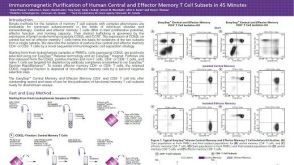 科学海报Immunomagnetic Purification of Human Central and Effector Memory T Cell Subsets in 45 Minutes

 沪公网安备31010102008431号