Human Induced Pluripotent Stem Cell-Derived Macrophages Share Ontogeny with MYB-Independent Tissue-Resident Macrophages.
Tissue-resident macrophages,such as microglia,Kupffer cells,and Langerhans cells,derive from Myb-independent yolk sac (YS) progenitors generated before the emergence of hematopoietic stem cells (HSCs). Myb-independent YS-derived resident macrophages self-renew locally,independently of circulating monocytes and HSCs. In contrast,adult blood monocytes,as well as infiltrating,gut,and dermal macrophages,derive from Myb-dependent HSCs. These findings are derived from the mouse,using gene knockouts and lineage tracing,but their applicability to human development has not been formally demonstrated. Here,we use human induced pluripotent stem cells (iPSCs) as a tool to model human hematopoietic development. By using a CRISPR-Cas9 knockout strategy,we show that human iPSC-derived monocytes/macrophages develop in an MYB-independent,RUNX1-,and SPI1 (PU.1)-dependent fashion. This result makes human iPSC-derived macrophages developmentally related to and a good model for MYB-independent tissue-resident macrophages,such as alveolar and kidney macrophages,microglia,Kupffer cells,and Langerhans cells.
View Publication
产品号#:
85850
85857
85870
85875
产品名:
mTeSR™1
mTeSR™1
Chou S-J et al. (APR 2017)
International journal of cardiology 232 255--263
Energy utilization of induced pluripotent stem cell-derived cardiomyocyte in Fabry disease.
BACKGROUND Fabry disease (FD) is a lysosomal storage disease in which glycosphingolipids (GB3) accumulate in organs of the human body,leading to idiopathic hypertrophic cardiomyopathy and target organ damage. Its pathophysiology is still poorly understood. OBJECTIVES We aimed to generate patient-specific induced pluripotent stem cells (iPSC) from FD patients presenting cardiomyopathy to determine whether the model could recapitulate key features of the disease phenotype and to investigate the energy metabolism in Fabry disease. METHODS Peripheral blood mononuclear cells from a 30-year-old Chinese man with a diagnosis of Fabry disease,GLA gene (IVS4+919G>A) mutation were reprogrammed into iPSCs and differentiated into iPSC-CMs and energy metabolism was analyzed in iPSC-CMs. RESULTS The FD-iPSC-CMs recapitulated numerous aspects of the FD phenotype including reduced GLA activity,cellular hypertrophy,GB3 accumulation and impaired contractility. Decreased energy metabolism with energy utilization shift to glycolysis was observed,but the decreased energy metabolism was not modified by enzyme rescue replacement (ERT) in FD-iPSCs-CMs. CONCLUSION This model provided a promising in vitro model for the investigation of the underlying disease mechanism and development of novel therapeutic strategies for FD. This potential remedy for enhancing the energetic network and utility efficiency warrants further study to identify novel therapies for the disease.
View Publication
产品号#:
85850
85857
85870
85875
产品名:
mTeSR™1
mTeSR™1
Gupta S et al. (DEC 2017)
Journal of Neurochemistry
Fibroblast growth factor 2 regulates activity and gene expression of human post-mitotic excitatory neurons
Many neuropsychiatric disorders are thought to result from subtle changes in neural circuit formation. We used human embryonic stem cells and induced pluripotent stem cells (hiPSCs) to model mature,post-mitotic excitatory neurons and examine effects of fibroblast growth factor 2 (FGF2). FGF2 gene expression is known to be altered in brain regions of major depressive disorder (MDD) patients and FGF2 has anti-depressive effects in animal models of depression. We generated stable inducible neurons (siNeurons) conditionally expressing human neurogenin-2 (NEUROG2) to generate a homogenous population of post-mitotic excitatory neurons and study the functional as well as the transcriptional effects of FGF2. Upon induction of NEUROG2 with doxycycline,the vast majority of cells are post-mitotic,and the gene expression profile recapitulates that of excitatory neurons within 6 days. Using hES cell lines that inducibly express NEUROG2 as well as GCaMP6f,we were able to characterize spontaneous calcium activity in these neurons and show that calcium transients increase in the presence of FGF2. The FGF2-responsive genes were determined by RNA-Seq. FGF2-regulated genes previously identified in non-neuronal cell types were up-regulated (EGR1,ETV4,SPRY4,and DUSP6) as a result of chronic FGF2 treatment of siNeurons. Novel neuron-specific genes were also identified that may mediate FGF2-dependent increases in synaptic efficacy including NRXN3,SYT2,and GALR1. Since several of these genes have been implicated in MDD previously,these results will provide the basis for more mechanistic studies of the role of FGF2 in MDD.
View Publication
K. B. Langer et al. (APR 2018)
Stem cell reports 10 4 1282--1293
Retinal Ganglion Cell Diversity and Subtype Specification from Human Pluripotent Stem Cells.
Retinal ganglion cells (RGCs) are the projection neurons of the retina and transmit visual information to postsynaptic targets in the brain. While this function is shared among nearly all RGCs,this class of cell is remarkably diverse,comprised of multiple subtypes. Previous efforts have identified numerous RGC subtypes in animal models,but less attention has been paid to human RGCs. Thus,efforts of this study examined the diversity of RGCs differentiated from human pluripotent stem cells (hPSCs) and characterized defined subtypes through the expression of subtype-specific markers. Further investigation of these subtypes was achieved using single-cell transcriptomics,confirming the combinatorial expression of molecular markers associated with these subtypes,and also provided insight into more subtype-specific markers. Thus,the results of this study describe the derivation of RGC subtypes from hPSCs and will support the future exploration of phenotypic and functional diversity within human RGCs.
View Publication
Alkaline phosphatase-positive colony formation is a sensitive, specific, and quantitative indicator of undifferentiated human embryonic stem cells.
Human embryonic stem cells (hESCs) can be maintained in vitro as immortal pluripotent cells but remain responsive to many differentiation-inducing signals. Investigation of the initial critical events involved in differentiation induction would be greatly facilitated if a specific,robust,and quantitative assay for pluripotent hESCs with self-renewal potential were available. Here we describe the results of a series of experiments to determine whether the formation of adherent alkaline phosphatase-positive (AP(+)) colonies under conditions optimized for propagating undifferentiated hESCs would meet this need. The findings can be summarized as follows. (a) Most colonies obtained under these conditions consist of textgreateror=30 AP(+) cells that coexpress OCT4,NANOG,SSEA3,SSEA4,TRA-1-60,and TRA-1-81. (b) Most such colonies are derived from SSEA3(+) cells. (c) Primary colonies contain cells that produce secondary colonies of the same composition,including cells that initiate multilineage differentiation in embryoid bodies (EBs). (d) Colony formation is independent of plating density or the colony-forming cell (CFC) content of the test population over a wide range of cell concentrations. (e) CFC frequencies decrease when differentiation is induced by exposure either to retinoic acid or to conditions that stimulate EB formation. Interestingly,this loss of AP(+) clonogenic potential also occurs more rapidly than the loss of SSEA3 or OCT4 expression. The CFC assay thus provides a simple,reliable,broadly applicable,and highly specific functional assay for quantifying undifferentiated hESCs with self-renewal potential. Its use under standardized assay conditions should enhance future elucidation of the mechanisms that regulate hESC propagation and their early differentiation.
View Publication
产品号#:
05850
05857
05870
05875
07923
36254
85850
85857
85870
85875
产品名:
Dispase (1 U/mL)
DMEM/F-12 with 15 mM HEPES
mTeSR™1
mTeSR™1
Erceg S et al. (MAY 2008)
PLoS ONE 3 5 e2122
Differentiation of human embryonic stem cells to regional specific neural precursors in chemically defined medium conditions.
BACKGROUND: Human embryonic stem cells (hESC) provide a unique model to study early events in human development. The hESC-derived cells can potentially be used to replace or restore different tissues including neuronal that have been damaged by disease or injury.backslashnbackslashnMETHODOLOGY AND PRINCIPAL FINDINGS: The cells of two different hESC lines were converted to neural rosettes using adherent and chemically defined conditions. The progenitor cells were exposed to retinoic acid (RA) or to human recombinant basic fibroblast growth factor (bFGF) in the late phase of the rosette formation. Exposing the progenitor cells to RA suppressed differentiation to rostral forebrain dopamine neural lineage and promoted that of spinal neural tissue including motor neurons. The functional characteristics of these differentiated neuronal precursors under both,rostral (bFGF) and caudalizing (RA) signals were confirmed by patch clamp analysis.backslashnbackslashnCONCLUSIONS/SIGNIFICANCE: These findings suggest that our differentiation protocol has the capacity to generate region-specific and electrophysiologically active neurons under in vitro conditions without embryoid body formation,co-culture with stromal cells and without presence of cells of mesodermal or endodermal lineages.
View Publication
产品号#:
05850
05857
05870
05875
85850
85857
85870
85875
产品名:
mTeSR™1
mTeSR™1
Bañ et al. (SEP 2008)
DNA repair 7 9 1471--1483
Mouse but not human embryonic stem cells are deficient in rejoining of ionizing radiation-induced DNA double-strand breaks.
Mouse embryonic stem (mES) cells will give rise to all of the cells of the adult mouse,but they failed to rejoin half of the DNA double-strand breaks (dsb) produced by high doses of ionizing radiation. A deficiency in DNA-PK(cs) appears to be responsible since mES cells expressed textless10% of the level of mouse embryo fibroblasts (MEFs) although Ku70/80 protein levels were higher than MEFs. However,the low level of DNA-PK(cs) found in wild-type cells appeared sufficient to allow rejoining of dsb after doses textless20Gy even in G1 phase cells. Inhibition of DNA-PK(cs) with wortmannin and NU7026 still sensitized mES cells to radiation confirming the importance of the residual DNA-PK(cs) at low doses. In contrast to wild-type cells,mES cells lacking H2AX,a histone protein involved in the DNA damage response,were radiosensitive but they rejoined double-strand breaks more rapidly. Consistent with more rapid dsb rejoining,H2AX(-/-) mES cells also expressed 6 times more DNA-PK(cs) than wild-type mES cells. Similar results were obtained for ATM(-/-) mES cells. Differentiation of mES cells led to an increase in DNA-PK(cs),an increase in dsb rejoining rate,and a decrease in Ku70/80. Unlike mouse ES,human ES cells were proficient in rejoining of dsb and expressed high levels of DNA-PK(cs). These results confirm the importance of homologous recombination in the accurate repair of double-strand breaks in mES cells,they help explain the chromosome abnormalities associated with deficiencies in H2AX and ATM,and they add to the growing list of differences in the way rodent and human cells deal with DNA damage.
View Publication


 EasySep™小鼠TIL(CD45)正选试剂盒




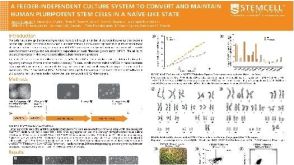 科学海报A Feeder-Independent Culture System to Convert and Maintain Human Pluripotent Stem Cells in a Naïve-Like State
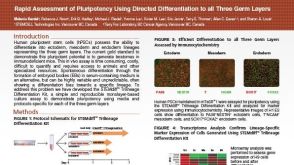 科学海报Rapid Assessment of Pluripotency Using Directed Differentiation to all Three Germ Layers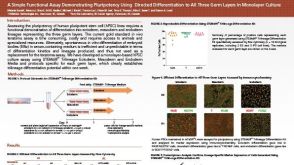

 沪公网安备31010102008431号