Ouyang Q et al. (NOV 2016)
Stem cell research 17 3 637--639
Human embryonic stem cells derived from abnormal blastocyst donated by polycystic kidney syndrome patient.
Human embryonic stem cell (hESC) line chHES-468 was derived from abnormal blastocyst donated by polycystic kidney syndrome (PKD) patient after preimplantation genetic diagnosis (PGD) treatment. DNA sequencing analysis confirmed that chHES-468 cell line carried a heterozygous mutation,c.1052610527delAG,of PKD1. Characteristic tests proved that the chHES-468 cell line presented typical markers of pluripotency and had the capability to form the three germ layers both in vitro and in vivo.
View Publication
产品号#:
05850
05857
05870
05875
85850
85857
85870
85875
产品名:
mTeSR™1
mTeSR™1
Carcamo-Orive I et al. (APR 2017)
Cell stem cell 20 4 518--532.e9
Analysis of Transcriptional Variability in a Large Human iPSC Library Reveals Genetic and Non-genetic Determinants of Heterogeneity.
Variability in induced pluripotent stem cell (iPSC) lines remains a concern for disease modeling and regenerative medicine. We have used RNA-sequencing analysis and linear mixed models to examine the sources of gene expression variability in 317 human iPSC lines from 101 individuals. We found that ∼50% of genome-wide expression variability is explained by variation across individuals and identified a set of expression quantitative trait loci that contribute to this variation. These analyses coupled with allele-specific expression show that iPSCs retain a donor-specific gene expression pattern. Network,pathway,and key driver analyses showed that Polycomb targets contribute significantly to the non-genetic variability seen within and across individuals,highlighting this chromatin regulator as a likely source of reprogramming-based variability. Our findings therefore shed light on variation between iPSC lines and illustrate the potential for our dataset and other similar large-scale analyses to identify underlying drivers relevant to iPSC applications.
View Publication
产品号#:
05850
05857
05870
05875
85850
85857
85870
85875
产品名:
mTeSR™1
mTeSR™1
O'Brien CM et al. (DEC 2016)
Stem cells (Dayton,Ohio)
New Monoclonal Antibodies to Defined Cell Surface Proteins on Human Pluripotent Stem Cells.
The study and application of human pluripotent stem cells (hPSCs) will be enhanced by the availability of well-characterised monoclonal antibodies (mAbs) detecting cell-surface epitopes. Here we report generation of seven new mAbs that detect cell surface proteins present on live and fixed human ES cells (hESCs) and human iPS cells (hiPSCs),confirming our previous prediction that these proteins were present on the cell surface of hPSCs. The mAbs all show a high correlation with POU5F1 (OCT4) expression and other hPSC surface markers (TRA-160 and SSEA-4) in hPSC cultures and detect rare OCT4 positive cells in differentiated cell cultures. These mAbs are immunoreactive to cell surface protein epitopes on both primed and naive state hPSCs,providing useful research tools to investigate the cellular mechanisms underlying human pluripotency and states of cellular reprogramming. In addition,we report that subsets of the seven new mAbs are also immunoreactive to human bone marrow-derived mesenchymal stem cells (MSCs),normal human breast subsets and both normal and tumorigenic colorectal cell populations. The mAbs reported here should accelerate the investigation of the nature of pluripotency,and enable development of robust cell separation and tracing technologies to enrich or deplete for hPSCs and other human stem and somatic cell types. This article is protected by copyright. All rights reserved.
View Publication
产品号#:
05970
产品名:
de Souza JS et al. (JAN 2017)
Human molecular genetics 26 2 270--281
IGF1 neuronal response in the absence of MECP2 is dependent on TRalpha 3.
Rett syndrome (RTT) is an X-linked neurodevelopmental disorder in which the MECP2 (methyl CpG-binding protein 2) gene is mutated. Recent studies showed that RTT-derived neurons have many cellular deficits when compared to control,such as: less synapses,lower dendritic arborization and reduced spine density. Interestingly,treatment of RTT-derived neurons with Insulin-like Growth Factor 1 (IGF1) could rescue some of these cellular phenotypes. Given the critical role of IGF1 during neurodevelopment,the present study used human induced pluripotent stem cells (iPSCs) from RTT and control individuals to investigate the gene expression profile of IGF1 and IGF1R on different developmental stages of differentiation. We found that the thyroid hormone receptor (TRalpha 3) has a differential expression profile. Thyroid hormone is critical for normal brain development. Our results showed that there is a possible link between IGF1/IGF1R and the TRalpha 3 and that over expression of IGF1R in RTT cells may be the cause of neurites improvement in neural RTT-derived neurons.
View Publication
产品号#:
05850
05857
05870
05875
85850
85857
85870
85875
产品名:
mTeSR™1
mTeSR™1
Ang Y-S et al. (DEC 2016)
Cell 167 7 1734--1749.e22
Disease Model of GATA4 Mutation Reveals Transcription Factor Cooperativity in Human Cardiogenesis.
Mutation of highly conserved residues in transcription factors may affect protein-protein or protein-DNA interactions,leading to gene network dysregulation and human disease. Human mutations in GATA4,a cardiogenic transcription factor,cause cardiac septal defects and cardiomyopathy. Here,iPS-derived cardiomyocytes from subjects with a heterozygous GATA4-G296S missense mutation showed impaired contractility,calcium handling,and metabolic activity. In human cardiomyocytes,GATA4 broadly co-occupied cardiac enhancers with TBX5,another transcription factor that causes septal defects when mutated. The GATA4-G296S mutation disrupted TBX5 recruitment,particularly to cardiac super-enhancers,concomitant with dysregulation of genes related to the phenotypic abnormalities,including cardiac septation. Conversely,the GATA4-G296S mutation led to failure of GATA4 and TBX5-mediated repression at non-cardiac genes and enhanced open chromatin states at endothelial/endocardial promoters. These results reveal how disease-causing missense mutations can disrupt transcriptional cooperativity,leading to aberrant chromatin states and cellular dysfunction,including those related to morphogenetic defects.
View Publication
产品号#:
05850
05857
05870
05875
85850
85857
85870
85875
产品名:
mTeSR™1
mTeSR™1
Nakagawa N et al. (DEC 2016)
JCI insight 1 20 e87446
Pentraxin-2 suppresses c-Jun/AP-1 signaling to inhibit progressive fibrotic disease.
Pentraxin-2 (PTX-2),also known as serum amyloid P component (SAP/APCS),is a constitutive,antiinflammatory,innate immune plasma protein whose circulating level is decreased in chronic human fibrotic diseases. Here we show that recombinant human PTX-2 (rhPTX-2) retards progression of chronic kidney disease in Col4a3 mutant mice with Alport syndrome,reducing blood markers of kidney failure,enhancing lifespan by 20%,and improving histological signs of disease. Exogenously delivered rhPTX-2 was detected in macrophages but also in tubular epithelial cells,where it counteracted macrophage activation and was cytoprotective for the epithelium. Computational analysis of genes regulated by rhPTX-2 identified the transcriptional regulator c-Jun along with its activator protein-1 (AP-1) binding partners as a central target for the function of rhPTX-2. Accordingly,PTX-2 attenuates c-Jun and AP-1 activity,and reduces expression of AP-1-dependent inflammatory genes in both monocytes and epithelium. Our studies therefore identify rhPTX-2 as a potential therapy for chronic fibrotic disease of the kidney and an important inhibitor of pathological c-Jun signaling in this setting.
View Publication
产品号#:
05850
05857
05870
05875
85850
85857
85870
85875
产品名:
mTeSR™1
mTeSR™1
Fu X et al. (FEB 2016)
Plos One 11 2 e0148819
High-Dose Fluoride Impairs the Properties of Human Embryonic Stem Cells via JNK Signaling
Fluoride is a ubiquitous natural substance that is often used in dental products to prevent dental caries. The biphasic actions of fluoride imply that excessive systemic exposure to fluoride can cause harmful effects on embryonic development in both animal models and humans. However,insufficient information is available on the effects of fluoride on human embryonic stem cells (hESCs),which is a novel in vitro humanized model for analyzing the embryotoxicities of chemical compounds. Therefore,we investigated the effects of sodium fluoride (NaF) on the proliferation,differentiation and viability of H9 hESCs. For the first time,we showed that 1 mM NaF did not significantly affect the proliferation of hESCs but did disturb the gene expression patterns of hESCs during embryoid body (EB) differentiation. Higher doses of NaF (2 mM and above) markedly decreased the viability and proliferation of hESCs. The mode and underlying mechanism of high-dose NaF-induced cell death were further investigated by assessing the sub-cellular morphology,mitochondrial membrane potential (MMP),caspase activities,cellular reactive oxygen species (ROS) levels and activation of mitogen-activated protein kinases (MAPKs). High-dose NaF caused the death of hESCs via apoptosis in a caspase-mediated but ROS-independent pathway,coupled with an increase in the phospho-c-Jun N-terminal kinase (p-JNK) levels. Pretreatment with a pJNK-specific inhibitor (SP600125) could effectively protect hESCs from NaF-induced cell death in a concentration- and time-dependent manner. These findings suggest that NaF might interfere with early human embryogenesis by disturbing the specification of the three germ layers as well as osteogenic lineage commitment and that high-dose NaF could cause apoptosis through a JNK-dependent pathway in hESCs.
View Publication
Mitochondrial replacement in human oocytes carrying pathogenic mitochondrial DNA mutations.
Maternally inherited mitochondrial (mt)DNA mutations can cause fatal or severely debilitating syndromes in children,with disease severity dependent on the specific gene mutation and the ratio of mutant to wild-type mtDNA (heteroplasmy) in each cell and tissue. Pathogenic mtDNA mutations are relatively common,with an estimated 778 affected children born each year in the United States. Mitochondrial replacement therapies or techniques (MRT) circumventing mother-to-child mtDNA disease transmission involve replacement of oocyte maternal mtDNA. Here we report MRT outcomes in several families with common mtDNA syndromes. The mother's oocytes were of normal quality and mutation levels correlated with those in existing children. Efficient replacement of oocyte mutant mtDNA was performed by spindle transfer,resulting in embryos containing<99% donor mtDNA. Donor mtDNA was stably maintained in embryonic stem cells (ES cells) derived from most embryos. However,some ES cell lines demonstrated gradual loss of donor mtDNA and reversal to the maternal haplotype. In evaluating donor-to-maternal mtDNA interactions,it seems that compatibility relates to mtDNA replication efficiency rather than to mismatch or oxidative phosphorylation dysfunction. We identify a polymorphism within the conserved sequence box II region of the D-loop as a plausible cause of preferential replication of specific mtDNA haplotypes. In addition,some haplotypes confer proliferative and growth advantages to cells. Hence,we propose a matching paradigm for selecting compatible donor mtDNA for MRT.
View Publication
产品号#:
05850
05857
05870
05875
85850
85857
85870
85875
产品名:
mTeSR™1
mTeSR™1
Wang R et al. (DEC 2015)
BMC cancer 16 1 56
Fusion with stem cell makes the hepatocellular carcinoma cells similar to liver tumor-initiating cells.
BACKGROUND Cell fusion is a fast and highly efficient technique for cells to acquire new properties. The fusion of somatic cells with stem cells can reprogram somatic cells to a pluripotent state. Our research on the fusion of stem cells and cancer cells demonstrates that the fused cells can exhibit stemness and cancer cell-like characteristics. Thus,tumor-initiating cell-like cells are generated. METHODS We employed laser-induced single-cell fusion technique to fuse the hepatocellular carcinoma cells and human embryonic stem cells (hESC). Real-time RT-PCR,flow cytometry and in vivo tumorigenicity assay were adopted to identify the gene expression difference. RESULTS We successfully produced a fused cell line that coalesces the gene expression information of hepatocellular carcinoma cells and stem cells. Experimental results showed that the fused cells expressed cancer and stemness markers as well as exhibited increased resistance to drug treatment and enhanced tumorigenesis. CONCLUSIONS Fusion with stem cells transforms liver cancer cells into tumor initiating-like cells. Results indicate that fusion between cancer cell and stem cell may generate tumor initiating-like cells.
View Publication
产品号#:
05850
05857
05870
05875
85850
85857
85870
85875
产品名:
mTeSR™1
mTeSR™1
Takayama Y and Kida YS (FEB 2016)
PloS one 11 2 e0148559
In Vitro Reconstruction of Neuronal Networks Derived from Human iPS Cells Using Microfabricated Devices.
Morphology and function of the nervous system is maintained via well-coordinated processes both in central and peripheral nervous tissues,which govern the homeostasis of organs/tissues. Impairments of the nervous system induce neuronal disorders such as peripheral neuropathy or cardiac arrhythmia. Although further investigation is warranted to reveal the molecular mechanisms of progression in such diseases,appropriate model systems mimicking the patient-specific communication between neurons and organs are not established yet. In this study,we reconstructed the neuronal network in vitro either between neurons of the human induced pluripotent stem (iPS) cell derived peripheral nervous system (PNS) and central nervous system (CNS),or between PNS neurons and cardiac cells in a morphologically and functionally compartmentalized manner. Networks were constructed in photolithographically microfabricated devices with two culture compartments connected by 20 microtunnels. We confirmed that PNS and CNS neurons connected via synapses and formed a network. Additionally,calcium-imaging experiments showed that the bundles originating from the PNS neurons were functionally active and responded reproducibly to external stimuli. Next,we confirmed that CNS neurons showed an increase in calcium activity during electrical stimulation of networked bundles from PNS neurons in order to demonstrate the formation of functional cell-cell interactions. We also confirmed the formation of synapses between PNS neurons and mature cardiac cells. These results indicate that compartmentalized culture devices are promising tools for reconstructing network-wide connections between PNS neurons and various organs,and might help to understand patient-specific molecular and functional mechanisms under normal and pathological conditions.
View Publication
产品号#:
05850
05857
05870
05875
85850
85857
85870
85875
产品名:
mTeSR™1
mTeSR™1
Wei W et al. (MAY 2017)
Artificial organs 41 5 452--460
Danshen-Enhanced Cardioprotective Effect of Cardioplegia on Ischemia Reperfusion Injury in a Human-Induced Pluripotent Stem Cell-Derived Cardiomyocytes Model.
Myocardial ischemia-reperfusion (I/R) injury is unavoidable during cardioplegic arrest and open-heart surgery. Danshen is one of the most popular traditional herbal medicines in China,which has entered the Food and Drug Administration-approved phase III clinical trial. This study was aimed to develop a human-induced pluripotent stem cell-derived cardiomyocytes (hiPSC-CMs) model to mimic I/R injury and evaluate the cardioprotective effect of regular cardioplegic solution with Danshen. hiPSC-CMs were cultured with the crystalloid cardioplegic solution (Thomas group) and Thomas solution with 2 or 10 µg/mL Danshen (Thomas plus Danshen groups). The cells under normoxic culture condition served as baseline group. Then,the cells were placed in a modular incubator chamber. After 45 min hypoxia and 3 h reoxygenation,hiPSC-CMs subjected to hypoxia/reoxygenation resulted in a sharp increase of reactive oxygen species (ROS) content in Thomas group versus baseline group. Compared with the Thomas group,ROS accumulation was significant suppressed in Thomas plus Danshen groups,which might result from elevating the content of glutathione and enhanced activities of superoxide dismutase and glutathione peroxidase. The enhanced L-type Ca(2+) current in hiPSC-CMs after I/R injury was also significantly decreased by Danshen,and meanwhile intracellular Ca(2+) level was reduced and calcium overload was suppressed. Thomas plus Danshen groups also presented less irregular transients and lower apoptosis rates. As a result,Danshen could improve antioxidant and calcium handling in cardiomyocytes during I/R and lead to reduced arrhythmia events and apoptosis rates. hiPSC-CMs model offered a platform for the future translational study of the cardioplegia.
View Publication


 EasySep™小鼠TIL(CD45)正选试剂盒




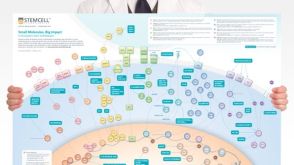 挂图Small Molecules, Big Impact in Pluripotent Stem Cell Research Overview of signaling pathways and small molecules in pluripotent stem cell research
 沪公网安备31010102008431号