Ao A et al. (APR 2011)
Chemistry & biology 18 4 413--24
Regenerative chemical biology: current challenges and future potential.
The enthusiasm surrounding the clinical potential of embryonic stem cells (ESCs) and induced pluripotent stem cells (iPSCs) is tempered by the fact that key issues regarding their safety,efficacy,and long-term benefits have thus far been suboptimal. Small molecules can potentially relieve these problems at major junctions of stem cell biology and regenerative therapy. In this review we will introduce recent advances in these important areas and the first generation of small molecules used in the regenerative context. Current chemical biology studies will provide the archetype for future interdisciplinary collaborations and improve clinical benefits of cell-based therapies.
View Publication
产品号#:
05850
05857
05870
05875
85850
85857
85870
85875
产品名:
mTeSR™1
mTeSR™1
Seibler P et al. (APR 2011)
The Journal of neuroscience : the official journal of the Society for Neuroscience 31 16 5970--6
Mitochondrial Parkin recruitment is impaired in neurons derived from mutant PINK1 induced pluripotent stem cells.
Genetic Parkinson disease (PD) has been associated with mutations in PINK1,a gene encoding a mitochondrial kinase implicated in the regulation of mitochondrial degradation. While the studies so far examined PINK1 function in non-neuronal systems or through PINK1 knockdown approaches,there is an imperative to examine the role of endogenous PINK1 in appropriate human-derived and biologically relevant cell models. Here we report the generation of induced pluripotent stem (iPS) cells from skin fibroblasts taken from three PD patients with nonsense (c.1366CtextgreaterT; p.Q456X) or missense (c.509TtextgreaterG; p.V170G) mutations in the PINK1 gene. These cells were differentiated into dopaminergic neurons that upon mitochondrial depolarization showed impaired recruitment of lentivirally expressed Parkin to mitochondria,increased mitochondrial copy number,and upregulation of PGC-1α,an important regulator of mitochondrial biogenesis. Importantly,these alterations were corrected by lentiviral expression of wild-type PINK1 in mutant iPS cell-derived PINK1 neurons. In conclusion,our studies suggest that fibroblasts from genetic PD can be reprogrammed and differentiated into neurons. These neurons exhibit distinct phenotypes that should be amenable to further mechanistic studies in this relevant biological context.
View Publication
Goossens S et al. (MAY 2011)
Blood 117 21 5620--30
The EMT regulator Zeb2/Sip1 is essential for murine embryonic hematopoietic stem/progenitor cell differentiation and mobilization.
Zeb2 (Sip1/Zfhx1b) is a member of the zinc-finger E-box-binding (ZEB) family of transcriptional repressors previously demonstrated to regulate epithelial-to-mesenchymal transition (EMT) processes during embryogenesis and tumor progression. We found high Zeb2 mRNA expression levels in HSCs and hematopoietic progenitor cells (HPCs),and examined Zeb2 function in hematopoiesis through a conditional deletion approach using the Tie2-Cre and Vav-iCre recombination mouse lines. Detailed cellular analysis demonstrated that Zeb2 is dispensable for hematopoietic cluster and HSC formation in the aorta-gonadomesonephros region of the embryo,but is essential for normal HSC/HPC differentiation. In addition,Zeb2-deficient HSCs/HPCs fail to properly colonize the fetal liver and/or bone marrow and show enhanced adhesive properties associated with increased β1 integrin and Cxcr4 expression. Moreover,deletion of Zeb2 resulted in embryonic (Tie2-Cre) and perinatal (Vav-icre) lethality due to severe cephalic hemorrhaging and decreased levels of angiopoietin-1 and,subsequently,improper pericyte coverage of the cephalic vasculature. These results reveal essential roles for Zeb2 in embryonic hematopoiesis and are suggestive of a role for Zeb2 in hematopoietic-related pathologies in the adult.
View Publication
产品号#:
03434
03444
04960
04902
04900
产品名:
MethoCult™ GF M3434
MethoCult™ GF M3434
MegaCult™-C胶原和无细胞因子培养基
胶原蛋白溶液
MegaCult™-C无细胞因子培养基
Mortensen M et al. (MAR 2011)
The Journal of experimental medicine 208 3 455--67
The autophagy protein Atg7 is essential for hematopoietic stem cell maintenance.
The role of autophagy,a lysosomal degradation pathway which prevents cellular damage,in the maintenance of adult mouse hematopoietic stem cells (HSCs) remains unknown. Although normal HSCs sustain life-long hematopoiesis,malignant transformation of HSCs leads to leukemia. Therefore,mechanisms protecting HSCs from cellular damage are essential to prevent hematopoietic malignancies. In this study,we crippled autophagy in HSCs by conditionally deleting the essential autophagy gene Atg7 in the hematopoietic system. This resulted in the loss of normal HSC functions,a severe myeloproliferation,and death of the mice within weeks. The hematopoietic stem and progenitor cell compartment displayed an accumulation of mitochondria and reactive oxygen species,as well as increased proliferation and DNA damage. HSCs within the Lin(-)Sca-1(+)c-Kit(+) (LSK) compartment were significantly reduced. Although the overall LSK compartment was expanded,Atg7-deficient LSK cells failed to reconstitute the hematopoietic system of lethally irradiated mice. Consistent with loss of HSC functions,the production of both lymphoid and myeloid progenitors was impaired in the absence of Atg7. Collectively,these data show that Atg7 is an essential regulator of adult HSC maintenance.
View Publication
产品号#:
03434
03444
产品名:
MethoCult™ GF M3434
MethoCult™ GF M3434
Lister R et al. (MAR 2011)
Nature 471 7336 68--73
Hotspots of aberrant epigenomic reprogramming in human induced pluripotent stem cells.
Induced pluripotent stem cells (iPSCs) offer immense potential for regenerative medicine and studies of disease and development. Somatic cell reprogramming involves epigenomic reconfiguration,conferring iPSCs with characteristics similar to embryonic stem (ES) cells. However,it remains unknown how complete the reestablishment of ES-cell-like DNA methylation patterns is throughout the genome. Here we report the first whole-genome profiles of DNA methylation at single-base resolution in five human iPSC lines,along with methylomes of ES cells,somatic cells,and differentiated iPSCs and ES cells. iPSCs show significant reprogramming variability,including somatic memory and aberrant reprogramming of DNA methylation. iPSCs share megabase-scale differentially methylated regions proximal to centromeres and telomeres that display incomplete reprogramming of non-CG methylation,and differences in CG methylation and histone modifications. Lastly,differentiation of iPSCs into trophoblast cells revealed that errors in reprogramming CG methylation are transmitted at a high frequency,providing an iPSC reprogramming signature that is maintained after differentiation.
View Publication
产品号#:
05860
05880
05850
05857
05870
05875
85850
85857
85870
85875
产品名:
mTeSR™1
mTeSR™1
Dambrot C et al. (FEB 2011)
The Biochemical journal 434 1 25--35
Cardiomyocyte differentiation of pluripotent stem cells and their use as cardiac disease models.
More than 10 years after their first isolation,human embryonic stem cells are finally 'coming of age' in research and biotechnology applications as protocols for their differentiation and undifferentiated expansion in culture become robust and scalable,and validated commercial reagents become available. Production of human cardiomyocytes is now feasible on a daily basis for many laboratories with tissue culture expertise. An additional recent surge of interest resulting from the first production of human iPSCs (induced pluripotent stem cells) from somatic cells of patients now makes these technologies of even greater importance since it is likely that (genetic) cardiac disease phenotypes can be captured in the cardiac derivatives of these cells. Although cell therapy based on replacing cardiomyocytes lost or dysfunctional owing to cardiac disease are probably as far away as ever,biotechnology and pharmaceutical applications in safety pharmacology and drug discovery will probably impact this clinical area in the very near future. In the present paper,we review the cutting edge of this exciting area of translational research.
View Publication
产品号#:
05850
05857
05870
05875
85850
85857
85870
85875
产品名:
mTeSR™1
mTeSR™1
Kozhukharova IV et al. (JAN 2010)
Tsitologiia 52 10 875--82
[Generation of dopamine neurons from human embryonic stem cells in vitro].
The aim of the study was to generate dopaminergic (DA) neurons from human embryonic stem cells (ESC) in vitro. It was shown that human ESCs are able to differentiated into DA neurons without co-culture with stromal cells. Terminal differentiation into DA neurons was reached by successive application of noggin and bFGF growth factors on collagen and matrigel substrates during 3-4 weeks. Differentiation efficiency was evaluated by the number of colonies with cells expressing tyrosine hydroxylase (TH),a DA neuron marker,and by the number of TH-positive cells in cell suspension using flow cytometry. No cells with pluripotent markers were detected in DA-differentiated cultures. It makes possible to propose that the protocol of human ESC differentiation might be applied to generate DA neurons for their transplantation into the animals modeling neurodegenerative (Parkinson) disease without the risk of tumor growth.
View Publication


 EasySep™小鼠TIL(CD45)正选试剂盒





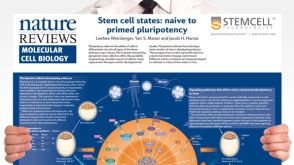 挂图Stem Cell States: Naive to Primed Pluripotency Properties of naive (ground) and primed pluripotent stem cells

 沪公网安备31010102008431号